Medically reviewed by Dr. Nathaniel Stroumza-Escoffier, plastic surgeon in Paris — RPPS 10100674943. Last review: July 2026.
The treatment for a double chin is not chosen arbitrarily: it depends on the underlying anatomical structure. A protruding submental area can result from fat accumulation, skin laxity, a weakened platysma muscle, or the shape of the chin and jaw. Depending on the individual's profile, the appropriate treatment may include cervical liposuction , subdermal radiofrequency ablation , platysma surgery, a facelift, or skeletal correction. A thorough clinical examination is essential to avoid insufficient or inappropriate treatment.
IN SHORT
A double chin has four possible causes: fat, skin, platysma muscle and bony support (chin, mandible, hyoid bone).
- Isolated fat with toned skin → targeted cervical liposuction.
- Fat associated with moderate skin laxity → SNEC Lift (liposuction + subdermal radiofrequency, without visible scarring).
- Platysmal bands → platysmaplasty, most often in a cervico-facial lifting.
- A poorly projected chin → chin implant or genioplasty. The result takes between 3 and 6 months to solidify; many procedures can be performed under local anesthesia.
SHORT ANSWER
According to Dr. Nathaniel Stroumza-Escoffier, a plastic surgeon in Paris, the treatment for a double chin depends on its anatomical cause. Localized fat deposits with firm skin are addressed with cervical liposuction. If the skin is loose, subdermal radiofrequency tightening is performed simultaneously (SNEC Lift). Muscular or skeletal forms are treated with platysma surgery or chin augmentation. Only a clinical examination will determine the best treatment strategy.
DEFINITION — WHAT IS A "DOUBLE CHIN"?
A double chin, or submental excess, refers to a protrusion of the area between the chin and the neck, which obscures the cervicomental angle—the angle formed by the chin line and the neck line, a key feature in defining the profile. It can be caused by fat, skin, muscle, or skeletal factors, and is therefore not always related to weight.
WHY CAN I HAVE A DOUBLE CHIN EVEN THOUGH I'M SLIM?
Because fat is only one of four factors. A receding chin, a low hyoid bone, sagging platysma muscles, or skin that has lost its elasticity can produce a puffy submental profile regardless of weight. This is why dieting or weight loss doesn't correct some double chins.
THE AUTHOR
Dr. Nathaniel Stroumza-Escoffier is a plastic surgeon in Paris (8th arrondissement), qualified in plastic, reconstructive and aesthetic surgery (RPPS 10100674943), former assistant clinical head at the Hospitals of Paris (Tenon Hospital, AP-HP) and a member of the SOFCPRE. He specializes in minimally invasive cosmetic surgery of the face, neck and body.
He has developed a personalized approach to the cervicomental contour, combining anatomical analysis, high-definition liposuction , and subdermal radiofrequency in appropriate cases. He is the creator of the SNEC Lift (Scarless Non-Excisional Cervical Lift), a cervical rejuvenation protocol without skin excision. A lecturer and trainer, he presents these techniques at conferences and workshops for physicians and conducts clinical studies aimed at objectively measuring the definition of the cervicomental angle and tissue retraction.
Why isn't a double chin always due to excess fat?
This is the most common misunderstanding, and the one that leads to disappointing treatments. A thin patient can have a pronounced double chin, and an overweight patient can maintain a well-defined cervicomental angle. The amount of fat only explains part of the problem.
Four structures determine the appearance of the submental profile: fat (superficial and deep), skin and its elasticity, the platysma muscle, and the skeletal support—chin and mandible. Each responds to different treatments. Removing fat from a patient whose problem is a receding chin will not correct anything; neither will placing a chin implant in a patient whose problem is adipose tissue.
This is why the approach presented here starts with diagnosis, not technology. Before choosing a technology, the responsible structure must be identified.
What anatomical structures determine the profile of the neck?
The submental region is organized into overlapping planes. Understanding these planes helps to grasp why the same appearance can have very different origins.
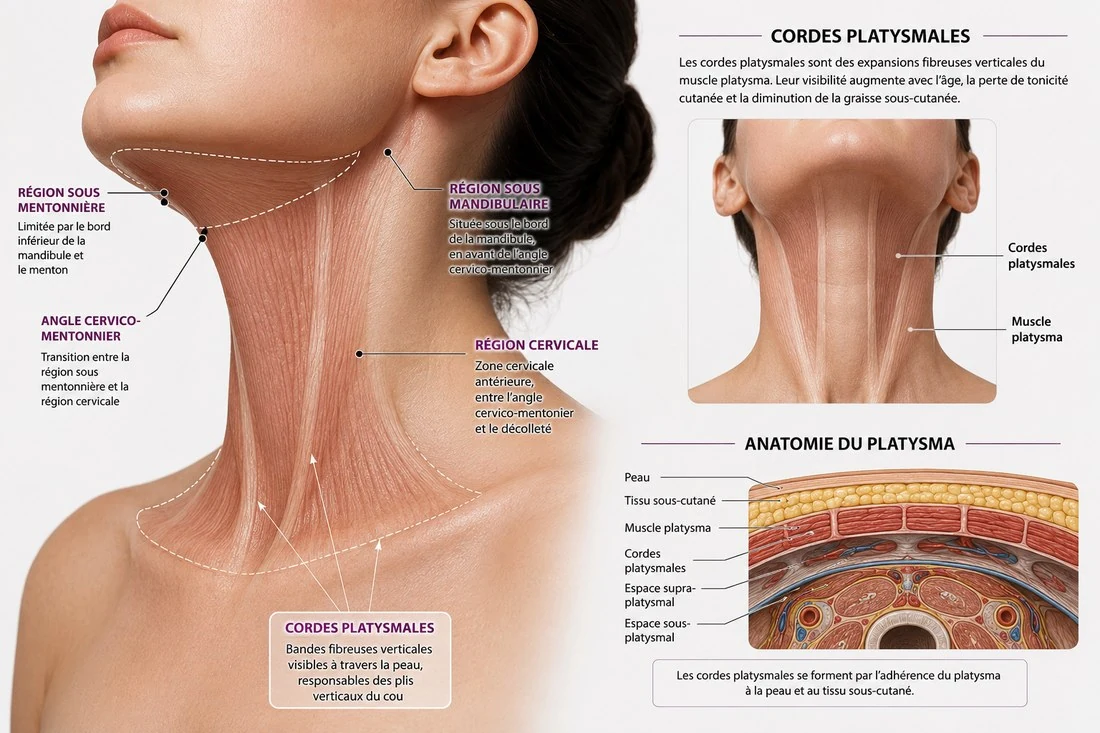
Preplatysmal fat
Located above the platysma muscle, just under the skin, this is the most superficial fat. It is the fat most easily removed by cervical liposuction, and it is on this fat that non-invasive surface treatments act.
The deep (subplatysmal) fat
Located beneath the platysma muscle, it is less accessible. Its excess contributes to filling the cervicomental angle and can persist even after a well-performed superficial liposuction. Its treatment requires a specific surgical procedure under direct surgical control.
The platysma muscle
A thin sheet of muscle stretches taut from the thorax to the mandible. With age, its anterior edges can separate and form visible vertical bands. It can also become generally lax, accentuating the puffy appearance of the neck. No fat removal treatment can correct platysmal bone deformities.
The skin and its elasticity
The skin's ability to retract after volume removal is crucial. Toned skin redrapes itself spontaneously. Loose skin remains flabby, and removing fat without anticipating this visually worsens the result.
The chin and the jaw
A receding chin (retrognathia) or a weak jawline reduces profile definition and creates the impression of a double chin, even without excess fat. The position of the hyoid bone, more
Whether lower or more anterior, it also influences the sharpness of the cervicomental angle. These factors cannot be corrected by soft tissue treatment.
WHY CAN I HAVE A DOUBLE CHIN EVEN THOUGH I'M SLIM?
Because fat is only one of four factors. A receding chin, a low hyoid bone, sagging platysma muscles, or skin that has lost its elasticity can produce a puffy submental profile regardless of weight. This is why dieting or weight loss doesn't correct some double chins.
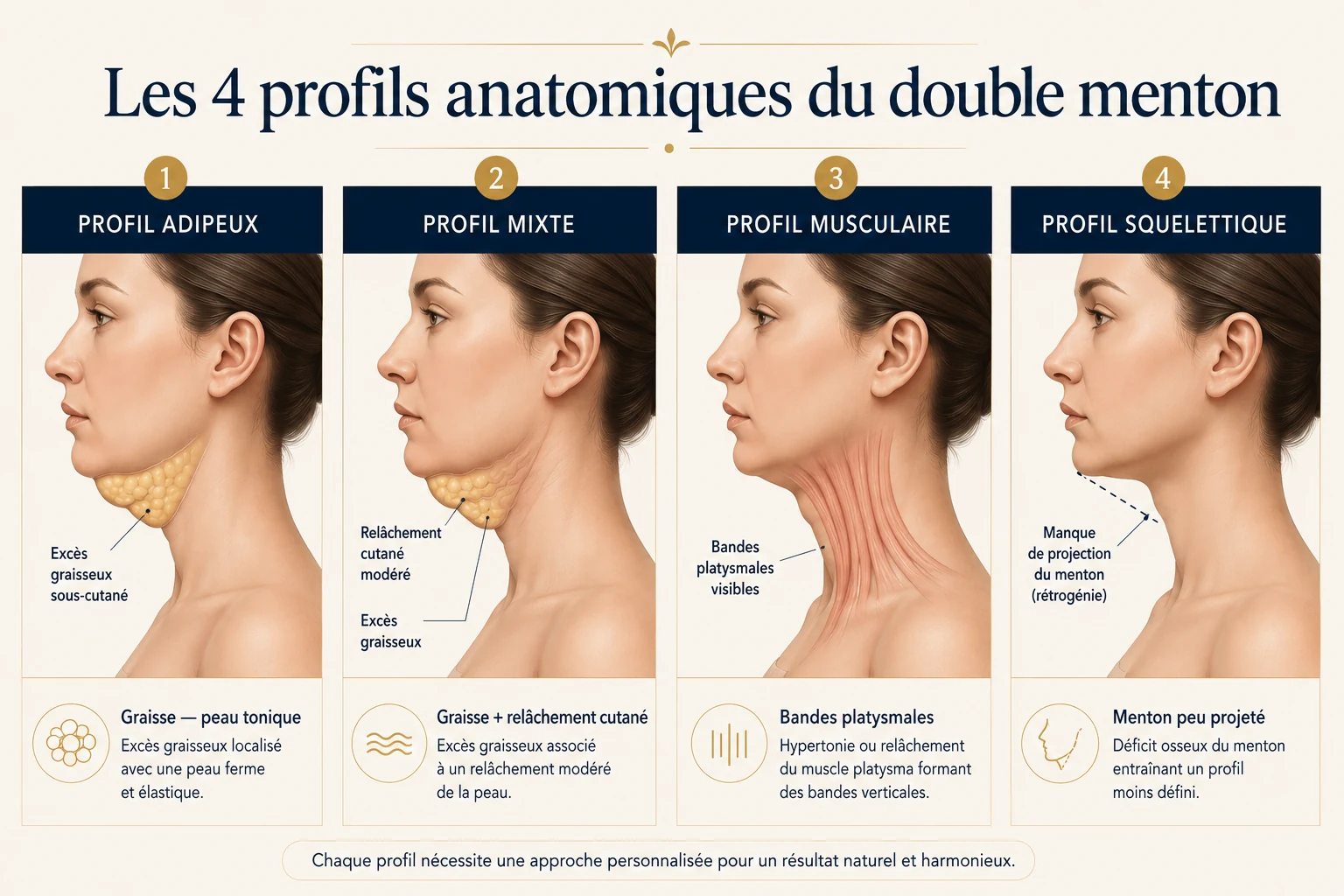
The four anatomical profiles of the double chin
THE FOUR PROFILES IN ONE SENTENCE
Adipose profile: fat, toned skin — liposuction. Mixed profile: fat and loose skin — SNEC Lift. Muscular profile: platysmal bands — platysma surgery. Skeletal profile: a receding chin — correction of the bony support.
This clinical grid with four profiles is proposed by Dr. Stroumza-Escoffier to structure the analysis during consultations. It is not a validated scientific classification: it is a reasoning tool, intended to identify the dominant component before choosing a treatment.
Profile 1 — Adipose with toned skin
Clinical signs: Isolated submental fat deposits, elastic skin that retracts well to the pinch test, absence of platysmal bands, satisfactory chin projection. Often seen in young or middle-aged patients. Common mistake: Proposing immediate skin tightening technology is unnecessary in this case. Primary treatment: Targeted cervical liposuction. Alternative: Injectable deoxycholic acid for moderate excesses, if the product is available and the indication is appropriate.
Profile 2 — Mixed: fat and skin laxity
Clinical signs: Excess fat associated with decreased skin elasticity, skin that remains marked after pinching, and a blurred cervicomental angle. This is the most common profile after age 45. Common mistake: Performing liposuction alone, which removes volume but leaves loose skin and can worsen the appearance. Primary treatment: SNEC Lift—a combination of cervical liposuction and subdermal radiofrequency, which simultaneously treats fat and skin retraction. Alternative: Cervicofacial lift if the sagging exceeds the skin's retraction capacity.
Profile 3 — Muscular: platysma and cervical bands
Clinical signs: Vertical bands visible at rest or during contraction, predominant muscle laxity, sometimes moderate fat. The appearance is accentuated during voluntary neck contraction. Common mistake: Treating the fat in the hope of correcting the bands—they will remain, or even become more visible, after removal of the volume that masked them. Primary treatment: Surgical correction of platysma (platysmaplasty), most often as part of a facelift. Alternative: Botulinum toxin injections on thin and moderate bands, with a temporary effect.
Profile 4 — Skeletal: chin, mandible and hyoid bone
Clinical signs: Poorly projected chin, poorly defined mandibular line, low or anterior hyoid bone, naturally open cervicomental angle. Often present since adolescence, regardless of weight. Common mistake: Performing successive soft tissue treatments without success, due to failure to identify the underlying bone cause. Primary treatment: Correction of chin projection—chin implant or genioplasty, depending on the case. Alternative: Combination with soft tissue treatment if a fatty component is present. A low hyoid bone position constitutes an anatomical limitation that no technique can correct.
THE FOUR PROFILES IN ONE SENTENCE
Adipose profile: fat, toned skin — liposuction. Mixed profile: fat and loose skin — SNEC Lift. Muscular profile: platysmal bands — platysma surgery. Skeletal profile: a receding chin — correction of the bony support.
Table: Which treatment for which profile?
This table summarizes the correspondence between each profile, its clinical signs and the strategy chosen.
| Profile | Clinical signs | Traitement principal | Alternatives |
|---|---|---|---|
| 1. Adipose tissue, toned skin | Isolated excess fat, elastic skin on pinch test, no bands | Targeted cervical liposuction | Deoxycholic acid if moderately excessive |
| 2. Mixed: fat + skin | Excess fat + decreased elasticity, blurred angle. Common after age 45 | SNEC Lift: liposuction + subdermal radiofrequency | A cervicofacial lift is performed if the sagging exceeds the retraction. |
| 3. Muscular: platysma | Vertical bands at rest or during contraction | Platysmaplasty, most often as part of a facelift | Botulinum toxin on thin strips (temporary effect) |
| 4. Skeletal: chin, hyoid | Chin not very prominent, mandible not very pronounced, hyoid bone low | Chin implant or genioplasty | Association with soft tissues if fatty component |
Which treatment to choose? The treatment algorithm
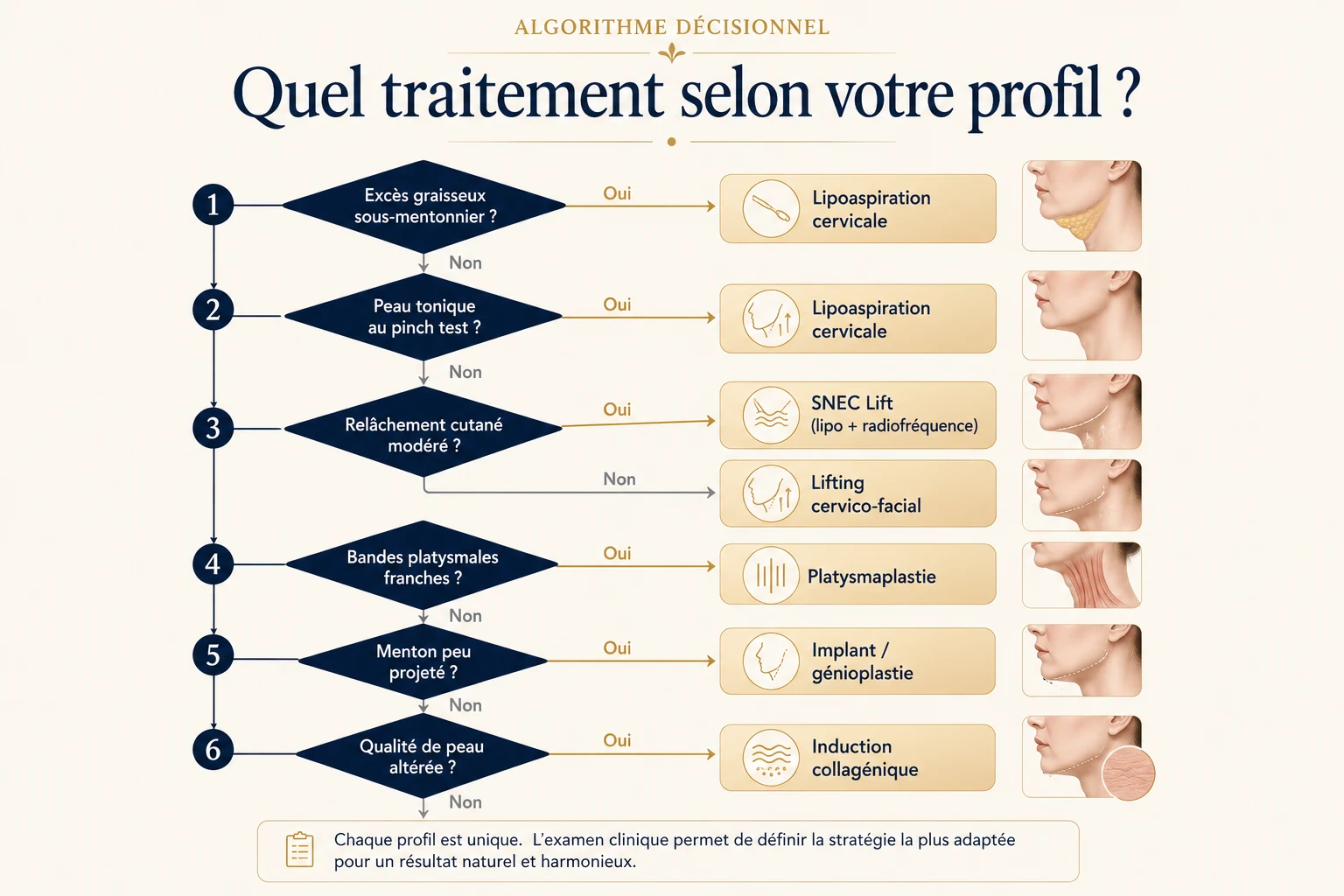
Clinical analysis follows a sequence of simple questions. Each question leads to the next, and together they result in a strategy. It is this reasoning, and not the availability of a technology, that determines the therapeutic approach.
| Stage | Clinical question | If yes | Yes not |
|---|---|---|---|
| 1 | Is there excess fat under the chin? | Proceed to step 2 | Go directly to step 4 |
| 2 | Is the skin toned during the pinch test? | Cervical liposuction alone (adipose profile) | Proceed to step 3 |
| 3 | Is the skin laxity moderate, without any significant excess skin? | SNEC Lift: liposuction + subdermal radiofrequency (mixed profile) | Cervicofacial lift — excess skin necessitates excision |
| 4 | Are there any distinct platysmal bands? | Platysmaplasty, most often performed as part of a facelift (muscular profile) | Proceed to step 5 |
| 5 | Is the chin not very prominent / is the jaw not very defined? | Chin implant or genioplasty (skeletal profile) | Reassess: low hyoid bone, or request without anatomical support |
| 6 | Is the skin quality altered (fine lines, loss of density)? | Complementary treatment for skin quality, either concurrent or delayed | Protocol adopted as is |
Two principles govern this algorithm. The first: several components often coexist, and the strategy then combines procedures rather than opposing them. The second: at each step, the least invasive procedure capable of truly treating the mechanism in question is selected—without subcontracting an indication that warrants more extensive surgery.
Cervical liposuction: indications, procedure and limitations
Cervical liposuction removes preplatysmal fat using thin cannulas inserted through small incisions hidden under the chin and behind the earlobes. The procedure aims to redefine the cervicomental angle and the jawline.
Candidates. This procedure is for patients with localized fat deposits and skin with good retraction capacity, and whose weight is stable. Anesthesia. The procedure can be performed under tumescent local anesthesia in appropriate cases, sometimes with light sedation. Scarring. The entry points are a few millimeters in size and are concealed within natural skin folds.
Specific limitations and risks. Liposuction that is too superficial or excessive can lead to surface irregularities and a hollowed appearance that is difficult to correct. Sculptural control—knowing how much to remove and where to stop—is more important than the total volume aspirated. Risks include bruising, prolonged swelling, asymmetry, irregularities, and, more rarely, transient sensory disturbances.
The result is not "definitive" in the absolute sense: the removed fat cells do not regenerate, but significant weight gain can cause the remaining cells to enlarge, and skin aging continues.
Associated subdermal radiofrequency: why and for whom?
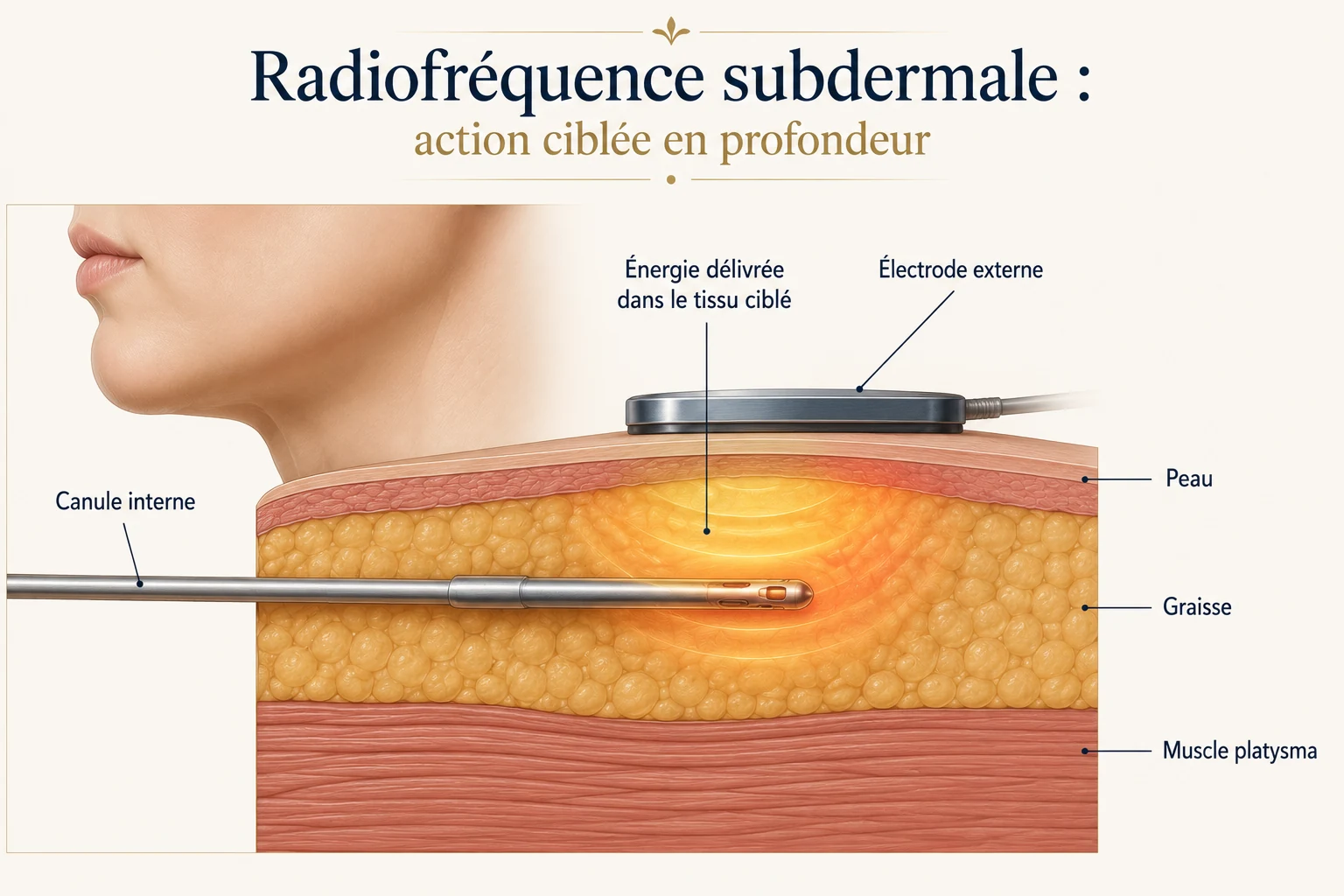
It's important to distinguish between two often-confused types of radiofrequency. External radiofrequency delivers its energy from the skin's surface: it must penetrate the epidermis and superficial dermis before reaching its target, which limits the amount of useful energy absorbed deeper into the tissue. Subdermal radiofrequency delivers energy between a cannula inserted under the skin and an external electrode: the treated tissue is located directly between the two.
This difference explains the difference in indications. External radiofrequency is suitable for early signs of skin laxity and is used in repeated sessions. Subdermal radiofrequency, a surgical procedure performed in a single session, is intended for moderate skin laxity and naturally combines well with liposuction.
The clinical reasoning is as follows: when fat removal risks leaving insufficiently retractable skin, combining it with thermal tightening during the same surgical procedure allows both components to be addressed. This is the principle behind the SNEC Lift. Recent devices incorporate thermal measurement and automatic power cutoff, useful safety features that do not replace the operator's anatomical knowledge.
SNEC Lift: What role does it play in the treatment of a double chin?
The SNEC Lift (Scarless Non-Excisional Cervical Lift) is a minimally invasive cervical rejuvenation protocol developed by Dr. Nathaniel Stroumza-Escoffier, a plastic surgeon in Paris. Depending on the anatomy, it combines targeted cervical liposuction, controlled bipolar subdermal radiofrequency, and, in more complex cases of sagging, supportive thread lifts—all without skin excision or periauricular scarring.
In the treatment of a double chin, it occupies a specific place: that of the mixed profile, where excess fat and moderate skin laxity coexist. This is the situation where liposuction alone would be disappointing—it would remove volume while leaving loose skin—and where a cervicofacial lift would be disproportionate.
It thus responds to what Anglo-Saxon literature calls the treatment gap: the therapeutic space left vacant between surface treatments, which are insufficient, and complete surgery, which is excessive for these indications.
What the SNEC Lift does not do: It does not remove skin. It does not correct pronounced platysmal bands. It does not modify insufficient skeletal support. In these situations, a cervicofacial lift, platysmaplasty, or chin augmentation remain indicated. Refusing to remove any scars should not lead to sub-treating a surgical indication.
How to improve the quality of the skin on the neck?
Treating volume and tension isn't always enough. The skin on the neck has its own characteristics: it's thin, has few sebaceous glands, is highly exposed to the sun, and is often neglected in skincare routines. As a result, it ages quickly and visibly—horizontal lines, loss of density, a crepey appearance, and age spots.
These issues are not addressed by liposuction or facelifts. A patient can emerge from a procedure with a well-defined cervico-mental angle but still have poor skin quality—and this is often what betrays the result.
Two mechanisms can be used to improve skin quality. The first is thermal: subdermal radiofrequency, by heating the deep dermis in a controlled manner, triggers collagen production, which improves skin density and firmness over several months. This is a benefit included in the SNEC Lift, beyond just the tightening effect. The second is injectable: collagen induction protocols—vitamin therapy, skinboosters based on lightly cross-linked hyaluronic acid, and collagen inducers—stimulate fibroblasts and improve hydration, density, and radiance of the skin.
These approaches are combined with the surgical procedure, either in preparation or for later consolidation. They do not replace it: no amount of skin quality improvement can correct excess fat or structural laxity.
TO REMEMBER
Treating a double chin involves three distinct dimensions: volume (fat), structure (skin, platysma, underlying bone), and skin quality (density, texture, radiance). A comprehensive treatment plan considers all three. Treating volume alone only provides partial results.
What are the non-surgical alternatives, and for what realistic indications?
Several non-surgical treatments are available for this indication. Their role is real but limited, and their honest presentation is part of providing information to the patient.
Injectable deoxycholic acid
This molecule causes the lysis of fat cells by destroying their membrane. Its effectiveness on moderate submental fat has been established by phase III trials. The treatment requires several spaced-out sessions and is sometimes accompanied by significant swelling. It does not treat skin laxity and is not indicated for significant fat deposits. Its availability and prescribing conditions in France must be verified at the time of the consultation.
Submental cryolipolysis
It cools fat cells until they undergo apoptosis. Non-invasive, it is suitable for moderate excess fat and requires several sessions. Sculptural control is less than with liposuction, and it does not improve skin laxity.
External radiofrequency and focused ultrasound
These technologies work from the surface to stimulate collagen. They are suitable for early signs of sagging, with repeated sessions and a moderate effect. They do not remove fat and are not a substitute for surgical tightening in advanced cases.
Botulinum toxin
It can reduce the appearance of mild to moderate platysmal bands by relaxing the muscle. The effect is temporary and requires maintenance. It has no effect on fat or skin.
Comparative table of double chin treatments
The techniques below are not competing: they cater to different profiles. The table compares them based on identical criteria.
| Technical | Indication | Invasiveness | Sessions | Recovery | limitations |
|---|---|---|---|---|---|
| Cervical liposuction | Excess fat, toned skin | minimally invasive surgery | 1 | Swelling and bruising for a few days; compression | Does not treat skin laxity |
| SNEC Lift (lipo + subdermal RF) | Fat + moderate skin laxity | minimally invasive surgery | 1 | Slightly more pronounced and prolonged edema | No excision: insufficient if there is significant excess skin |
| Cervico-facial lift | Excess skin, jowls, advanced platysma | Complete surgery | 1 | Longer; periauricular scars | More significant after-effects and scarring |
| Platysmaplasty | Clear platysmal bands | surgical | 1 | According to the associated gesture | It does not treat fat or bone structure. |
| Chin implant / genioplasty | Chin not very prominent | surgical | 1 | Swelling, temporary difficulty chewing | No effect on fat and skin |
| Deoxycholic acid | Moderate oiliness, toned skin | Injectable | Many | Swelling sometimes marked after each session | Does not treat the skin; significant excesses excluded |
| cryolipolysis | Moderate excess fat | Non-invasive | Many | Rapid, transient local discomfort | Less sculptural control; no skin effect |
| External radiofrequency / ultrasound | Beginner relaxation | Non-invasive | Many | immediate | Moderate effect; does not remove fat |
| Botulinum toxin | Thin platysmal bands | Injectable | Maintenance | immediate | Temporary; no effect on fat or skin |
The most frequent processing errors
| Error | Cause | Result | Correct strategy |
|---|---|---|---|
| Liposuction on loose skin | Skin elasticity not assessed by pinch test | Volume removed but loose skin; appearance sometimes worsened | Combine this with a tightening treatment: SNEC Lift, or facelift if there is significant excess |
| Treatment of fat on platysmal bands | Voluntary contraction not tested during consultation | The bands became more visible once the volume that was masking them was removed. | Platysmaplasty, most often performed as part of a cervicofacial lift |
| Repeated technologies on skeletal profile | Chin projection and hyoid bone position not analyzed | Accumulated expense without results, the cause being bone-related | Correction of the support: chin implant or genioplasty |
| Volume treatment without skin quality | Density, fine lines and sun damage not assessed | A sharp angle but creased skin, which betrays the result | Combining radiofrequency and collagen induction protocols |
| Choosing the technique before diagnosis | Approach based on available technology | Inappropriate or insufficient treatment of the dominant component | Apply the algorithm: first identify the responsible structure |
When is a facelift or skeletal surgery preferable?
Some situations are beyond the scope of minimally invasive approaches. Recognizing these situations prevents the patient from undergoing successive treatments without success.
- Clear excess skin — stretched skin, especially after significant weight loss: only skin excision provides lasting correction.
- Marked platysmal bands at rest or during contraction: these are a matter for platysmaplasty.
- Advanced cervical laxity associated with jowls and sagging of the lower third of the face: a cervicofacial lift treats the whole in a coherent manner.
- A poorly projected chin or a poorly defined mandible: correction involves a chin implant or genioplasty, possibly combined with soft tissue treatment.
Results, recovery, risks and duration
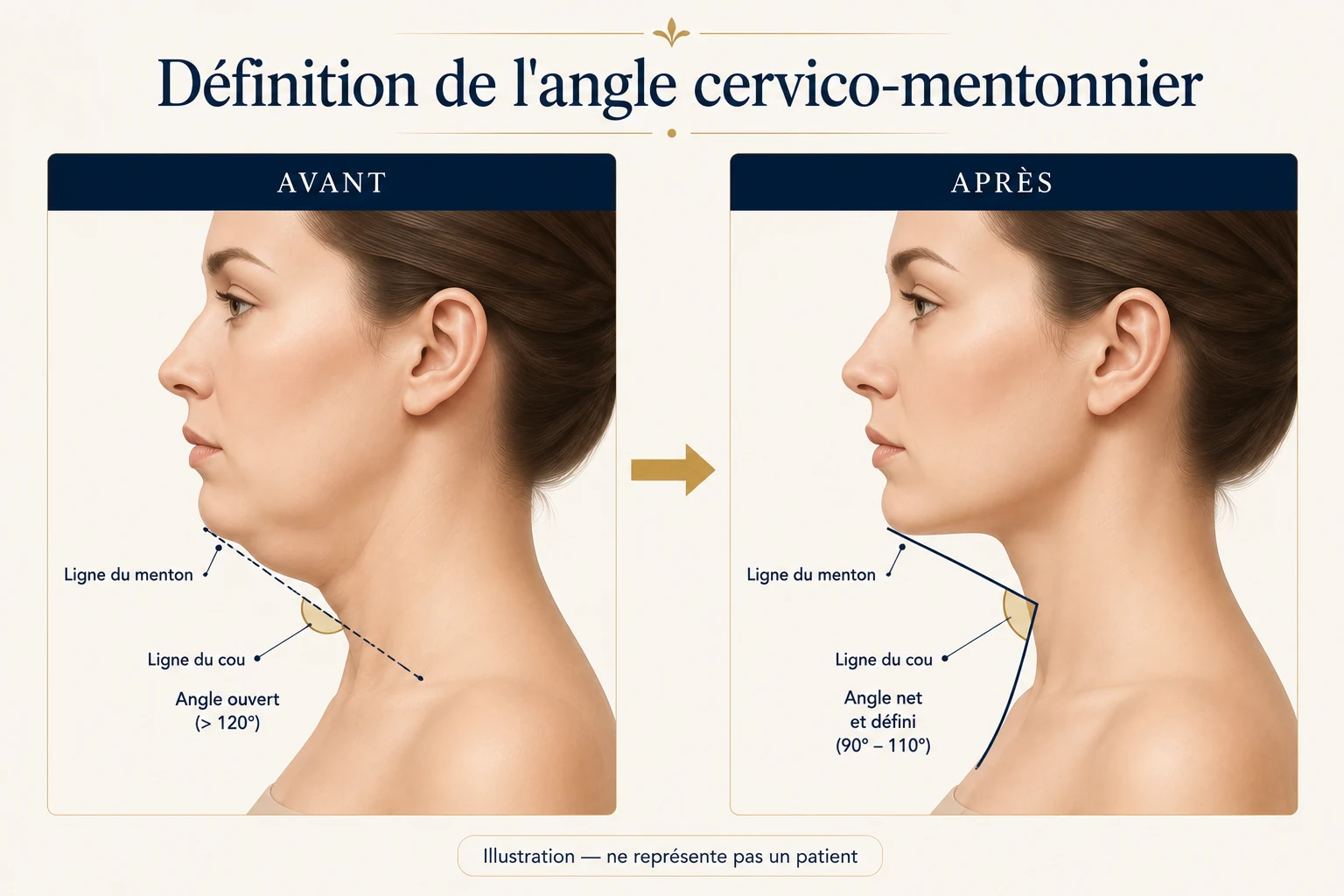
The recovery depends on the technique used. After cervical liposuction, swelling and bruising are common for the first few days, and cervical compression is usually prescribed. When subdermal radiofrequency is combined with the procedure, the swelling may be more pronounced and last slightly longer.
The result develops in three stages. An initial result appears after the swelling subsides, over a few weeks. A maturation phase follows, during which the skin redrapes and, in the case of heat treatment, the collagen remodels—this phase generally lasts three to six months. Finally, maintenance depends on weight stability, natural aging, and skincare.
Risks: Bruising, prolonged swelling, asymmetry, surface irregularities, transient sensory disturbances, and, more rarely, infection or nerve damage. Heat treatments add a risk of burns and prolonged induration. These events remain infrequent but should be understood before making a decision.
How does a specialist consultation work in Paris?
The examination follows a precise sequence. It includes inspection from the front, side, and three-quarter views, both at rest and during contraction, documented with standardized photographs. The pinch test assesses fat thickness and, most importantly, the skin's ability to retract. Voluntary neck contraction reveals the platysmal bands. The chin projection and hyoid bone position are then evaluated. Finally, skin quality is assessed, including density, fine lines, elasticity, and sun damage.
In addition, there is an interview about medical history, weight fluctuations, smoking, current treatments, and a discussion of expectations. This last point is crucial: a request that is disproportionate to the patient's anatomy must be identified before, not after, the procedure.
Dr. Nathaniel Stroumza-Escoffier's approach
The goal is not to apply the same technique to all patients, but to identify the dominant component of the double chin. This precise approach allows for the selection of the least invasive procedure likely to effectively address the underlying anatomical mechanism, while also indicating when more comprehensive surgery is necessary.
Dr. Stroumza-Escoffier is among the first French plastic surgeons to have integrated the latest generation of bipolar radiofrequency into minimally invasive neck and body contouring surgery. He teaches these techniques to his colleagues through workshops, masterclasses, and live surgeries, and speaks at national and international conferences.
DECLARATION OF CONFLICTS OF INTEREST
Dr. Stroumza-Escoffier works as a consultant and trainer for InMode, a manufacturer of radiofrequency devices. This information is provided transparently. The recommendations made during consultations are based on the patient's anatomical analysis, independently of any commercial considerations.
F.A.Q
Why do I have a double chin even though I'm thin?
Because fat is only one of four possible causes. A receding chin, a low hyoid bone, a sagging platysma muscle, or skin that has lost its elasticity can produce a puffy profile regardless of weight. This is why dieting doesn't correct some double chins.
What is the most effective treatment for a double chin?
There is no universally superior treatment: effectiveness depends on the cause. Localized fat with firm skin is addressed with liposuction. Fat associated with moderate sagging is addressed with liposuction combined with subdermal radiofrequency. Platysmal bands are addressed with muscle surgery, and a receding chin with bone correction.
Is liposuction sufficient if the skin is loose?
No, and this is a common mistake. Removing volume without addressing skin retraction leaves sagging skin and can visually worsen the result. In this case, a tightening procedure must be combined—subdermal radiofrequency for moderate sagging, or a cervicofacial lift if there is significant excess skin.
What is the difference between external and subdermal radiofrequency?
External radiofrequency delivers its energy from the surface: it must pass through the skin before reaching its target, which limits its penetration depth. Subdermal radiofrequency delivers energy between a cannula placed under the skin and an external electrode, directly into the targeted tissue. The former is suitable for early-stage skin laxity with repeated sessions; the latter is a surgical procedure performed in a single session.
What is the SNEC Lift?
The SNEC Lift (Scarless Non-Excisional Cervical Lift) is a minimally invasive cervical rejuvenation protocol developed by Dr. Stroumza-Escoffier, a plastic surgeon in Paris. Depending on the anatomy, it combines targeted cervical liposuction, subdermal radiofrequency, and, in more complex cases, thread lifts—all without skin excision or periauricular scarring. For double chins, it is suitable for mixed profiles: fat and moderate skin laxity.
Can a double chin be treated under local anesthesia?
Yes, in many minimally invasive applications. Cervical liposuction and subdermal radiofrequency ablation can be performed under tumescent local anesthesia, sometimes combined with light sedation. The choice depends on a medical evaluation based on the extent of the procedure and the patient's profile.
When is a neck lift preferable?
When there is significant excess skin, pronounced platysmal bands, or sagging extends to the lower third of the face with jowls, only skin excision and surgical tightening can provide a consistent result. The goal is to avoid any scarring.
would lead to outsourcing the indication.
Can a receding chin give the impression of a double chin?
Yes, that's the skeletal profile. A poorly projected chin reduces profile definition and creates an impression of submental bulging, even without excess fat. Correction then requires a chin implant or genioplasty, not soft tissue surgery.
How long does it take to see the result?
An early result appears after the swelling subsides, over a few weeks. The maturation process then continues: skin tightening and, in the case of heat treatment, collagen remodeling. The result is generally consolidated between three and six months.
Is the result of cervical liposuction permanent?
The removed fat cells do not regenerate. However, significant weight gain can cause the remaining cells to enlarge, and skin aging continues. Therefore, weight stability is a key factor in the long-term success of the results.
Can a double chin be treated in an overweight patient?
Cervical liposuction is not a treatment for obesity and does not cause weight loss. In an overweight patient whose weight is not stable, the procedure should be discussed: prior weight loss often alters the assessment and improves the outcome. The decision is made on a case-by-case basis.
What are the risks and limitations?
Risks include bruising, prolonged swelling, asymmetry, surface irregularities, and transient sensory disturbances; more rarely, infection or nerve damage. Heat treatments add a risk of burns and induration. The limitations are primarily related to the indication: no technique can correct a cause it does not treat.
Can the quality of the skin on the neck be improved at the same time?
Yes. Subdermal radiofrequency stimulates collagen production and improves skin density over several months. Collagen induction protocols—vitamin therapy, skin boosters, collagen inducers—can be used in conjunction with radiofrequency treatments, either as preparation or to reinforce the process. They complement the procedure without replacing it.
What is Dr. Stroumza-Escoffier's specific approach?
It consists of starting with the anatomical diagnosis rather than the technique: identifying which of the four components predominates, then selecting the least invasive procedure capable of effectively treating it. This approach includes skin quality as an integral component and does not preclude referring the patient to full surgery when indicated.
Conclusion
Modern double chin treatment is no longer simply about removing fat. It relies on an analysis of adipose tissue volume, skin elasticity, platysma muscle, and skeletal support. The quality of the result depends less on the name of the technology than on the appropriateness of the indication. A specialist consultation allows for the development of a proportionate, realistic strategy tailored to each patient's anatomy.
WARNING
This article is for informational and educational purposes only. It is not a substitute for individual medical consultation. The choice of a technique is a medical decision made after an anatomical examination. No results can be guaranteed: they depend on anatomy, skin quality, and factors specific to each individual. The information above is provided for general purposes only.
Main scientific references
References from peer-reviewed journals (PubMed/MEDLINE) and specialized publications.
- Ascher B., Hoffmann K., Walker P. et al. Efficacy, patient-reported outcomes and safety profile of ATX-101 (deoxycholic acid), an injectable drug for the reduction of unwanted submental fat: results from a phase III, randomized, placebo-controlled study. Journal of the European Academy of Dermatology and Venereology, 2014. Phase III study validating the effectiveness of deoxycholic acid.
- Yen S., Wang J., Gao X. et al. Bipolar Radiofrequency-Assisted Liposuction for Cervical Contouring in Eastern Asians. Aesthetic Surgery Journal Open Forum, 2023;5:ojad035. DOI: 10.1093/asjof/ojad035. Study on cervical radiofrequency-assisted liposuction, including the treatment of a double chin with a cutaneous component.
- Chia CT, Marte JA, Ulvila DD, Theodorou SJ Percutaneous Radiofrequency Technologies for the Lower Face and Neck. Facial Plastic Surgery Clinics of North America, 2019. PMID: 31280845.
- Tackling submental fat: A review of management strategies. Cosmoderma, 2023. Review of therapeutic strategies for double chin, including anatomical description and relative positioning of techniques.
- Overview of non-invasive treatments for submental fat reduction. The PMFA Journal. Review of non-invasive treatments: deoxycholic acid, cryolipolysis, external radiofrequency, with indications and limitations.
- Park HJ, Jang JS, Kim CH et al. Topical formulation of sodium deoxycholate for submental lipolysis. Skin Research and Technology, 2023;29(3):e13293. DOI: 10.1111/srt.13293.
Article written by the editorial team and approved by Dr. Nathaniel Stroumza-Escoffier — plastic surgeon, qualified in plastic, reconstructive and aesthetic surgery, former assistant clinical head of the Hospitals of Paris (Tenon Hospital, AP-HP) — RPPS 10100674943. Member of the SOFCPRE. Practice: 11 rue du Faubourg Saint-Honoré, 75008 Paris.
Last updated: July 2026.
This article is for informational purposes only and does not replace a medical consultation.