High-definition abdominal liposuction in Paris : to reveal muscle definition
Medically reviewed by Dr. Nathaniel Stroumza-Escoffier, plastic surgeon in Paris — RPPS 10100674943. Last review: August 2026.
IN SUMMARY
High-definition abdominal liposuction goes beyond simply removing fat; it sculpts the abdominal contour while respecting the underlying muscle structure. It is suitable for patients with a stable weight, good muscle tone, and skin capable of retraction. It does not induce weight loss, does not replace an abdominoplasty in cases of significant excess skin or diastasis recti, and does not eliminate the need for regular exercise. When performed correctly, it reveals contours that were already present but hidden by a residual layer of fat. The final result is visible between six and twelve months.
Key figures
Parameter | Order of magnitude |
|---|---|
Operating time | 90 minutes to 3 hours depending on the extent |
Anesthesia | General for a 360° circular treatment |
Hospitalisation | Outpatient or overnight depending on the extent |
Volumes aspirated (published cases) | 2,5 to 5,5 L depending on the number of zones |
Cessation of activity | 5 to 10 days depending on the profession |
Compression garment | Continuous wear followed by lighter wear — duration specified in instructions |
Lymphatic drainage | Prescribed from the first week, individualized number |
Resumption of the march | From the first days |
Resumption of intense sport | Deferred, individualized schedule |
Intermediate image | 6 to 8 weeks |
Final result | 6 to 12 months |
Legal cooling-off period | 15 days (art. L.6322-2 CSP) |
Patient Care | None — procedure for aesthetic purposes |
These values are orders of magnitude: they do not constitute a commitment and are specified individually in consultation.
1. What is high-definition abdominal liposuction (HD Lipo)?
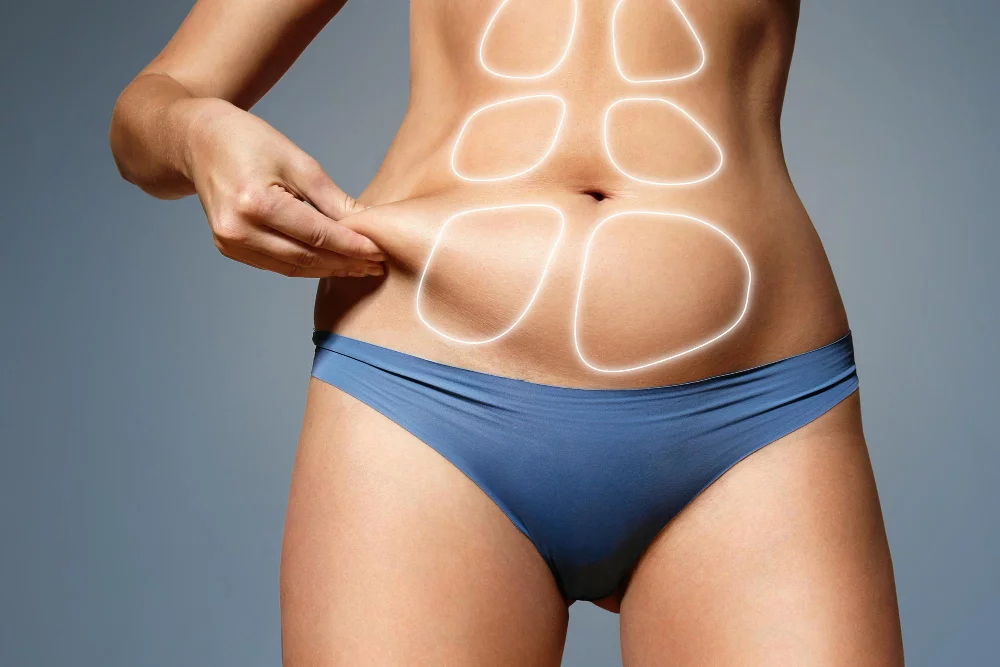
High-definition abdominal liposuction — also called HD Lipo or abdominal etching — is a sculpting technique that removes fat in a differentiated way depending on the areas in order to reveal the existing muscle relief, whereas classic liposuction aspirates homogeneously to refine a volume.
Traditional liposuction removes fat to refine the silhouette. High-definition liposuction pursues a different objective: to reveal muscle definition by removing more fat from areas of anatomical depression and preserving volume in areas of protrusion.
We also talk about abdominal reshaping, sports liposuction, or athletic liposuction—these terms all refer to the same thing: sculpting, not simply removing volume. The request for a six-pack liposuction reflects this expectation of a defined contour, which must be weighed against what the patient's anatomy actually allows.
Two distinct objectives, one same technique
It's important to distinguish between two approaches that rely on the same technique but aim for different results. Defining sculpting is for patients who are already close to their ideal weight and have good muscle tone: the goal is to create contrast in the contours. 360° circular remodeling treats the entire abdomen—anterior, flanks, and lumbar region—in patients whose primary concern is the overall silhouette and the quality of the skin tightening, most often in conjunction with radiofrequency ablation. The prerequisites, the volume of tissue removed, and the recovery process differ. A consultation will determine which approach is most appropriate.
This page deals with the abdomen. The sculpting logic also applies to other areas — flanks, back, arms, thighs — and is detailed on the high-definition liposuction page.
2. What abdominal anatomy determines the outcome?
The relief of a sculpted abdomen comes from the muscle and two anatomical structures — the linea alba and the tendinous intersections — which the procedure reveals by removing the superficial fat that masks them, without ever creating them.
The sculpted abdomen doesn't come from the surgeon; it comes from the muscle. The purpose of the surgery is to remove what obscures it, while respecting the anatomical structure.
The abdominal layers
From the surface to the depth: the skin, the superficial fat (compact, organized into regular lobules), the Scarpa's fascia which separates it from the deep fat (looser), then the aponeurosis and the rectus abdominis muscle.
This distinction is crucial. Deep grease can be extensively vacuumed without affecting the surface appearance. Superficial grease, on the other hand, is what defines the texture: it's what determines the definition, and it's also what can lead to irregularities if the application is imprecise.
Landmarks
Two structures define the abdominal contour. The linea alba, vertical and median, separates the two rectus abdominis muscles. The horizontal tendinous intersections divide each muscle into segments—these are what create the "tablet" appearance. Finally, the semilunar lines mark the lateral border of the rectus abdominis muscles.
High-definition work involves accentuating these natural depressions by removing the superficial fat that fills them, while preserving the volume above the muscle mass. If these structures are underdeveloped in the patient, no technique will create them.

Figure 1 — Anatomical layers of the abdominal wall, from surface to depth. Deep fat is located beneath Scarpa's fascia, in contact with the aponeurosis. This distinction forms the basis for the differentiated treatment of the two layers. This is an educational diagram for explanatory purposes only and is not based on medical imaging.
3. Who is a good candidate for high-definition abdominal liposuction? The 4 prerequisites
A good candidate for high-definition abdominal liposuction has four characteristics: stable weight, present abdominal musculature, skin capable of retracting, and an objective consistent with their anatomy.
This is the most important point of this article, and the one that marketing tends to overlook. High definition isn't suitable for everyone, and a poorly placed indicator produces a disappointing result, or even an artificial look that's difficult to correct.
- A stable weight. Subsequent weight gain fills the hollows again and undoes the work done. Fluctuating weight contraindicates the procedure, not for technical reasons, but because the result would not last.
- Muscularity is present. The revealed contour is the one that already exists. A patient without abdominal muscle mass will not achieve definition, regardless of the volume of fat removed.
- Skin capable of retracting. After the removal of a superficial layer, the skin must be precisely redraped over the contours. Preserved elasticity allows for precise sculpting; reduced elasticity necessitates radiofrequency retraction, or even consideration of resection.
- An objective consistent with anatomy. A patient requesting a relief that their morphology does not allow must be informed before the procedure. Physical activity is not a comfort recommendation: it is a condition for the longevity of the result.
IN OUR PRACTICE
The selection process is based on three elements assessed during the consultation. First, weight stability. Second, skin quality, evaluated by the pinch test—skin that doesn't retract necessitates discussing a related tightening procedure, or even another intervention. Finally, the patient's objective, which must be consistent with their anatomy: the consultation serves both to rule out disproportionate requests and to plan the procedure. A patient whose anatomy is unsuitable is better served by honest information than by an inappropriate intervention.
TO REMEMBER
Four conditions determine eligibility: stable weight, present muscle tone, skin capable of retraction, and a coherent objective. These prerequisites determine the outcome. A patient who does not meet them will be better served by traditional liposuction, circumferential contouring with retraction, an abdominoplasty, or prior preparation.
4. What result should be aimed for depending on the morphotype: male or female?
For men, the goal is generally a marked athletic definition (white line, tendon intersections, semi-lunar lines); for women, a soft definition favoring the refinement of the waist, the continuity of lines and the harmony of curves.
In humans
The goal is generally a pronounced athletic definition: accentuation of the linea alba, highlighting of tendon intersections, and shaping of the lateral semilunar lines. The work focuses on a clear contrast between hollows and contours, with complementary treatment of the flanks . The specifics of liposuction in men are detailed on a dedicated page.
In the woman
The request more often focuses on a subtle definition: a refined waistline, a subtle midline contour, and harmonious curves rather than muscular contrast. Too much treatment would produce a masculinized appearance, which is generally undesirable. Sculpting prioritizes the continuity of lines—see the page on liposuction for women.
5. How is the procedure carried out? Differentiated marking and suction
The procedure takes place in two stages: a preoperative marking carried out while standing, which defines the sculpting plan, then a differentiated aspiration which separately treats deep fat (reduction of volume) and superficial fat (creation of definition).
Preoperative marking
It is performed standing up, before the procedure, with the patient tensed and then relaxed. The surgeon marks the areas of hollows to be accentuated, the areas of volume to be preserved, and the transition boundaries. This marking is crucial: it defines the result. It cannot be done lying down, as the position alters the distribution of tissues.
Differentiated aspiration
Two levels are treated separately. Deep fat is suctioned to reduce overall volume. Superficial fat is treated selectively, using fine cannulas, only in areas of anatomical depression. This second step is what creates definition and requires the most control: excessive or poorly placed superficial suction produces visible irregularities that are difficult to correct.
Anesthesia and surgical setting
A 360° circular reshaping is performed under general anesthesia. Tumescent local anesthesia with sedation remains an option for specific indications limited to a single, small area, consistent with the minimally invasive surgical approach of the practice. The choice is made during an anesthesia consultation.
TO REMEMBER
The result hinges on two key moments: the pre-operative marking, performed while standing, which defines the sculpting plan, and the treatment of the superficial fat, which creates the definition. The total volume aspirated is less important than the precision of these two steps.
6. What is the role of the associated subdermal radiofrequency?
Subdermal radiofrequency ensures skin retraction after liposuction: controlled heating of the deep dermis produces an immediate contraction of collagen fibers, followed by neocollagenesis which continues for several months.
After the removal of a superficial layer of fat, the skin must retract precisely to conform to the contours. This is where subdermal radiofrequency comes in.
The principle is as follows: a cannula delivers energy under the skin, between an internal and an external electrode, under the control of a thermal sensor. The controlled heating of the deep dermis produces two effects—an immediate contraction of existing collagen fibers, followed by neocollagenesis that continues for several months. The literature documents this collagen stimulation effect of bipolar radiofrequency.
In abdominal sculpting, this combination has a specific benefit: it ensures the safety of skin tightening in patients whose skin is adequate but not perfect, and it improves the definition of the resulting relief. It does not, however, transform a poor indication into a good one: significantly stretched skin requires surgical resection, not thermal treatment.
TRANSPARENCY — CONFLICTS OF INTEREST
Dr. Stroumza-Escoffier works as a consultant and trainer for InMode, the manufacturer of the radiofrequency devices mentioned on this page. This information is provided transparently. The recommendations made during consultations are based on a morphological analysis of the patient, independently of any commercial considerations.
7. VASER, radiofrequency, cryolipolysis: which technology for which objective?
The technologies associated with body sculpting do not pursue the same goal: ultrasound liquefies fat, radiofrequency acts on skin retraction, cryolipolysis destroys adipocytes without sculpting effect, and none replaces the surgical sculpting plan.
The confusion between technology and technique is common, fueled by marketing communications. The following table distinguishes what each tool actually does.
Technology | Action | Main indication | Limit |
|---|---|---|---|
VASER (ultrasound) | Thin the grease before vacuuming | Fibrous areas, extended movements, resumptions | Don't sculpt: it's the sculpting plan that defines the HD |
Subdermal bipolar radiofrequency | Controlled heating of the deep dermis and subcutaneous layer | Skin is okay but not perfect, securing the redrape | Does not replace skin resection |
External ultrasound (HIFU) | Non-invasive adipocyte destruction | Very localized excesses, refusal of surgery | Moderate effect, no sculpting ability |
cryolipolysis | Adipocyte apoptosis by cold | Isolated fat deposits, non-surgical patients | Unpredictable result in relief, no definition |
Muscle stimulation (HIFEM) | Supramaximal contractions | Adjunctive muscle strengthening | Does not remove grease |
Tummy tuck | Skin resection and diastasis repair | Excess skin, diastasis | Horizontal scar, longer recovery |
The key point: none of these technologies alone defines high definition. It's the sculpting plan—the marking and differentiated treatment of the two fat layers—that characterizes it. Choosing a technology without prior knowledge only adds to the cost.
8. Skin laxity after weight loss with GLP-1 analogues
Rapid weight loss under GLP-1 analogues frequently leaves skin laxity that liposuction alone does not correct: management requires combining a skin retraction technique, or even resection when the excess is significant.
The reasons for consultation have changed since these treatments became widely available. Many patients present after rapid and significant weight loss, with localized residual fat and, most importantly, excessively large skin envelope. Suctioning without treating the underlying skin would produce a sagging result. Combining subdermal bipolar radiofrequency with liposuction allows for controlled tightening in cases of moderate skin laxity; beyond that, surgical resection remains the only option. Evaluation is performed once the patient's weight has stabilized.
9. Classic liposuction, high-definition liposuction, or abdominoplasty: which to choose?
Classic liposuction refines volume, high definition sculpts muscular relief, and abdominoplasty treats excess skin and diastasis: the choice depends on the patient's anatomy, compared here on ten criteria.
These three procedures are often confused, even though they address different situations. Abdominoplasty is covered on a dedicated page.
Criterion | Classic liposuction | High Definition | Tummy tuck |
|---|---|---|---|
Slim your stomach | Yes | Yes | Yes |
Revealing muscle definition | No | Yes | According to the indication |
Treating significant excess skin | No | No | Yes |
Correcting a diastasis | No | No | Yes |
To achieve a "six-pack" effect | No | Yes | No |
Very discreet scars | Yes | Yes | No |
Association with radio frequency | According to the indication | Yes | According to the indication |
Does not cause weight loss | Yes | Yes | Yes |
Indicated for localized fat | Yes | Yes | No |
Fastest recovery | Yes | According to the indication | No |
10. What abdominal sculpting doesn't do
High-definition abdominal sculpting does not make you lose weight, does not treat excess skin or diastasis recti, and does not create muscle: it only reveals an already existing relief.
- It doesn't make you lose weight. The goal is sculpted, not weight-related. It is not a treatment for excess weight and does not replace physical activity or a balanced diet.
- It does not treat blatant excess skin or diastasis. Severely stretched skin after pregnancy or major weight loss, or a separation of the rectus abdominis muscles, are grounds for an abdominoplasty.
- It does not build muscle. The revealed contour is what already exists. Without prior abdominal muscle mass, there is nothing to reveal.
11. What are the post-operative procedures and the recovery schedule?
Recovery takes place over several months: edema dominates the first few weeks, an intermediate image appears around six to eight weeks, and the final result can be assessed between six and twelve months.
The recovery from high-definition body sculpting is more demanding than that from traditional liposuction because the superficial treatment requires precise reshaping. Wearing a compression garment is mandatory and prolonged: it limits swelling and guides skin retraction over the contours. Adherence to this garment directly impacts the quality of the result. Manual lymphatic drainage is frequently prescribed.
Period | What is expected |
|---|---|
Days 1 to 7 | Maximum edema and bruising. Continuous compression. Early walking recommended. |
Weeks 2 to 4 | Regression of bruising, persistent edema. Lymphatic drainage. Resumption of sedentary activity. |
Weeks 6 to 8 | First intermediate image of the relief. The result is not final. |
Months 3 to 6 | Continued skin retraction and neocollagenesis. Full return to sport as advised. |
Months 6 to 12 | Appreciable final result, edema resolved, redraping completed. |
This schedule is indicative and will be individualized during a consultation. The return to sports is gradual and supervised: early exertion increases edema and the risk of hematoma.
12. What are the possible risks and complications?
The risks are those of any liposuction — bruising, prolonged edema, asymmetry, surface irregularities, transient sensory disturbances, more rarely infection, seroma or thrombosis — with two specificities: superficial treatment increases the risk of irregularity and the association with radiofrequency adds a risk of burns and induration.
No surgical procedure is without risk. The risks of high-definition sculpting deserve to be known before the decision is made, not discovered afterward.
- Frequent and transient: bruising, prolonged edema, sensory disturbances, discomfort on movement.
- Specific to high definition: Surface irregularities, relief asymmetries, and an overly detailed appearance can result from superficial over-processing. These defects are difficult to correct later.
- Related to radio frequency: Skin burn, transient induration, hyperpigmentation.
- Related to extended gestures: Circular or multi-zone treatment involves a larger aspirated volume, a longer operating time and appropriate post-operative monitoring — hydro-electrolytic balance, thromboembolic prevention.
- Less common: infection, seroma, hematoma, venous thrombosis and thromboembolic complications, complications related to anesthesia.
Smoking, obesity, a history of thromboembolic events, and certain chronic conditions increase these risks and are assessed during consultations. All of this is detailed in the informed consent process.
13. Can lipofilling be combined with abdominal sculpting?
Yes: the aspirated fat can be purified and then reinjected to enhance volume — buttocks, hips, pectorals, deltoids — in a logic of overall silhouette coherence, part of the grafted volume being reabsorbed during the first few months.
Abdominal sculpting cannot be judged in isolation. In women, the transfer of muscle mass to the buttocks and hips often accompanies a circular reshaping: it restores a continuity of line that ablation alone would not achieve. In men, the transfer of muscle mass to the pectorals or deltoids reinforces the coherence of the upper body.
Two caveats must be noted. The first concerns resorption: a portion of the grafted volume disappears within the first few months, which means that a precise final volume cannot be guaranteed. The second concerns the indication: adding lipofilling unnecessarily lengthens the procedure, increases swelling, and complicates the recovery.
14. What alternatives or additions should be considered?
Depending on the patient's profile, abdominoplasty, classic liposuction, associated circular treatment or non-invasive technologies may be more suitable than high definition, or complement it.
- Abdominoplasty — indicated in cases of significant excess skin or diastasis of the rectus abdominis muscles.
- Traditional liposuction — sufficient when the goal is to slim down without seeking muscle definition.
- The associated circular treatment — flanks and lumbar region, often necessary for the consistency of the result.
- Non-invasive technologies — Cryolipolysis, external radiofrequency, muscle stimulation: moderate effect on limited localized excesses, without sculpting capacity.
- The preliminary preparation — A phase of several months often transforms a bad indication into a good one.
15. Results: Clinical cases before/after
The cases presented below illustrate 360° circular remodelings performed under general anesthesia with associated bipolar radiofrequency; all post-operative images were taken at twelve months, in patients who had given their written consent to publication.
Each situation is unique. These images document individual results obtained in specific indications: they are neither a promise nor a standard applicable to another patient. Initial morphology, skin quality, weight stability, and postoperative compliance all influence the outcome.
Case 1 — Woman, 30 years old
High-definition circular liposuction of the abdomen (360°) — 2,5 L aspirated — combined with BodyTite bipolar radiofrequency. General anesthesia.
Front view
BEFORE

12 MONTHS

Back view
BEFORE

12 MONTHS

Case 1 — Woman, 30 years old. High-definition circular liposuction of the abdomen (360°) — 2,5 L aspirated — combined with BodyTite bipolar radiofrequency ablation. General anesthesia. Post-operative images at 12 months. Individual result, not guaranteed and not applicable to other patients. Unretouched photographs, published with the patient's written consent.
Case 2 — Woman, 28 years old
High-definition circular liposuction of the abdomen (360°) and circular liposuction of the thighs — 4 L aspirated — combined with BodyTite bipolar radiofrequency. General anesthesia.
Front view
BEFORE

Oblique view

12 MONTHS

Back view
BEFORE

12 MONTHS

Case 2 — Woman, 28 years old. High-definition circular liposuction of the abdomen (360°) and circular liposuction of the thighs — 4 liters aspirated — combined with BodyTite bipolar radiofrequency ablation. General anesthesia. Post-operative images at 12 months. Individual result, not guaranteed and not applicable to other patients. Unretouched photographs, published with the patient's written consent.
Case 3 — Woman, 38 years old
High-definition circular liposuction of the abdomen (360°), thighs and arms — 5,5 L aspirated — with lipofilling of the buttocks and hips and Quantum 25 bipolar radiofrequency. General anesthesia.
Front view
BEFORE

12 MONTHS

Back view
BEFORE

Case 3 — Woman, 38 years old. High-definition circular liposuction of the abdomen (360°), thighs, and arms — 5,5 L aspirated — with lipofilling of the buttocks and hips and Quantum 25 bipolar radiofrequency ablation. General anesthesia. Postoperative images at 12 months. Individual result, not guaranteed and not applicable to other patients. Unretouched photographs, published with the patient's written consent.
Case 4 — Woman, 26 years old
High-definition circular liposuction of the abdomen (360°), thighs and arms — 5,5 L aspirated — with lipofilling of the buttocks and hips and Quantum 25 bipolar radiofrequency. General anesthesia.
Posterior oblique view
BEFORE

12 MONTHS

Case 4 — Woman, 26 years old. High-definition circular liposuction of the abdomen (360°), thighs, and arms — 5,5 L aspirated — with lipofilling of the buttocks and hips and Quantum 25 bipolar radiofrequency ablation. General anesthesia. Postoperative images at 12 months. Individual result, not guaranteed and not applicable to other patients. Unretouched photographs, published with the patient's written consent.
Case 5 — Male, 40 years old
High-definition circular liposuction of the abdomen (360°) — 4 L aspirated — combined with Quantum 25 bipolar radiofrequency. General anesthesia.
Anterior oblique view
BEFORE

12 MONTHS

Case 5 — Male, 40 years old. High-definition circular liposuction of the abdomen (360°) — 4 L aspirated — combined with Quantum 25 bipolar radiofrequency ablation. General anesthesia. Post-operative images at 12 months. Individual result, not guaranteed and not applicable to other patients. Unretouched photographs, published with the patient's written consent.
MANDATORY GALLERY INFORMATION
The photographs shown are unretouched clinical documents, published with the written and revocable consent of the patients concerned. They illustrate individual results obtained for specific indications determined during consultations. No results can be guaranteed or promised. These images are not a substitute for a medical consultation and do not constitute an inducement to undergo any procedure.
16. How does the pre-operative consultation take place?
The consultation assesses the thickness and distribution of fat (pinching test), skin quality, abdominal musculature, the possible presence of diastasis or excess skin, then compares the patient's objective with their actual anatomy.
The examination assesses the thickness and distribution of fat using the pinch test, skin quality and elasticity, abdominal muscle development, the possible presence of diastasis recti, and any excess skin. Standardized photographs document the initial condition. The consultation concludes with the provision of a detailed estimate.
In addition, there is the crucial discussion of expectations. A patient seeking a result that their anatomy does not allow must be informed before the procedure, not after. The consultation serves both to determine if a procedure is indicated and to rule it out.
17. Why consult Dr. Stroumza-Escoffier for high-definition abdominal liposuction in Paris?
Dr. Nathaniel Stroumza-Escoffier, a plastic surgeon practicing at 11 rue du Faubourg Saint-Honoré in Paris 8th arrondissement, integrated Quantum 25 bipolar radiofrequency into his clinical activity in September 2024 and trained more than fifty doctors in bipolar radiofrequency techniques between 2021 and 2026.
The approach is individualized according to body type and skin quality: there is no single protocol applied to all patients. Radiofrequency is used when it provides a real benefit in terms of skin retraction, and not systematically. Incisions are short and positioned to remain discreet. The goal is a natural result, consistent with the individual's facial structure, rather than maximum definition applied indiscriminately.
EXPERIENCE, EXPERTISE AND TEACHING
Qualifications — Qualified surgeon in plastic, reconstructive and aesthetic surgery. RPPS 10100674943. Former clinical assistant at the Hospitals of Paris (Tenon Hospital, AP-HP). Member of the scientific committee of the SOFCEP.
Technology — Among the first French plastic surgeons to have integrated Quantum 25 bipolar radiofrequency into his clinical practice, starting in September 2024, and to develop its use in minimally invasive body contouring surgery. Consultant and trainer for InMode, and in this capacity, early adopter of the latest generation platforms, including the IGNITE device.
Education — More than fifty doctors trained between 2021 and 2026 — thirty-five in France and fifteen internationally — in the BodyTite, FaceTite and Quantum 25 bipolar radiofrequency techniques. Regularly organizes workshops and live surgeries.
Scientific activity — Around thirty workshops and communications at national and international congresses, including: Sardinia 2024, Corsica Medical Summit 2025 and 2026, Mini Invasive Breast Meeting 2025, SOFCEP 2025 and 2026, IMCAS 2026.
Conflicts of interest — Consultant and trainer for InMode, manufacturer of the aforementioned radiofrequency devices. Information provided transparently; the indications given are based on the patient's morphological analysis.
Dr. Stroumza-Escoffier leads workshops and training sessions on minimally invasive techniques for doctors.
Video
Sequences illustrating training activities and clinical practice:
- Workshop — Eiffel Clinic — https://www.instagram.com/reel/DYo4MF4INv2/
- SOFCEP Congress 2026, Biarritz — https://www.instagram.com/reel/DZNckD0I1iT/
- Clinical case — Lipo HD 360°, buttock lipofilling and Quantum 25 radiofrequency — https://www.instagram.com/reel/DYPnyO1oA7_/
- Lipo HD and Quantum 25 radiofrequency after weight loss under GLP-1 analog — https://www.instagram.com/reel/DUlb8KBCEKt/
18. How much does high-definition abdominal liposuction cost in Paris?
The price of high-definition abdominal liposuction in Paris depends on the extent of the areas treated, whether or not radiofrequency and lipofilling are combined, the type of anesthesia and the technical platform; a personalized quote is provided after consultation, with the legal 15-day reflection period.
These cosmetic procedures are not covered by health insurance. The personalized quote, provided after the consultation, details four items:
- surgical fees, depending on the extent and complexity of the procedure;
- Anesthesia fees vary depending on the method chosen;
- clinic and technical platform fees, including operating room occupancy and monitoring time;
- where applicable, the cost of specific consumables and compression garment.
The statutory 15-day cooling-off period applies before any cosmetic procedure (Article L.6322-2 of the Public Health Code). A consultation does not constitute a commitment, and a quote lower than the market average should prompt you to check what it actually includes.
List of anatomical areas concerned
- Abdominals
- Belly
FAQ
What is the difference between HD Lipo and VASER?
These are two distinct concepts. HD Lipo refers to an objective: sculpting muscle contours through targeted suction. VASER refers to an ultrasound-assisted technology that liquefies fat before suction. High-definition sculpting can be achieved with or without ultrasound assistance, and assistance alone is not enough to guarantee high definition: it is the sculpting plan that defines it.
What is 360° circular liposuction?
It treats the abdomen around its entire circumference—anterior wall, flanks, and lumbar region—during a single procedure, rather than just the anterior wall. This approach is often necessary for a consistent result, as the silhouette is assessed from the side and back as much as from the front.
Can HD Lipo be performed under local anesthesia?
In certain limited cases, yes: a single, small area may be treated with tumescent local anesthesia with light sedation. For circular abdominal sculpting, general anesthesia is preferred due to the duration and extent of the procedure. The choice is made during an anesthesia consultation.
What is the ideal BMI for high-definition liposuction?
There is no universally applicable threshold. Defining sculpting is suitable for patients close to their ideal weight. Circular remodeling with skin retraction is suitable for different body types and has different objectives. The distinction is made during the consultation.
How long does the procedure take?
From 90 minutes to 3 hours depending on the number of areas treated and whether or not radiofrequency and lipofilling are combined. Circular sculpting is a longer procedure than traditional liposuction of the same volume, as the superficial treatment requires a slow and controlled progression.
How long does recovery take?
Swelling and bruising are the most prominent features during the first few weeks. An intermediate appearance usually develops around six to eight weeks. The final result can be assessed between six and twelve months, once the swelling has completely subsided and skin retraction is complete. The use of compression garments and drainage techniques will affect this timeframe.
How many days of sick leave should be expected?
Five to ten days depending on the profession and the extent of the work. Sedentary work is usually resumed sooner than physical activity or professions involving prolonged standing. Since these procedures are not covered by insurance, compensation conditions must be anticipated.
When can I resume playing sports?
Recovery is gradual and supervised by the surgeon. Early exertion increases swelling and the risk of hematoma. Walking is resumed within the first few days, while activities involving the abdominal muscles are introduced much later. The recovery schedule is individualized.
Is the result final if my weight remains stable?
The removed fat cells do not regenerate. However, those that remain can increase in size if you gain weight, which fills in the hollows again and erases the definition. Weight stability and continued physical activity are the two conditions for lasting results.
How many kilos can you lose with high-definition liposuction?
The question is poorly framed: the procedure is not weight-related. The key is the distribution of the removed fat and the quality of the skin tightening, not the quantity aspirated. A patient can see their figure transformed without a significant change on the scale. Liposuction is in no way a treatment for being overweight.
Can abdominal sculpting be combined with flank liposuction?
Yes, and that's often desirable. The silhouette is judged from the side as much as from the front: treating the abdomen without the flanks can give an inconsistent result. This is precisely the purpose of the 360° circular treatment.
Can the harvested fat be reinjected?
Yes. The aspirated fat can be purified and then reinjected to enhance volume—buttocks, hips, pectorals, deltoids. This combination is common during circumferential body contouring. Some of the grafted volume will be reabsorbed in the first few months, which must be factored into the planning.
I lost weight while taking a GLP-1 analogue: can I have liposuction?
It depends on the skin's condition after weight loss. If the sagging is moderate, liposuction combined with radiofrequency skin tightening may be suitable. If there is significant excess skin, surgical resection is indicated. The assessment is performed once the patient's weight has stabilized.
Is abdominal sculpting suitable after pregnancy?
It depends on the condition of the abdominal wall. If the skin has remained toned and there is no diastasis recti, sculpting can be considered after weight stabilization. If there is excess skin or separation of the rectus abdominis muscles, an abdominoplasty is indicated.
Does HD tummy liposuction give everyone a six-pack?
No. The procedure reveals an existing contour; it doesn't create it. A patient without well-developed abdominal muscles will not achieve a marked definition, regardless of the volume of fat removed. This is the primary selection criterion during the consultation.
How does this differ from traditional liposuction?
The objective and the method. Traditional liposuction uses a homogeneous suction to refine volume. High-definition liposuction works in a more targeted way: it removes more fat from areas of anatomical depression while preserving volume in areas of muscle prominence. The selection criteria are also more stringent.
Is it necessary to wear a compression garment after the procedure?
Yes, systematically and for an extended period. Compression garments limit swelling and, most importantly, guide skin retraction over the sculpted contours. Adherence to these garments directly influences the quality of the final result.
Are lymphatic drainage treatments essential?
They do not determine the outcome in the same way as compression, but they accelerate the reduction of edema and improve comfort in the first few weeks. They are prescribed from the first week, in an individualized quantity.
What are the risks of this procedure?
Bruising, prolonged swelling, asymmetry, surface irregularities, and transient sensory disturbances may occur; infection, seroma, or thrombosis are more rare. Superficial treatment increases the risk of irregularities, and combining it with radiofrequency treatment adds a risk of burns and induration. These risks are discussed during the consultation.
Is smoking a contraindication to the procedure?
Smoking impairs cutaneous microcirculation and increases the risk of delayed healing, necrosis, and infectious complications. Smoking cessation is required before and after the procedure. Given that this technique relies on superficial treatment and skin retraction, this requirement is essential for the safety of the procedure.
Is there an age limit?
There is no absolute age limit. What matters is skin quality, muscle condition, and the absence of comorbidities that contraindicate anesthesia. However, as skin elasticity decreases with age, retraction becomes less predictable.
Is radio frequency always involved?
No. It is only recommended when it provides a real benefit in terms of skin retraction. In a patient with very firm skin, it offers no additional benefit. Nor does it correct severely stretched skin, which requires surgical resection.
Conclusion
High-definition abdominal liposuction is a demanding procedure, both for the surgeon and the patient. Its success depends less on the technology used than on the appropriateness of the indication: a well-selected candidate, with a stable weight and skin capable of retraction, will obtain a natural and lasting result. A poorly selected candidate will be disappointed, regardless of the technique. The consultation is precisely designed to make this distinction and guide the patient toward the truly suitable procedure—which may be an abdominoplasty, traditional liposuction, or no intervention at all.
WARNING
This article is for informational and educational purposes only. It is not a substitute for individual medical consultation. No results can be guaranteed: they depend on body type, skin quality, muscle tone, and lifestyle. The photographs shown illustrate individual cases and do not predict the outcome for any other patient.
Scientific references
References from peer-reviewed journals, indexed in PubMed/MEDLINE. Each reference is provided with its verifiable identifier.
- Hoyos AE, Millard JA VASER-Assisted High-Definition Liposculpture. Aesthetic Surgery Journal, 2007;27(6):594-604. DOI: 10.1016/j.asj.2007.08.007PMID: 19341688.
- Vera Cucchiaro J. High Definition Liposuction Classification. Plastic and Reconstructive Surgery Global Open, 2019;7(9):e2440. DOI: 10.1097/GOX.0000000000002440.
- Hoyos AE, Cala LC, Perez ME et al. High-Definition Liposculpture 18-Year Evolution: Patient Safety and Aesthetic Outcomes. Aesthetic Surgery Journal, 2023. PMID: 36729973.
- Cala LC, Perez ME, Zannin Ferrero A. et al. Effects of Bipolar Radiofrequency on Collagen Synthesis. Plastic and Reconstructive Surgery Global Open, 2023;11(4):e4924. DOI: 10.1097/gox.0000000000004924.
- Duncan DI The Science and Art of Radiofrequency Assisted Lipocoagulation (RFAL) in Body Contouring Surgery. IntechOpen, 2019.
This article is for informational purposes only and does not replace a medical consultation.