Body contouring surgery in Paris: liposuction, abdominoplasty and body sculpting
Parent page — liposuction, high-definition liposuction, abdominoplasty, body lift, arm and thigh lift. Medically reviewed by Dr. Nathaniel Stroumza-Escoffier, plastic surgeon in Paris 8 — RPPS 10100674943. Last updated: September 2026.

Medically reviewed by Dr. Nathaniel Stroumza-Escoffier , plastic surgeon in Paris.
RPPS 10100674943 — Last updated: September 2026.
Body contouring surgery encompasses various procedures that reshape the body's contours by acting on three main anatomical components : subcutaneous fat, skin, and, in certain areas such as the abdomen, the muscular wall.
In Paris, Dr. Nathaniel Stroumza-Escoffier, a plastic surgeon, offers personalized body contouring services including liposuction , high-definition (HD) liposuction , abdominoplasty , abdominal etching , body lift , and arm or thigh lifts.
His approach is particularly oriented towards minimally invasive surgery and body contouring, with the use, when the indication allows, of complementary technologies designed to improve skin retraction and contour definition.
Central question
Does the problem stem primarily from fat, excess skin, sagging skin, the muscle wall… or from several of these elements combined?
In short — which body contouring surgery should you choose?
| Situation | Treatment generally considered |
|---|---|
| Localized fat + toned skin | Liposuccion |
| Fat + moderate skin laxity | Liposuction ± skin tightening technique |
| Significant excess skin | Dermolipectomy: abdominoplasty, body lift, arm or thigh lift |
| Fat + significant excess skin | Liposuction + dermolipectomy as indicated |
| Musculature present but masked | High-definition liposuction / abdominal etching |
| Abdominal diastasis | Repair of the abdominal wall muscles, usually as part of an abdominoplasty when indicated |
Key takeaway: liposuction treats subcutaneous fat, but does not treat visceral fat or significant excess skin. Conversely, removing skin that still has good retraction capacity can result in an unnecessary scar.
Skin quality is therefore an essential element of the preoperative examination.
Fat, skin or muscle: how to choose the right procedure?
One of the potential mistakes in body contouring surgery is focusing solely on volume. A large abdomen, for example, can have several causes: subcutaneous fat, visceral fat, skin laxity, diastasis recti (separation of the rectus abdominis muscles), or a combination of these factors. Each of these requires a different treatment.
Subcutaneous fat
It is located between the skin and the muscle layers and can be treated by liposuction or lipoaspiration when it constitutes a localized excess.
Excess skin
After pregnancy, significant weight loss, or with the natural aging of tissues, the skin can lose some of its elasticity. When this excess skin becomes substantial, a dermolipectomy may be necessary: abdominoplasty, body lift, brachioplasty, or thigh lift, depending on the area.
Moderate skin laxity
There is a particularly important intermediate situation: the skin is no longer perfectly toned, but the excess skin is not significant enough to systematically justify resection with an extensive scar. In certain selected patients, liposuction combined with a tissue retraction technique, particularly radiofrequency-assisted ablation, can be considered.
Muscle wall
After pregnancy, in particular, the rectus abdominis muscles can separate: this is called diastasis recti. Liposuction does not correct this problem. When correction is indicated, it requires a specific procedure on the abdominal wall.

The minimally invasive approach to body contouring surgery
Modern body contouring surgery is no longer simply a matter of pitting liposuction against skin excision. The goal is to precisely identify the anatomical structure responsible for the deformity in order to perform the appropriate procedure, while minimizing scarring and surgical trauma as much as possible.
Dr. Nathaniel Stroumza-Escoffier's practice is particularly oriented towards this minimally invasive approach to body contouring , combining, depending on the indications:
- conventional or high-definition liposuction;
- 360° circular treatment;
- radiofrequency assisted to support tissue retraction;
- abdominal etching;
- lipofilling to restore or accentuate certain volumes;
- dermolipectomy when a significant excess of skin makes resection necessary.
The goal is therefore not to use a particular technology on all patients, but to determine which combination allows for the consistent treatment of fat, skin and volume.
Which areas of the body can be reshaped?
Body contouring surgery can address virtually any area with localized excess fat or sagging skin.
| Areas | Common problem | Possible intervention |
|---|---|---|
| Belly / abdomen | Localized fat | Abdominal liposuction |
| Belly | Excess skin after pregnancy or weight loss | Tummy tuck |
| Abdomen | Muscle definition not sufficiently visible | HD Liposuction / abdominal etching |
| Waist / flanks / love handles | Localized fat | Liposuccion |
| Two | Fat rolls | Liposuccion |
| bra | Fat ± skin laxity | Liposuction ± skin retraction / arm lift |
| Thighs | Fat or excess skin | Liposuction / cruroplasty |
| Culotte de cheval | Localized excess fat | Liposuccion |
| Knees | Localized fat | Liposuccion |
| Calves | Volume or contour issue | Treatment tailored to the indication |
| Full waist circumference | Excess skin after massive weight loss | Bodylift |
| Legs ± arms | Suspected lipedema | Specific care |
Principle
The anatomical area alone is not enough to determine the intervention: it is the nature of the tissue responsible for the deformity that guides the choice.
What can — and cannot — be treated by liposuction?
Liposuction removes subcutaneous fat using cannulas inserted through small incisions. It is a standard surgical treatment for localized subcutaneous fat deposits in patients whose weight is relatively stable. It can treat areas such as the abdomen, waist, love handles, hips, back, saddlebags, thighs, knees, or arms, depending on the individual case.
In contrast, liposuction:
- does not treat obesity;
- does not constitute a weight loss method;
- does not remove visceral fat;
- does not correct a diastasis;
- does not allow for the removal of significant excess skin.
Subcutaneous fat or visceral fat?
This distinction is particularly important for the abdomen. Subcutaneous fat is located between the skin and muscles and can be removed by liposuction. Visceral fat is located deep within the abdominal cavity, surrounding the abdominal organs. It is not accessible to liposuction. A firm, protruding abdomen can therefore sometimes be primarily due to visceral fat and is not necessarily a good indication for liposuction.
Traditional liposuction or high-definition liposuction?
Conventional liposuction primarily aims to reduce excess fat and harmonize facial contours. High-definition liposuction , or HD liposculpture, pursues an additional objective: to utilize the distribution of fat to better reveal the underlying muscle structure.
It can be performed on the abdomen, but the logic of high-definition body contouring more broadly encompasses the waist and the various anatomical transitions of the torso. For some patients, the treatment is performed in a 360° circular fashion, integrating the abdomen, flanks, and back in order to address the entire silhouette rather than focusing on a single area.
However, HD liposuction requires rigorous selection: relatively stable weight, satisfactory skin quality, sufficiently developed musculature and quantity of fat compatible with the desired objective.
Abdominal etching: revealing muscle definition
Abdominal etching is a form of high-definition liposculpture designed to enhance the anatomical contours of the abdominal muscles. Liposuction is performed differentially in the subcutaneous fat compartments to visually reinforce certain anatomical lines, particularly those corresponding to the linea alba, the boundaries of the rectus abdominis muscles, and their intersections.
The goal is not to "create" muscles that don't exist. Abdominal etching is more about revealing muscles that are already present but partially hidden by a residual layer of fat.
Liposuction and skin retraction by radiofrequency
When liposuction removes fat, the skin's ability to retract becomes crucial. In a patient with very firm skin, this retraction can be naturally satisfactory. Conversely, when there is moderate skin laxity, Dr. Stroumza-Escoffier can, in certain selected patients, combine liposuction with radiofrequency-assisted treatment to promote the contraction of subcutaneous tissues. This approach is particularly useful for certain indications on the abdomen, arms, or trunk.
Important limitation
Skin tightening technology does not replace an abdominoplasty or facelift when there is significant excess skin.
When should an abdominoplasty be considered?
An abdominoplasty is indicated when there is excess abdominal skin that liposuction alone cannot correct. It may involve several procedures:
- removal of excess skin;
- removal of some of the fat;
- liposuction of certain adjacent areas;
- repositioning of the umbilicus according to the technique;
- correction of the muscle wall when indicated.
It is particularly common after one or more pregnancies or after significant weight loss. The drawback is a low abdominal scar, the length of which depends in particular on the amount of skin that needs to be removed.
Body contouring surgery after significant weight loss or GLP-1
After significant weight loss, the problem is often no longer solely fat. The reduction in fat volume can reveal excess skin on the abdomen, arms, thighs, back, or buttocks. The choice of procedure then depends on the extent of this skin laxity. When it remains moderate, certain minimally invasive approaches can be considered. When the excess skin is significant, procedures involving skin resection are generally more appropriate: abdominoplasty, body lift, arm lift, or thigh lift. Weight stability is desirable before considering these procedures to limit the impact of subsequent weight fluctuations on the outcome.
This situation also applies to patients who have lost a significant amount of weight after bariatric surgery or while taking GLP-1 receptor agonists . After this weight loss, the surgical question is not simply whether any fat remains: it is essential to assess the quality of the skin, the amount of residual fat, and the distribution of skin laxity.
| Situation after weight loss | This option can be discussed. |
|---|---|
| Localized residual fat + toned skin | Liposuccion |
| Residual fat + moderate skin laxity | Liposuction combined, depending on the indication, with a technique promoting skin retraction |
| Significant excess skin | Abdominoplasty, body lift or limb lift |
In practice, localized residual fat with still-toned skin may be treated with liposuction. In cases of moderate skin laxity, a minimally invasive approach combining liposuction and tissue retraction techniques, depending on the indication, can be considered. When excess skin is significant, an abdominoplasty, body lift, or limb lift is generally more appropriate. The evaluation should be performed after weight stabilization and take into account the patient's nutritional status and individual medical history.
Body lift after massive weight loss
A body lift is primarily intended for patients with significant and circumferential excess skin on the torso, particularly after massive weight loss or bariatric surgery. Unlike an abdominoplasty, which is limited to the abdomen, a body lift addresses the entire circumference of the torso and can treat several areas simultaneously. It is a more extensive surgical procedure than liposuction, requiring a specific preoperative assessment and appropriate postoperative care.
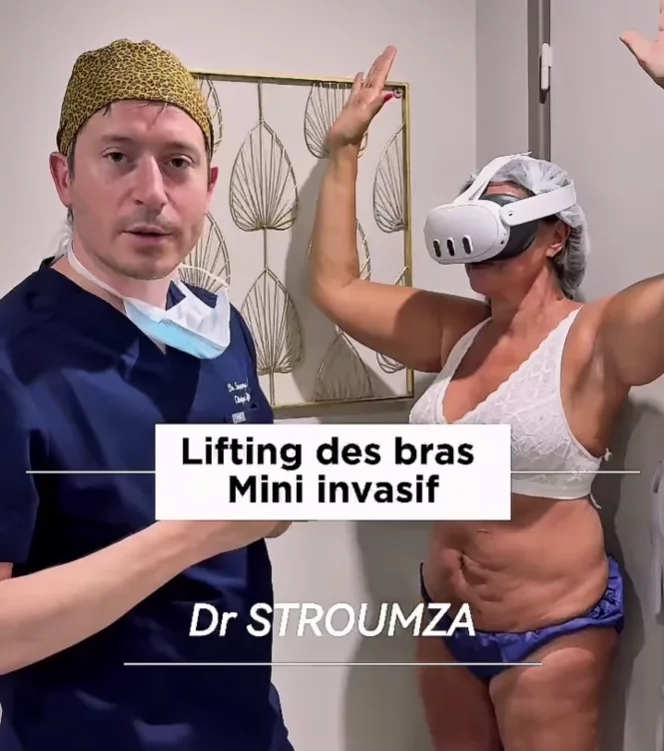
Arm lift: with or without extensive scarring?
Sagging of the inner arms is common after weight loss or with the gradual decrease in skin elasticity. The strategy depends once again on the respective proportions of fat and skin. When excess fat predominates with limited sagging, a minimally invasive approach combining liposuction and, in certain cases, tissue retraction can be considered.
When there is a significant amount of excess skin, a brachioplasty or arm lift allows the excess skin to be removed directly, at the cost of a scar whose position and length depend on the extent of the sagging.
Thigh lift
Thighplasty , or a thigh lift, primarily addresses excess skin in this area. Depending on its extent, the scar may be limited to the groin crease or extend vertically along the inner thigh. Liposuction may be performed in conjunction with the procedure when excess fat accompanies skin laxity.
Lipedema: a different problem from localized fat
Lipedema should not be confused with simple cosmetic excess fat. It corresponds to a chronic and disproportionate accumulation of fat, primarily affecting the lower limbs and sometimes the arms. This presentation may be accompanied by tissue tenderness and a tendency to bruise easily.
Its management therefore requires a specific assessment and should not be confused with liposuction performed to reshape an isolated fat deposit. Learn more about lipedema.
Can fat removed by liposuction be reused?
Yes, in certain cases. The harvested fat can be processed and then reinjected: this is called lipofilling or autologous fat grafting. This technique allows us to consider not only volume reduction but also the redistribution of body volume. Depending on the specific indication, it can be used, for example, on the buttocks or hips. Some of the transferred volume is reabsorbed in the months following the procedure; the final result therefore depends on the graft's survival.
Two clinical cases of body contouring
Clinical case 1 — 360° high-definition liposuction. A 30-year-old patient underwent circumferential liposuction of the abdomen with bipolar radiofrequency. Before/12-month result.
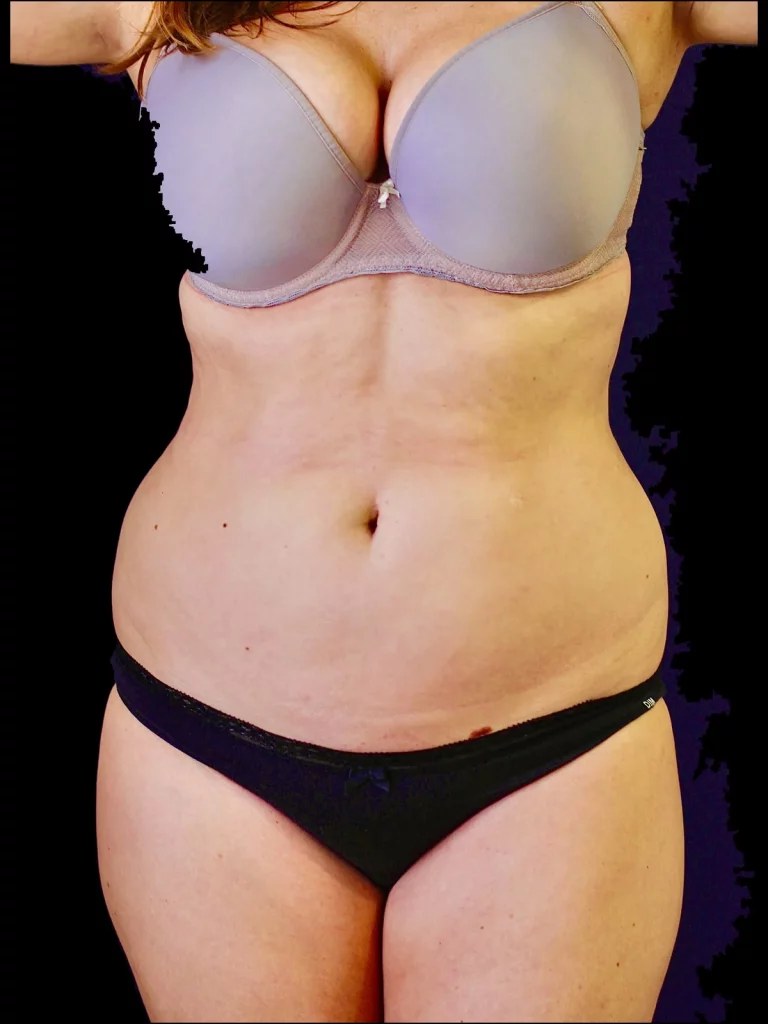
Before
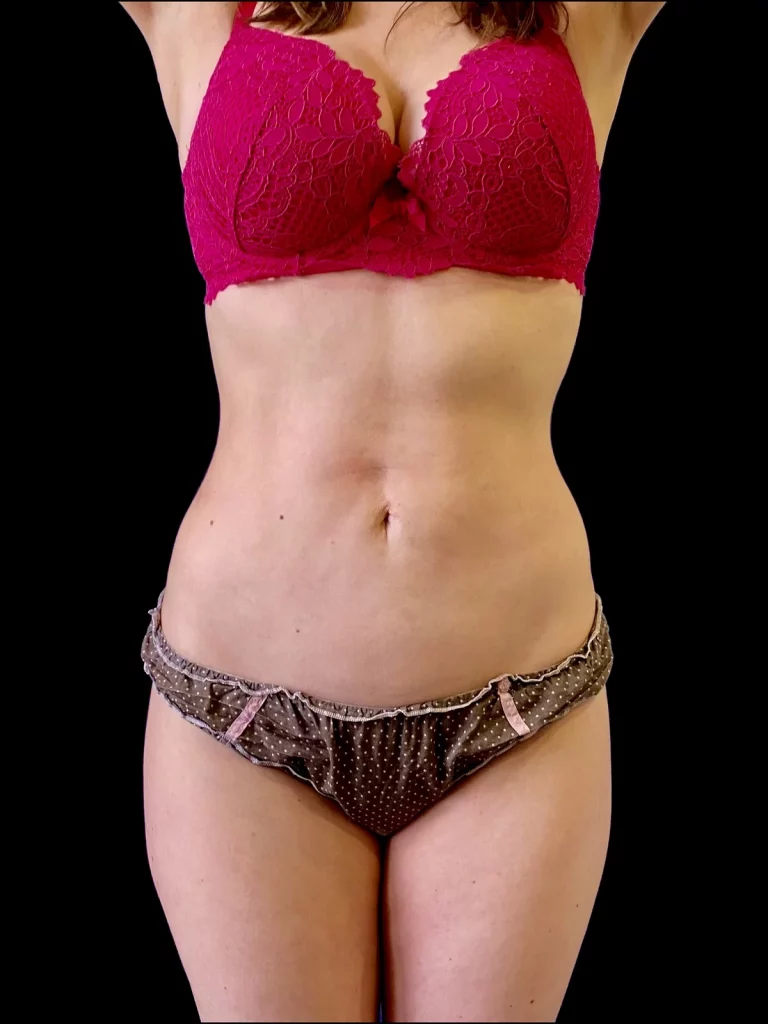
After 12 months
See also the five clinical cases presented on the page "High-definition abdominal liposuction".
Clinical case 2 — multi-zone body contouring and lipofilling. A 38-year-old patient underwent liposuction of the abdomen, thighs, and arms combined with lipofilling of the buttocks and hips and radiofrequency ablation. Before/12-month result.
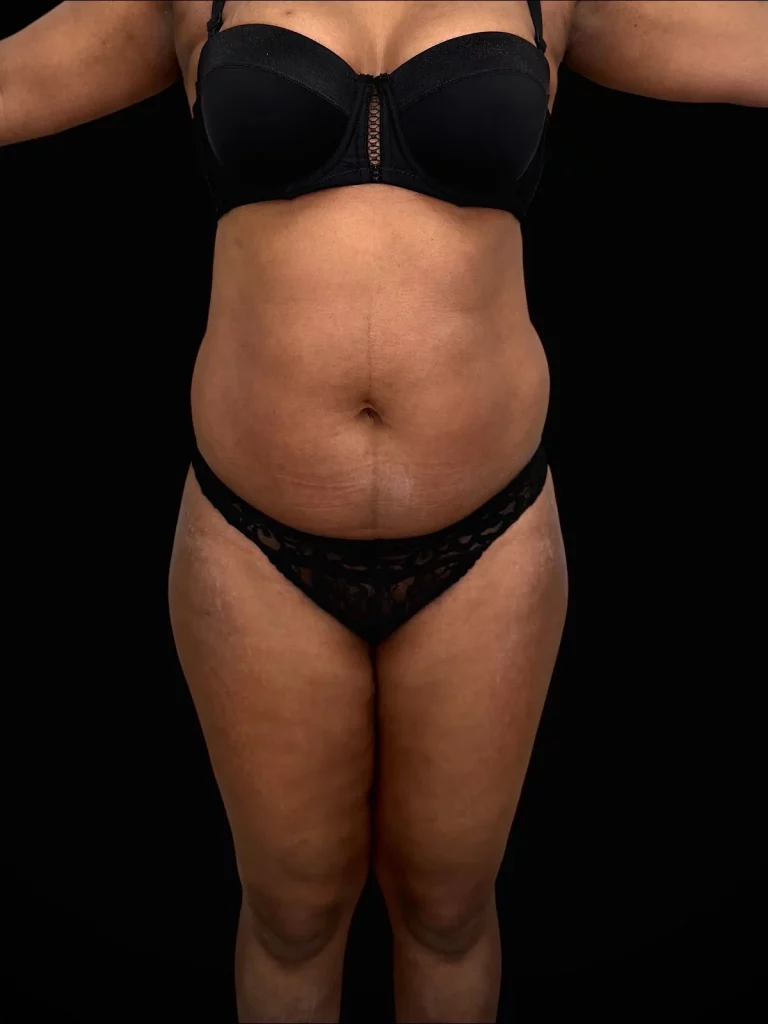
Before
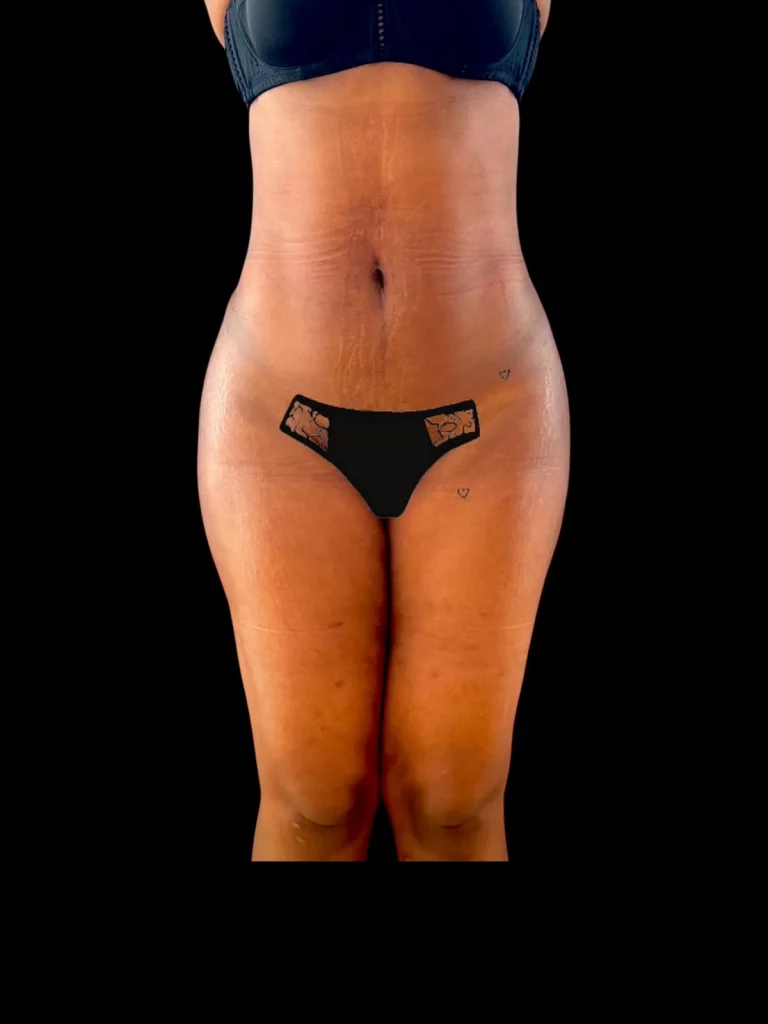
After 12 months
This case illustrates the logic of a global body contouring: reducing certain volumes and strengthening others in order to work on body proportions as a whole.
Photographs from the practice of Dr. Nathaniel Stroumza-Escoffier, published with the patients' consent. Each result is individual and cannot be guaranteed.
Abdominoplasty: CCAM codes and health insurance tariff bases in 2026
The Common Classification of Medical Procedures (CCAM) distinguishes several abdominal dermolipectomies according to the procedures actually performed: umbilical transposition, diastasis recti closure, combined abdominal liposuction, or circumferential dermolipectomy. In the CCAM, activity 1 corresponds to the surgical procedure and activity 4 to the associated anesthetic procedure. The amounts below are standard CCAM 2026 fee bases and not a guarantee of individual reimbursement.
| CCAM code | Simplified wording | Activity 1 — Surgery | Activity 4 — Anesthesia |
|---|---|---|---|
| QBFA001 | Dermolipectomy with umbilical transposition + diastasis closure | 361,37 € | 164,40 € |
| QBFA003 | Total circumferential abdominal dermolipectomy / body lift | 441,92 € | 157,49 € |
| QBFA005 | Dermolipectomy with umbilical transposition | 311,86 € | 153,26 € |
| QBFA006 | Without umbilical transposition + diastasis closure | 318,51 € | 129,46 € |
| QBFA008 | Umbilical transposition + abdominal liposuction | 348,07 € | 162,48 € |
| QBFA010 | Without transposition + liposuction + diastasis closure | 366,54 € | 133,68 € |
| QBFA012 | Umbilical transposition + liposuction + diastasis repair | 404,97 € | 172,08 € |
Example: QBFA001. QBFA001 corresponds to an abdominal dermolipectomy with umbilical transposition and closure of a diastasis recti. The CCAM 2026 fee schedule presented here is €361,37 for the surgical procedure and €164,40 for the anesthetic procedure, according to the applicable fee schedule.
Abdominoplasty with liposuction and diastasis repair. When the procedure combines umbilical transposition, abdominal liposuction, and diastasis repair, the corresponding code is QBFA012. The base fee shown is €404,97 for the surgical procedure and €172,08 for the anesthetic procedure.
Bodylift: QBFA003. Total circular abdominal dermolipectomy corresponds to code QBFA003. The base price shown is €441,92 for the surgical activity and €157,49 for the anesthetic activity.
In what cases can an abdominoplasty be covered by insurance?
Cosmetic surgery is not covered by French National Health Insurance. However, certain abdominal dermolipectomies may be considered reconstructive surgery when they meet the medical and administrative criteria of the French Classification of Medical Procedures (CCAM). For several of these procedures, the reconstructive indication is based in particular on significant damage to the anterior abdominal wall with an abdominal apron partially covering the pubis, documented preoperatively, in the contexts defined by the nomenclature. Prior authorization is required when stipulated by the code.
Important note: pregnancy, diastasis recti, or weight loss alone are not sufficient to guarantee coverage. The applicable CCAM code depends on the procedures actually performed, and the decision regarding coverage depends on regulatory criteria and the individual situation.
Why talk about "CCAM base" rather than "CPAM reimbursement"?
The CCAM amount is a standard fee schedule. The amount actually covered depends in particular on the code used, the eligibility of the procedure for reimbursement, the practitioner's agreement status, and the insured's situation. Any excess fees do not correspond to the base amount reimbursed by the national health insurance; their potential coverage depends in particular on the supplemental health insurance policy.
Dermolipectomy of the limbs: arms and thighs
For reconstructive dermolipectomies of the limbs, particularly in certain contexts following significant weight loss, code QZFA014 may be applicable depending on the indication. The 2026 tariff base presented is €292,64 for surgical activity and €126,71 for anesthetic activity.
CCAM rates verified for the editorial version of September 2026. Conventional rates and coverage rules are subject to change; the CCAM and Health Insurance remain the references to determine the situation applicable to each patient.
Is it necessary to have reached one's ideal weight before undergoing body contouring surgery?
It is not necessary to arbitrarily seek an "ideal weight," but it is preferable to have reached a relatively stable weight that is compatible with the planned procedure. Significant weight fluctuations after the procedure can alter the outcome. Weight gain increases the volume of remaining fat cells in both treated and untreated areas. Conversely, significant weight loss can reveal or accentuate skin laxity.
After bariatric surgery or major weight loss, the timing of the intervention is therefore determined individually based in particular on weight stability and nutritional status.
What happens during a body contouring surgery consultation?
The consultation allows for a personalized anatomical analysis. This includes examining the location and distribution of fat, skin elasticity and laxity, body proportions, and, when relevant, the tone of the abdominal muscles. Standardized medical photographs may be taken to document the pre-operative situation.
This consultation then allows us to determine whether the problem is best addressed by liposuction, high-definition liposuction, a skin tightening technique, lipofilling, dermolipectomy, or a combination of several techniques. When it involves cosmetic surgery, a detailed estimate is provided, and the applicable legal reflection period is observed.
Duration, recovery and outcome
The after-effects vary considerably depending on whether it is a limited liposuction or surgery with skin resection.
| Parameter | Order of magnitude from the source page |
|---|---|
| Procedure time — HD liposuction | 90 minutes to 3 hours depending on the extent and associated procedures |
| Hospitalisation | Outpatient or overnight depending on the extent of the treatment |
| Cessation of activity | Approximately 5 to 10 days depending on the profession and the extent of the procedure |
| Evolution of the result | Intermediate image at 6-8 weeks; final result between 6 and 12 months |
| Body lift — compression | 4 to 6 week girdle |
The swelling gradually decreases. The appearance observed after a few weeks is not the final result: the evolution of the tissues and skin retraction continues for several months.
Body contouring surgery procedures performed in Paris
Liposuccion
Surgical treatment of localized subcutaneous fat deposits in the abdomen, hips, waist, back, thighs, knees or arms.
High-definition abdominal liposuction
Abdominal and waist remodeling designed to better reveal anatomical contours in selected patients.
Abdominal etching
Selective liposculpture designed to accentuate the anatomical definition of the abdominal muscles.
Tummy tuck
Treatment of excess abdominal skin, with correction of the muscular wall where indicated.
Bodylift
Treatment of excess circumferential skin, particularly after massive weight loss.
Brachioplasty — arm lift
Treatment of sagging of the inner arms.
Thigh lift
Treatment of excess skin on the inner thighs.
Lipedema
Evaluation and specific management of disproportionate chronic fat accumulation.
Male silhouette
Liposculpture and body contouring surgery adapted to male anatomical particularities.
Body contouring surgery after GLP-1
Weight loss under GLP-1, skin laxity, weight stability, choice between liposuction and skin resection.
Body contouring
360° liposuction, high definition, radiofrequency, lipofilling and overall remodeling.
Minimally invasive body contouring surgery
Fat and moderate skin laxity, radiofrequency, limitations and difference with dermolipectomy.
Body contouring surgery prices in Paris
The cost of body contouring surgery depends on the area treated, the extent of the procedure, the techniques used, the type of anesthesia, and the hospital stay. The amounts below are indicative prices. A personalized quote will be provided after a clinical examination.
| Intervention | Indicative price |
|---|---|
| Liposuction | From 2 € |
| Tummy tuck | From 4 € |
| Mini-abdominoplasty | From 3 € |
| Arm lift | From 4 € |
| Thigh lift | From 5 € |
| Bodylift | From 6 € |
| Calf lipofilling | From 4 € |
| Calf prostheses | From 4 € |
FAQ — Body contouring surgery
What is the difference between liposuction and abdominoplasty?
Liposuction removes subcutaneous fat but not skin. Abdominoplasty, on the other hand, removes excess abdominal skin and can be combined, when indicated, with correction of the abdominal wall muscles. Toned skin with excess fat is therefore more suited to liposuction; significant excess skin is more indicative of an abdominoplasty.
Does liposuction make you lose weight?
No. Liposuction is a body contouring procedure, not a treatment for obesity. It removes localized fat deposits but is not intended to cause significant weight loss.
What surgery is needed to lose belly fat?
There is no single procedure. Localized subcutaneous fat may be treated with liposuction; excess skin with an abdominoplasty; diastasis recti requires an evaluation of the abdominal wall muscles. Visceral fat is not amenable to liposuction.
Liposuction or HD liposuction?
Traditional liposuction primarily aims to reduce excess fat and harmonize contours. High-definition liposuction also seeks to reveal more of the anatomical and muscular structure in selected patients.
Does the fat return after liposuction?
Fat cells removed by aspiration do not regenerate in the same way in the treated area. Weight gain is still possible, however, as the remaining fat cells can increase in size. Therefore, maintaining a stable weight is essential for preserving the results.
Can loose skin be treated without leaving a large scar?
It depends on the degree of skin laxity. Moderate laxity may, in some patients, allow for discussion of a minimally invasive approach combining liposuction and tissue retraction techniques. Significant excess skin generally requires surgical resection.
Can liposuction and abdominoplasty be combined?
Yes, depending on the indication. Abdominoplasty primarily treats excess abdominal skin, while liposuction can help to harmonize certain adjacent fatty areas.
What kind of scarring is there after an abdominoplasty?
The scar is usually horizontal and positioned as low as possible. Its length depends mainly on the amount of excess skin to be removed and the technique used.
How long does it take to see the results of liposuction?
An initial change is visible early on, but swelling initially masks the result. The process continues for several months, and the final result of high-definition liposuction can take 6 to 12 months, depending on the extent of the treatment.
Is it possible to have body contouring surgery after weight loss while taking GLP-1?
Yes, after evaluation. The procedure depends primarily on the amount of residual fat, skin quality, and the degree of skin laxity after weight loss. Weight stability is desirable before establishing the surgical strategy.
Can the removed fat be reinjected?
Yes, in certain cases. After preparation, the fat can be used for lipofilling to restore or modify certain body volumes, particularly in the hips or buttocks.
Can abdominoplasty be covered by insurance after pregnancy?
Pregnancy alone is not sufficient to qualify for coverage. Coverage depends on applicable medical and administrative criteria, including the presence of an abdominal apron meeting the established criteria and prior authorization.
Can diastasis recti be corrected by liposuction?
No. Diastasis recti refers to a separation of the rectus abdominis muscles. Liposuction acts on subcutaneous fat and therefore cannot bring the muscles together.
Is it possible to do sports after liposuction?
Walking is generally encouraged early on, but resuming sports depends on the extent of the movement and any associated procedures. Individualized instructions are provided during postoperative follow-up.
About Dr. Nathaniel Stroumza-Escoffier
Dr. Nathaniel Stroumza-Escoffier — plastic surgeon in Paris 8, qualified in plastic, reconstructive and aesthetic surgery. RPPS: 10100674943. Former assistant clinical head at the Hospitals of Paris at Tenon Hospital — AP-HP, he is a member of the scientific committee of SOFCEP.
His practice focuses particularly on minimally invasive surgery of the face, neck, body, and breasts. In the area of body contouring, his approach combines high-definition liposuction, body contouring, radiofrequency-assisted procedures, and tissue retraction techniques, with the aim of tailoring the intervention to the patient's individual anatomy. He teaches these techniques through workshops, masterclasses, live surgeries, and at national and international conferences.
Declaration of competing interests: Dr. Nathaniel Stroumza-Escoffier works as a consultant and trainer for InMode, a manufacturer of radiofrequency devices. This information is provided in the interest of transparency. Surgical indications are determined after clinical examination and based on the patient's anatomy and individual needs.
Office: 11 rue du Faubourg Saint-Honoré, 75008 Paris — Metro: Concorde / Madeleine.
Scientific and regulatory references
- Common classification of medical procedures (CCAM). Procedures QBFA001, QBFA003, QBFA005, QBFA006, QBFA008, QBFA010, QBFA012, QZFA014 — abdominal and limb dermolipectomies.
- Health insurance — prior agreement procedure.
- Article L.6322-2 of the Public Health Code — quote and reflection period in cosmetic surgery.
- Hoyos AE, Millard JA. VASER-Assisted High-Definition Liposculpture. Aesthetic Surgery Journal. 2007;27(6):594-604. PMID 19341688.
- Hoyos AE, Cala LC, Perez ME et al. High-Definition Liposculpture 18-Year Evolution: Patient Safety and Aesthetic Outcomes. Aesthetic Surgery Journal. 2023. PMID 36729973.
- Cala LC, Perez ME, Zannin Ferrero A et al. Effects of Bipolar Radiofrequency on Collagen Synthesis. Plastic and Reconstructive Surgery—Global Open. 2023;11(4):e4924.
Read also
- Liposuccion — treated areas, technique and limits.
- High-definition abdominal liposuction — 360°, radio frequency and five documented cases.
- Tummy tuck — excess abdominal skin, scarring and management.
- Bodylift — circumferential remodeling after massive weight loss.
- Abdominal etching — muscle definition and prerequisites.
- Lipedema — a chronic disease, not localized fat.
Page written under the responsibility and validated by Dr. Nathaniel Stroumza-Escoffier . Last updated: September 2026.