
Facial hyaluronic acid injections in Paris : collagen induction rather than volume addition
How aesthetic medicine shifted from filling to regeneration — and why the pursuit of naturalness has changed the way injections are performed
Written and validated by Dr Nathaniel Stroumza-Escoffier , qualified plastic surgeon in plastic, reconstructive and aesthetic surgery — RPPS 10100674943. Last medical review: August 2026.
Facial hyaluronic acid injections today encompass two distinct approaches: a regenerative approach, which improves skin quality by stimulating fibroblasts, and a volumizing approach, which restores genuinely lost volume. Dr. Nathaniel Stroumza-Escoffier, a plastic surgeon practicing at 11 rue du Faubourg Saint-Honoré in the 8th arrondissement of Paris, favors the former: less product, greater precision, and the goal of a result that goes unnoticed by those around you.

Hyaluronic acid injection in one minute ?
Nature of the act | Medical procedure. In France, reserved for doctors. |
Molecule | Hyaluronic acid, a polysaccharide naturally present in the dermis. |
Two logics | Regenerative (skin quality) · volumizing (filling). |
Regenerative mechanism | Mechanical stretching of fibroblasts, followed by a relaunch of collagen synthesis (neocollagenesis). |
Level of evidence | Synthesis of procollagens I and III demonstrated after injection of cross-linked hyaluronic acid (Wang 2007, Quan 2013). |
Zones — regenerative | Face, neck, décolletage, hands. |
Zones — volumizer | Temples, cheeks, dark circles, nasolabial folds, chin, jaw. |
Anesthesia | Anesthetic cream, or local anesthetic incorporated into the product. |
First way | A blunt cannula is used in approximately 75% of cases; a needle is used for targeted superficial injections. |
Session duration | 15 to 30 minutes depending on the area. |
Social exclusion | None. Bruising may occur for 3 to 7 days. |
Result | Immediate for filling · progressive over 4 to 12 weeks for regenerative. |
Duration of effect | Filling: 6 to 18 months depending on the product and the area. Regenerative: maintenance offered remotely. |
Reversibility | Yes — hyaluronidase helps to dissolve the product. |
Serious risk | Vascular occlusion. Rare, but serious. Higher risk areas: nose, glabella, forehead. |
Patient Care | None. Cosmetic procedure not covered by insurance. Quote provided during consultation. |
Practitioner experience | 15 years of experience in aesthetic medicine · 200 to 300 hyaluronic acid injections per year · more than 100 trained doctors. |
Consultation | Essential for verifying the indication. |
REMEMBER IN 30 SECONDS
|
SHORT ANSWER According to Dr. Nathaniel Stroumza-Escoffier, a plastic surgeon in Paris, hyaluronic acid now serves two distinct purposes that must be understood separately. The regenerative approach uses a fluid hyaluronic acid to stimulate fibroblasts and improve skin quality. The volumizing approach uses a more cross-linked product to restore volume that has actually been lost. The choice depends on what is lacking, not on a preference for a particular product. |
DEFINITION Hyaluronic acid : a molecule naturally present in the dermis, capable of retaining water. Crosslinking : degree of bonding between the product chains — the more crosslinked it is, the more it holds volume; the less it is, the more it diffuses and hydrates. Skinboosters : injections of lightly cross-linked hyaluronic acid intended to improve skin quality. Neocollagenesis : reactivation of collagen production by fibroblasts. Hyaluronidase : an injected enzyme that dissolves hyaluronic acid. |
Fifteen years ago, hyaluronic acid injections followed a simple logic: where volume was lacking, it was added. This approach produced sometimes spectacular results, but also the excesses we know all too well—over-plumped lips, artificial cheekbones, and frozen faces that betrayed the procedure. Aesthetic medicine learned from this period. In 2026, the demands have changed: less product, more precision, and above all, a different objective—no longer to fill, but to regenerate.
This article explains this shift, the biological mechanism that makes it possible, what the scientific literature actually demonstrates, and how all of this applies practically in the office. It's not a product catalog, but a philosophy of skin regeneration.
Hyaluronic acid: what has changed between 2010 and 2026?
The turning point can be summed up in one sentence: we've moved from filling to regeneration. Hyaluronic acid is no longer used primarily to add volume, but to trigger a biological response in the skin.
Three converging developments explain this change.
- The rejection of the artificial effect. Patients no longer want to "look injected." The dominant demand today is for a result that no one notices—a healthier appearance, not a transformation.
- Understanding the role of fibroblasts. We now know that hyaluronic acid does not simply fill a space: injected in a certain way, it stimulates skin cells that produce collagen.
- The rise of holistic approaches. We no longer treat an isolated wrinkle, but the quality of the skin as a whole — density, hydration, radiance, firmness.
This evolution does not render hyaluronic acid fillers obsolete: they still have specific indications, particularly for restoring genuinely lost volume. But they are no longer a cure-all. They are becoming one tool among others serving a broader objective.
What exactly does hyaluronic acid do in the skin?
TO REMEMBER Beyond its hydrating properties, injected hyaluronic acid can stimulate fibroblasts—the cells responsible for collagen production. Stretched and stimulated by the product, these fibroblasts restart collagen production, a phenomenon called neocollagenesis. It is this mechanism, and not simply the filling effect, that forms the basis of regenerative aesthetic medicine in 2026. |
To understand this shift, we need to look at what happens in the dermis. Skin owes its firmness to a network of collagen and elastin fibers, produced by cells called fibroblasts. With age, two phenomena combine: fibroblasts produce less collagen, and the existing fibers break down. These fibers normally anchor the fibroblasts and keep them taut. When they fragment, the cell shrinks, loses its mechanical tension, and slows its production. The skin thins, loses density, and sags.
Hyaluronic acid acts on this mechanism in two ways. The first is hydration: a molecule naturally present in the skin, it attracts and retains water, which plumps the dermis and improves elasticity. The second, more subtle, is cellular stimulation: by penetrating between the dermal fibers, the product mechanically stretches the fibroblasts. Once stretched, these fibroblasts become active again and restart collagen production—this is neocollagenesis. It is no longer the injected product that produces the result, but the skin's natural response that it triggers.
One important point to note: not all products have the same level of evidence
The mechanism of fibroblast stretching has been demonstrated in humans with cross-linked hyaluronic acids , meaning relatively dense ones—and not with the more fluid products. Skinboosters, which are less cross-linked, have a different level of evidence: available studies document a measurable improvement in hydration, elasticity, roughness, and wrinkle appearance after several sessions, without equivalent histological demonstration of procollagen synthesis.
The distinction deserves to be clearly stated, because it is often overlooked: claiming that a skinbooster "produces collagen" is an extrapolation; claiming that it measurably improves skin quality is documented. In practice, this doesn't change the indication—but it does change what can honestly be promised to a patient.
In short — According to Dr. Stroumza-Escoffier, hyaluronic acid works by hydrating and mechanically stretching fibroblasts, which stimulate collagen synthesis. This neocollagenesis is demonstrated with cross-linked products; skinboosters, for their part, have shown a measurable improvement in skin hydration and elasticity.
What does the scientific literature say?
Three results structure the current understanding: cross-linked hyaluronic acid induces measurable collagen synthesis in humans, this effect remains obtained even on very old skin, and skinbooster protocols improve skin parameters objectified by instrumentation.
Data | Result | Source |
|---|---|---|
Induction of neocollagenesis | Following intradermal injection of cross-linked hyaluronic acid, the expression of type I and III procollagens is increased at 4 and 13 weeks. The fibroblasts exhibit a mechanically stretched appearance. | Wang F et al., Arch Dermatol, 2007 — PMID 17309996 |
The effect is maintained on aged skin. | In subjects over 70 years of age, the injection of cross-linked hyaluronic acid restores the production of type I collagen, with elongation of fibroblasts and activation of the TGF-beta pathway. | Quan T et al., J Invest Dermatol, 2013 — PMID 23096713 |
Skinboosters and skin quality | Protocol of 3 sessions at 2-week intervals: Lemperle wrinkle score reduced by approximately 40% at 8 weeks, benefit maintained at around 33% at 12 weeks. Significant improvement in hydration, elasticity, roughness, and pore size. | Lee JH et al., J Cosmet Dermatol, 2024 — PMID 37705328 |
Visual complications | 98 cases of visual disturbances after injection were recorded in the world literature up to 2015, then 48 additional cases between 2015 and 2018. Areas most exposed in the recent period: nasal region 56,3%, glabella 27,1%, forehead 18,8%. | Beleznay K et al., Dermatol Surg 2015 — PMID 26356847; Aesthet Surg J 2019 — PMID 30805636 |
Frequency of serious events | Severe adverse events remain infrequent with currently marketed products. Imperfect aesthetic results are far more common than serious complications, and are largely preventable through training. | Rzany B, DeLorenzi C, Plast Reconstruction Surg, 2015 — PMID 26441099 |
These data come from studies conducted on limited sample sizes and with specific products: they establish a mechanism and a trend, not a predictable individual outcome. Full references at the end of the article.
In short — The indexed literature establishes that cross-linked hyaluronic acid injected into the dermis induces the synthesis of type I and III procollagens, even in very aged skin, and that skinbooster protocols improve measured skin parameters. It also notes that vascular complications, which are rare, are concentrated on the nose and glabella.
How can we improve overall skin quality?
In the office, regeneration does not begin with the choice of a product but with an assessment of skin quality — complexion, density, hydration, elasticity — to which personalized protocols respond.
Several complementary tools contribute to this.
Vitamin therapy
It involves deeply nourishing the skin with vitamins and antioxidants to revive radiance and strengthen the skin's defenses against external aggressors. It aims for luminosity and vitality rather than correcting a specific wrinkle.
Skinboosters
Skinboosters use a very fluid, lightly cross-linked, non-volumizing hyaluronic acid, injected superficially into the dermis. It does not alter facial volume or expression; instead, it deeply hydrates, plumps the skin, and stimulates fibroblasts. The result is smoother, denser skin with a refined texture—without any puffiness. It is particularly suitable for the face, neck, décolleté, and hands, and is performed in three sessions spaced three to four weeks apart, with optional monthly maintenance.
Collagen inducers
These products are designed not to fill cavities, but to trigger collagen production by fibroblasts. Unlike fillers that add volume, they elicit a biological response that firms the skin and improves its texture over time. The result is gradual—developing over several weeks to months—but it is long-lasting because it relies on collagen produced by the skin itself. The choice of molecule and treatment protocol is made during a consultation, depending on the individual's skin and desired outcome.
How is the protocol chosen?
The choice is based on what the skin shows, not on a preference for a product: dehydration, alteration of skin quality or sagging do not call for the same response.
What the skin shows | Preferred response | Rhythm |
|---|---|---|
Dehydrated skin | Skinboosters | 3 sessions spaced 3 to 4 weeks apart, or monthly maintenance |
Impaired skin quality: dull complexion, uneven texture | Vitamin therapy | 3 sessions spaced 3 to 4 weeks apart, or monthly maintenance |
Skin laxity or loosening | Biostimulators / collagen inducers | One session per year; two per year if the sagging is significant. |
Lost Volume | Volumizing hyaluronic acid | Single session, possible touch-up in 2–4 weeks |
The LIFT UP protocol
When several of these parameters are combined—which is most often the case—Dr. Stroumza-Escoffier combines the approaches within a protocol he named LIFT UP, structured in four steps: a volumizing hyaluronic acid to restore lost support, a hydration booster for skin quality, a biostimulator for firmness, and botulinum toxin for expression lines. Each step corresponds to a distinct anatomical plan; it is their combination, and not increasing the doses, that produces the result.
No brand is mentioned here intentionally: the choice of a product stems from the analysis of the skin, never the other way around.
Criterion | Regenerative hyaluronic acid | Volumizing hyaluronic acid |
|---|---|---|
The goal | Skin quality: density, hydration, radiance | Restore lost volume or correct a wrinkle |
Product | Fluid, lightly crosslinked (skinboosters) | More cross-linked, holds volume |
Mechanism | Hydration and stimulation of fibroblasts | Filling the deficiency, with associated neocollagenesis |
Typical areas | Face, neck, décolletage, hands | Temples, cheeks, dark circles, nasolabial folds, chin |
Result | Progressive, over several sessions | Visible from the session |
Reversibility | hyaluronidase | hyaluronidase |
The two approaches are not mutually exclusive and are often combined. The choice depends on what is lacking—skin quality or volume—and not on a product preference. The decision is made during a consultation.
Data from Dr. Stroumza-Escoffier's practice
Dr. Nathaniel Stroumza-Escoffier has practiced aesthetic medicine for fifteen years and performs between 200 and 300 hyaluronic acid injections per year. For several years now, the distribution of his activity has shifted towards regenerative treatments.
Parameter | Data | What this means for the patient |
|---|---|---|
Decline in practice | 15 years in aesthetic medicine | A practice predating the regenerative turn, which allows us to compare the two eras. |
Annual volume | 200 to 300 hyaluronic acid injections per year | Regular practice is a prerequisite for anatomical mastery and the management of complications. |
Breakdown of activity | 60% regenerative · 40% volumizing | The majority of patients are treated for skin quality, not to add volume. |
First way | Foam cannula in approximately 75% of cases | Less risk of bruising and vascular trauma, particularly to the lips, under-eye circles, temples and during non-surgical rhinoplasty. |
Transmission | More than 100 trained doctors — 80 cosmetic doctors and 30 surgeons, in France and internationally | A practice that is taught, and therefore subject to criticism from peers. A list of names is kept. |
This data describes the conditions under which it was carried out and the volume of activity. It does not prejudge any individual results.
In short — Dr. Stroumza-Escoffier has been practicing aesthetic medicine for fifteen years and performs 200 to 300 hyaluronic acid injections annually, 60% of which are for regenerative purposes. A blunt cannula is used in approximately 75% of cases. More than 100 physicians have been trained in these techniques, both in France and internationally.
Injections or radiofrequency: what are the differences?
Injections and radiofrequency treatments both aim for the same goal—stimulating collagen production—but through two different mechanisms. Injections mechanically stretch fibroblasts; radiofrequency heats the dermis in a controlled manner. The two approaches complement each other rather than replacing one another.
Skin regeneration isn't solely achieved through injections. Dr. Stroumza-Escoffier combines injections with Quantum radiofrequency , which pursues the same goal via a different pathway. While injections mechanically stretch fibroblasts, radiofrequency induces neocollagenesis through controlled dermal heating—the same biological mechanism, but a different entry point. The two approaches complement each other: injections improve surface quality and hydration, while radiofrequency works deeper to enhance firmness.
For the neck and lower face, when more pronounced sagging justifies surgery but the goal is to minimize its impact, the SNEC Lift —a protocol developed in-house that combines a facelift with concealed scars and repositioning of deep structures—extends this same logic: achieving a natural result with the least visible intervention possible. An injection cannot correct established sagging; this is a limitation that must be clearly defined during the consultation.
Criterion | Hyaluronic acid injections | Radio frequency |
|---|---|---|
Mechanism | Mechanical stretching of fibroblasts | Controlled heating of the dermis |
Main target | Surface quality and hydration | Deep firmness |
Injected product | Yes | No |
Result | Progressive, maintained by sessions | Gradual, over several months |
Complementarity | Both pathways target the same neocollagenesis and are commonly associated |
|
Neither approach is superior in itself: they act on different levels and are frequently combined within the same protocol.

Figure 1 — The two approaches to using hyaluronic acid. On the left, a fluid product diffuses into the superficial dermis: it stretches and activates fibroblasts, which produce new collagen fibers. On the right, a denser product forms a localized deposit in the deep dermis, restoring volume. This is an educational diagram for explanatory purposes only and is not based on medical imaging.
In what cases does hyaluronic acid filler still have its place?
Dermal fillers remain a suitable option for restoring genuinely lost volume—temples, cheeks, under-eye circles—correcting deep wrinkles, or harmonizing proportions. The difference compared to the practice of fifteen years ago lies in the intention and the amount used, not in the product itself.
Refocusing the practice on regeneration does not mean abandoning fillers. Volumizing hyaluronic acid remains indicated in several situations, provided it is used judiciously:
- The restoration of a truly lost volume — hollowing of the temples, cheeks or under-eye circles, where aging has melted away the fatty compartments;
- The fine correction of a marked wrinkle — nasolabial fold, marionette line;
- The harmonization of proportions — a chin, a jaw — in a logic of facial balance rather than transformation;
- Medical rhinoplasty — Non-surgical correction of minor nasal irregularities. The nasal region is the primary area at risk of visual complications in published series: this indication remains reserved for specific cases and an experienced practitioner, after specific information has been provided to the patient regarding this risk.
The volumes used by the firm provide a measure of this evolution:
Areas | Usual volume per session |
|---|---|
Dark circles | 0,25 to 0,5 mL (one quarter to one half syringe) |
Lips, nasolabial folds, marionette lines | 0,5 to 1 mL (half to one syringe) |
Cheekbones, jawline, chin | 1 to 2 mL (one to two syringes) |
The difference with the practice of fifteen years ago is not in the product, but in the intention and the dose: we inject less, more precisely, with the objective of an imperceptible result.
Clinical cases: before and after results
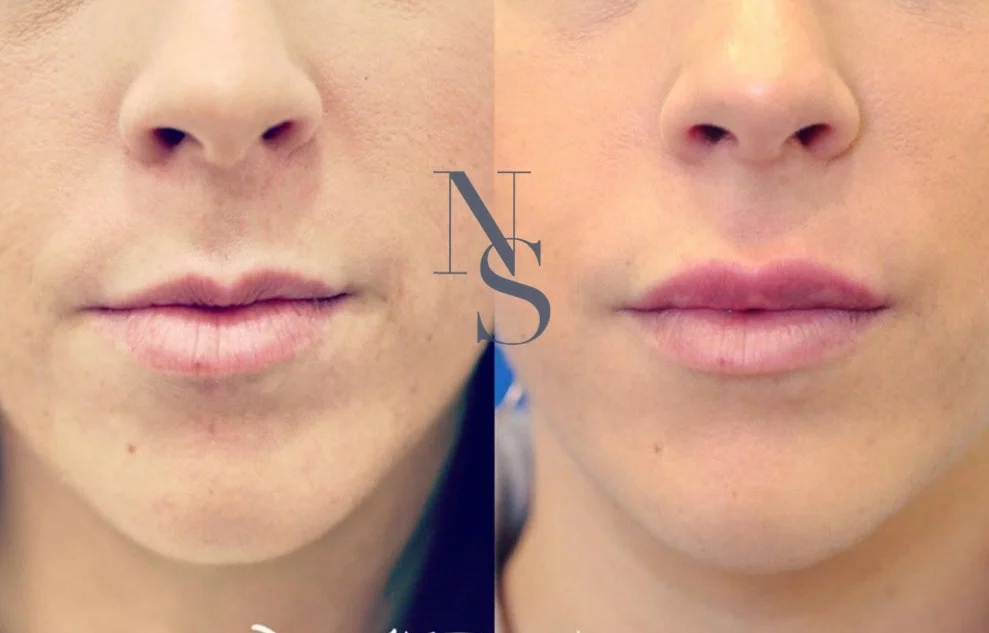
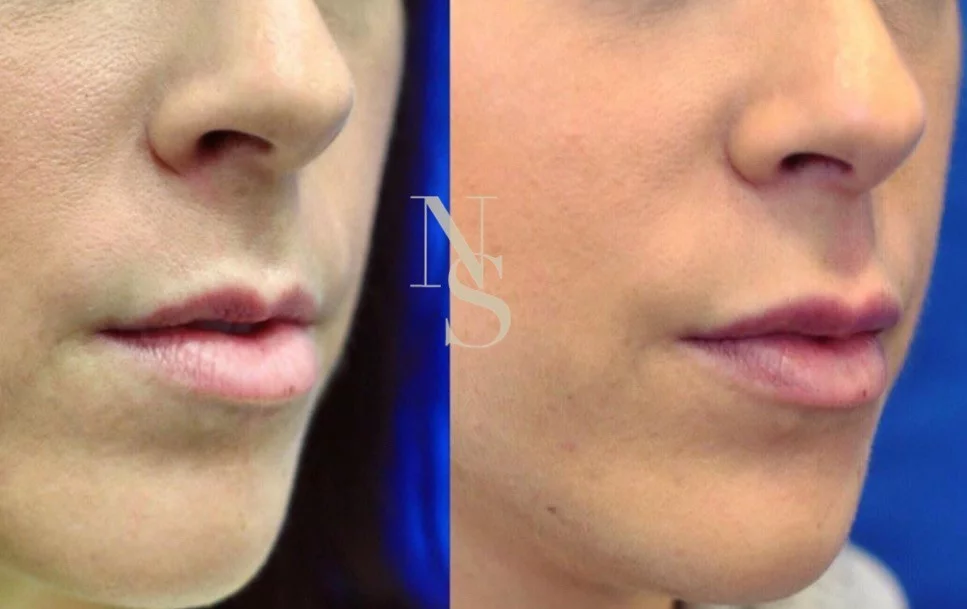
The photographs below document volumizing hyaluronic acid injections performed at Dr. Nathaniel Stroumza-Escoffier's office: six cases of lip augmentation—three frontal views, two three-quarter views, and one profile view—followed by one case of non-surgical rhinoplasty. The usual volume for lips is 0,5 to 1 mL per session, injected using a cannula.
Method and limitations of these photographs The images underwent no local retouching: no smoothing, no shape modification, no edge correction. Three strictly global and identical treatments were applied to the before and after to make the two images comparable: framing harmonization, scaling to the same size, and neutralization of white balance and background. These limitations must be understood: lighting, head position, and expression are not exactly the same from one photograph to another. An individual result cannot be inferred from these images: it depends on each person's anatomy, tissue quality, and desired outcome. The orbital region in Figure 8 is blurred to preserve anonymity. Photographs published with the patients' written consent. |
Lip augmentation with volumizing hyaluronic acid

Figure 3 — Front view. Restoration of upper lip volume and definition of Cupid's bow.

Figure 4 — Close-up front view. Rebalancing of the ratio between the upper and lower lip, without widening of the mouth.

Figure 5 — Three-quarter view. Restoration of the volume and the vermilion line.

Figure 6 — Three-quarter view. Vermilion projection and philtrum support.

Figure 7 — Profile view. Anterior projection of both lips and correction of the inversion of the upper lip.
Medical rhinoplasty
Non-surgical rhinoplasty corrects minor irregularities of the nasal bridge and tip position using very small deposits of hyaluronic acid, placed in contact with the bone and cartilage. It does not reduce the size of the nose; it rebalances its shape. Since the nasal region is the area most at risk of vascular complications in published studies, this procedure remains reserved for specific cases, after receiving specific information.

Figure 8 — Profile view. Non-surgical rhinoplasty: correction of the nasal hump and slight tip rotation. The orbital region is blurred at the patient's request; the bridge and tip of the nose, the only areas affected by the procedure, remain fully visible. The head positions are not exactly identical between the two photographs: three-quarter view before, true profile after. This difference is noted for methodological transparency.
What has disappeared from modern practice?
Aesthetic medicine in 2026 has also been built by subtraction: some practices from the 2010s have been abandoned.
- Systematic overcorrection — the reflex to “fill it in well” so that the result is visible, the source of artificial faces;
- The excessive lip-plumping effect, which has long been a marker of intervention;
- The logic of the single product — treat an entire face with the same hyaluronic acid, without distinguishing between hydration, regeneration and filling.
What replaces them is not a technique, but a requirement: that of naturalness. A good result today is one that those around you attribute to fitness, rest, or a healthy lifestyle — not to an injection.
Is hyaluronic acid safe and reversible?
Injectable hyaluronic acid is reversible: hyaluronidase, an enzyme, dissolves it in case of an undesired result or complication. The injection is a medical procedure and can only be performed by a doctor.
Hyaluronic acid is one of the best-tolerated products in aesthetic medicine, primarily because it is absorbable and reversible. It is gradually broken down by enzymes naturally present in the skin, called hyaluronidases. In the event of an undesired result or a complication, an injection of hyaluronidase can dissolve the product—a possibility not available with all injectables and a significant safety feature.
This does not mean that the procedure is harmless. Common side effects—redness, bruising, swelling—are temporary and disappear within a few days.
What are the risks and how are they prevented?
The most feared complication is vascular occlusion: the accidental injection of the product into a blood vessel, which can compromise the blood supply to an area of skin and, in exceptional cases, vision. While rare, it is documented. In the global literature review by Beleznay et al., 98 cases of visual disturbances were identified up to 2015, followed by an additional 48 cases between 2015 and 2018. During this recent period, the most affected areas were the nasal region (56,3% of cases), the glabella (27,1%), and the forehead (18,8%).
These figures are not intended to cause alarm: compared to the number of injections administered worldwide, they describe an exceptional event. They do, however, indicate where the danger lies, and what prevents it:
- A precise knowledge of the vascular anatomy of the face, and the identification of at-risk areas before any procedure;
- The use of blunt cannulas rather than needles in many indications, which reduces the risk of vascular trauma without eliminating it;
- Slow injection, in small volume, with aspiration and continuous mobilization of the device;
- Immediate availability of hyaluronidase in the office and knowledge of the emergency treatment protocol;
- Prior information for the patient on the signs that should prompt immediate consultation: intense and persistent pain, whitening of the skin, visual disturbances.
It is this combination of factors—and not the product itself—that determines the safety of the procedure. This also explains why these injections cannot be administered by a non-medical practitioner.
In short — According to Dr. Stroumza-Escoffier, the safety of a hyaluronic acid injection depends less on the product than on the conditions of its execution: mastery of vascular anatomy, cannula rather than needle where possible, slow injection and small volume, hyaluronidase available in the office, and informing the patient about warning signs.
IMPORTANT INFORMATION: WHO CAN INJECT IN FRANCE? In France, only doctors are authorized to perform hyaluronic acid injections for aesthetic purposes, in accordance with the ANSM guidelines of April 2022. Since decree no. 2024-490 of May 29, 2024, which came into force on July 1, 2024 (articles R.5211-72 and R.5211-73 of the Public Health Code), devices and injectable products containing hyaluronic acid can only be made available to doctors and dentists for their professional use, and to their patients on prescription. Using any other person — beautician, non-medical provider, home injection outside of a medical setting — is illegal and presents a major health risk. |
What happens during an injection session?
It all starts with a facial diagnostic consultation. The injection itself lasts from fifteen to thirty minutes depending on the areas, with no downtime.
The consultation assesses skin quality, volume, and expectations, resulting in a personalized treatment plan and cost estimate. An anesthetic cream or a product containing a local anesthetic enhances comfort. Fine cannulas, preferred over needles in many cases, reduce the risk of bruising and vascular trauma.
The side effects are mild: possible redness, slight swelling, or bruising, which fade within three to seven days. For skinboosters and stimulators, the result is gradual—it appears and improves over four to twelve weeks, as the skin responds to the stimulation. A follow-up appointment is generally offered remotely to prolong the benefits.
It is advisable to avoid aspirin and non-prescription anti-inflammatory drugs in the week preceding the session, as these increase the risk of bruising. In the hours following the injection, it is recommended to avoid strenuous exercise, saunas, steam rooms, and direct sun exposure.
How much does a hyaluronic acid injection cost in Paris?
The price depends on the area treated, the product used, and the volume applied. These procedures are not covered by health insurance. A detailed estimate will be provided during your consultation.
Documents | Office fees |
|---|---|
Volumizing hyaluronic acid — 1 syringe | 400 € |
Volumizing hyaluronic acid — 2 syringes | 700 € |
Volumizing hyaluronic acid — 3 syringes | 900 € |
Dark circles treatment | 500 € |
Medical rhinoplasty | 600 € |
Skinbooster or vitamin therapy — 1 session | 300 € |
Skinbooster or vitamin therapy — 3-session protocol | 800 € |
Collagen inducer — 1 syringe | 500 € |
These prices correspond to the procedure performed in the office and do not include the initial consultation. Only the quote provided after the consultation is valid. Price should not be the deciding factor when choosing an injector; medical expertise and the ability to manage complications are.
Hyaluronic acid or botulinum toxin: which to choose?
The two products do not treat the same thing. Botulinum toxin works on expression lines by relaxing the muscle. Hyaluronic acid works on skin quality or to restore lost volume. They are complementary and often used together in the same treatment plan.
Criterion | Botulinum toxin | Hyaluronic acid |
|---|---|---|
Target | The muscle | The dermis and volumes |
Typical indication | Frown lines, forehead wrinkles, crow's feet | Skin quality, dark circles, temples, cheeks, wrinkles |
Action time limit | 3 to 15 days. | Immediate (filling) or progressive (regenerative) |
Duration | 4 to 6 months | 6 to 18 months for the filling |
Reversibility | No, but a temporary effect | Yes, by hyaluronidase |
Who is Dr. Nathaniel Stroumza-Escoffier?
Dr. Nathaniel Stroumza-Escoffier is a qualified plastic surgeon specializing in plastic, reconstructive and aesthetic surgery (RPPS 10100674943), located at 11 rue du Faubourg Saint-Honoré in the 8th arrondissement of Paris.
- Qualification. Plastic, reconstructive and aesthetic surgery — RPPS 10100674943, registered with the Medical Council.
- Hospital journey. Former assistant head of clinic at the Hospitals of Paris — Tenon hospital (AP-HP).
- Areas of expertise. Minimally invasive techniques for the face and neck, regenerative aesthetic medicine, radiofrequency, minimally invasive breast surgery.
- Learned society. Member of the scientific committee of SOFCEP (French Society of Aesthetic Plastic Surgeons).
- Education. More than 100 doctors trained — 80 cosmetic doctors and 30 surgeons — in injection techniques botulinum toxin, hyaluronic acid, biostimulators, skinboosters and vitamin therapy, in France and internationally. Presentations at specialist congresses (SOFCPRE, AMWC, IMCAS).
- Practice locations. Consultations and aesthetic medicine procedures at the office at 11 rue du Faubourg Saint-Honoré, Paris 8th. Surgical procedures at the Eiffel and Turin clinics.
DECLARATION OF CONFLICTS OF INTEREST Dr. Nathaniel Stroumza-Escoffier declares consulting relationships with InMode (radiofrequency devices), AbbVie/Allergan Aesthetics, and serves as a medical expert for Fillmed Laboratories. These relationships have no influence on the recommendations made during consultations, which are based on anatomical analysis and the patient's goals. No products are sold at the practice. |
Where to consult in Paris?
Facial aesthetic medicine consultations take place at the office at 11 rue du Faubourg Saint-Honoré, in the 8th arrondissement of Paris, in the immediate vicinity of the Madeleine and the Place de la Concorde.
The practice receives patients from Paris and the surrounding region, as well as patients from other parts of France and abroad. An initial consultation allows us to assess skin quality, define a treatment plan, and provide a cost estimate. Cosmetic procedures are performed at the practice; surgical interventions take place at a clinic.
A word from Dr. Stroumza-Escoffier
My conviction is that a beautiful result in aesthetic medicine is one that goes unseen. I don't seek to transform a face, but to restore its skin's quality—its density, radiance, and firmness. It's a shift in focus: we don't fill a void, we reactivate a natural process.
That's why I always consider skin quality before choosing a product. Depending on the skin, the solution will be vitamin therapy, skin boosters, collagen stimulators, Quantum radiofrequency, or a combination of these approaches. Hyaluronic acid fillers still have their place, but in the right dose and for the right indications—never just for the sake of "filling it in."
This demand for naturalness is not an aesthetic constraint, it is a philosophy: the best intervention is the one that respects the face as it is, and simply helps it to age better.
If you wish to improve the quality of your skin without changing its expression, I would be happy to welcome you for a consultation at the office at 11 rue du Faubourg Saint-Honoré.
— Dr. Nathaniel Stroumza-Escoffier
List of anatomical areas concerned
- Lips
- Temples
- Cheekbones
- Nose (Medical Rhinoplasty)
- Chin (Medical Genioplasty)
- Nasolabial folds
- Dark circles / Eyelids


FAQ
What is a facial hyaluronic acid injection?
It is a medical procedure consisting of injecting a hyaluronic acid gel into or under the skin. Hyaluronic acid is a molecule naturally present in the dermis. Depending on its cross-linking, it is used either to improve skin quality or to restore lost volume.
What is the difference between hyaluronic acid fillers and skinboosters?
Dermal fillers use a denser hyaluronic acid to restore volume (cheekbones, under-eye circles, wrinkles). Skinboosters use a very fluid, non-volumizing hyaluronic acid, injected superficially to hydrate the skin and stimulate fibroblasts—without altering volume or expression. One fills, the other revitalizes.
Does hyaluronic acid really stimulate collagen?
Yes, indirectly. By penetrating the dermis, it mechanically stretches the fibroblasts, which become active and restart collagen production—this is neocollagenesis. This mechanism has been demonstrated in humans, with an increase in type I and III procollagens at 4 and 13 weeks post-injection.
Do skinboosters produce collagen as a cross-linked product?
The level of evidence is not the same. Procollagen synthesis has been demonstrated with cross-linked hyaluronic acids. For skinboosters, the available studies show a measured improvement in hydration, elasticity, roughness, and wrinkle appearance, without equivalent histological evidence. This is an important distinction to be aware of.
Will the result be noticeable?
The goal of modern aesthetic medicine is precisely the opposite: a natural result that goes unnoticed by those around you. The aim is to improve your appearance, not to transform yourself. With skin boosters and activators, the effect is gradual and subtle: smoother, brighter skin, without any puffiness.
Is it painful?
The discomfort is moderate and brief. An anesthetic cream applied before the session, or a product containing a local anesthetic, makes the procedure well tolerated. Blunt cannulas are also less traumatic than needles.
How long does a session last?
From fifteen to thirty minutes depending on the number of areas treated, prior consultation not included.
Is there social exclusion?
No. Redness, slight swelling, or bruising are possible and will subside within three to seven days. It is advisable not to schedule an injection the day before an important event.
How long do the effects last?
It depends on the product and the objective. A hyaluronic acid filler is generally absorbed within 6 to 18 months, depending on the product, the area treated, and the individual's metabolism. Skin boosters and stimulators work more gradually, with maintenance treatments recommended remotely.
How many sessions are needed?
For targeted fillers, a single session is often sufficient, with a possible touch-up two to four weeks later. For skin boosters and vitamin therapy, the usual protocol is three sessions spaced three to four weeks apart, with monthly maintenance sessions possible. Collagen stimulators are administered once a year, or twice a year if sagging is significant. The protocol is determined during a consultation.
Is hyaluronic acid reversible?
Yes, that's one of its major advantages. It's naturally broken down by enzymes called hyaluronidases. If the result is undesirable, an injection of hyaluronidase can dissolve it—a safety feature not available with all injectables.
What are the risks ?
Common side effects (redness, bruising, swelling) are temporary. A rare but serious complication is vascular occlusion, resulting from accidental injection into a blood vessel. Therefore, these injections must be performed by a physician with expertise in facial vascular anatomy and the ability to treat this complication in an emergency.
What is a vascular occlusion and how is it prevented?
This involves the obstruction of a blood vessel by the injected product, which can compromise the blood supply to an area of skin and, in rare cases, vision. In published series, the most affected areas are the nose, the glabella (between the eyebrows), and the forehead. Prevention relies on knowledge of anatomy, the use of cannulas, slow injection of small volumes, and the immediate availability of hyaluronidase.
Needle or cannula: which is preferable?
The blunt cannula is preferred in many cases: its blunt shape allows it to move around blood vessels rather than passing through them, thus reducing the risk of bruising and vascular trauma, though not eliminating it entirely. In the office, the cannula is used in approximately 75% of cases, particularly for non-surgical rhinoplasty, lip augmentation, under-eye treatment, temple injections, and biostimulation procedures. The needle remains reserved for specific indications, notably for superficial and highly targeted injections.
Who can perform these injections in France?
Only physicians, in accordance with the ANSM (French National Agency for Medicines and Health Products Safety) guidelines of April 2022. Since Decree No. 2024-490 of May 29, 2024, which came into force on July 1, 2024, these products may only be supplied to physicians and dentists for their professional use, and to their patients with a prescription. Any injection by a non-physician, or at home outside of a medical setting, is illegal and dangerous.
What is the price of a hyaluronic acid injection in Paris?
At Dr. Stroumza-Escoffier's practice, a syringe of volumizing hyaluronic acid costs €400, treatment for dark circles costs €500, non-surgical rhinoplasty costs €600, a skinbooster or vitamin therapy session costs €300 (€800 for a three-session protocol), and a syringe of collagen inducer costs €500. These procedures are not covered by insurance. A detailed estimate is provided during the consultation.
Is it covered by Social Security?
No. Hyaluronic acid injections for cosmetic purposes are not covered by health insurance, nor by most supplementary health insurance plans.
Can hyaluronic acid and botulinum toxin be combined?
Yes, this is common and consistent: the two products do not treat the same thing. Botulinum toxin relaxes the muscles responsible for expression lines, while hyaluronic acid improves skin quality or restores volume. They can both be administered during the same session.
Does radiofrequency replace injections?
No, it complements them. Quantum radiofrequency stimulates collagen deep within the skin through heat, while injections address hydration and surface quality. Both aim for the same goal—to boost collagen production—through different pathways, and are often used together.
At what age can these injections be considered?
There is no set age. Regenerative treatments can be relevant as early as your thirties, when skin quality begins to change. Volumizing treatments address a more established loss of volume, often occurring later in life. The decision is made based on the examination, not on age.
Are there any contraindications?
Yes. Active skin infection at the injection site, unstable autoimmune disease, history of allergy to any of the components, and anticoagulant treatment should be discussed on a case-by-case basis. A history of recurrent cold sores warrants prophylaxis before lip injections. These points are reviewed during the consultation.
Is it safe to inject during pregnancy or breastfeeding?
No. As a precautionary measure, cosmetic injections are postponed until after pregnancy and breastfeeding, due to a lack of sufficient safety data in this situation.
When is one injection no longer sufficient?
Once skin laxity is established, no injection will correct it: adding product to sagging tissue only makes the face appear heavier. This then raises the question of surgery—for the neck and lower face, the SNEC Lift offers a minimally invasive solution. A consultation will determine the appropriate procedure.
What is the LIFT UP protocol?
This is the combined protocol developed by Dr. Stroumza-Escoffier for use when several parameters are present in the same patient. It comprises four steps: volumizing hyaluronic acid to restore lost support, a hydration booster for skin quality, a biostimulator for firmness, and botulinum toxin for expression lines. Each step corresponds to a distinct anatomical plan.
What is the practitioner's experience with injections?
Dr. Nathaniel Stroumza-Escoffier has practiced aesthetic medicine for fifteen years and performs between 200 and 300 hyaluronic acid injections per year, approximately 60% of which are for regenerative purposes. He has trained more than 100 doctors—80 aesthetic physicians and 30 surgeons—in France and internationally.
How to make an appointment in Paris?
Consultations take place at 11 rue du Faubourg Saint-Honoré, Paris 8th arrondissement. Appointments can be made via the website's contact page.
WARNING This article is for informational purposes only and does not replace a medical consultation. The choice of the most suitable protocol requires an individualized medical evaluation. As with any cosmetic procedure, the result cannot be guaranteed: it depends on the skin, age, and factors specific to each person. The figures cited come from published studies and do not guarantee an individual outcome. |

This article is for informational purposes only and does not replace a medical consultation.