Facelift and cervicofacial lift in Paris 8
Medically reviewed by Dr. Nathaniel Stroumza-Escoffier, plastic surgeon in Paris — RPPS 10100674943. Last review: August 2026.
A facelift, or rhytidectomy, corrects sagging facial and neck tissues by repositioning the deep structures that support them—the superficial musculoaponeurotic system, or SMAS—and not just the skin. When the procedure combines facial and neck treatment, it is called a cervicofacial lift. Several surgical techniques exist, and recent comparative data show that none is superior across all criteria: the choice is determined by clinical examination, not by preference.
A facelift in one minute |
|---|
In short, this procedure addresses sagging facial and neck tissues. It does not address volume loss or skin quality, which are treated with related procedures. Four main techniques are used. General anesthesia is most often administered. Social appearance returns to an acceptable level within two to three weeks, with the final result stabilizing over several months. A personalized quote is provided during the consultation, along with the legally mandated 15-day reflection period. |
|---|
Short answer: According to Dr. Nathaniel Stroumza-Escoffier, a plastic surgeon in Paris, the choice of technique is not a matter of academic preference but of clinical examination. Three elements determine it: the location of the skin laxity, the quality of the skin covering, and the presence or absence of associated volume loss. Published data shows that higher satisfaction can be accompanied by a higher complication rate: the two figures are related. |
|---|
Definition of a facelift (rhytidectomy) : a procedure involving the SMAS, the superficial musculoaponeurotic system, a fibromuscular layer located between the skin and the facial muscles. A cervicofacial lift is performed when the procedure combines treatment of the face and neck. |
|---|
what is a Facelift ?
A facelift, or rhytidectomy, corrects sagging facial and neck tissues by repositioning the supporting structures. The term cervicofacial lift refers to the combination of facial and neck treatments, a common approach because these two areas age together.
A clarification is necessary from the outset, as it is essential for understanding the procedure. A modern facelift is not a skin-pulling operation. Pulling on the skin produces an artificial, taut, and short-lived result, as the skin stretches again under the effect of gravity. Current techniques act on a deeper layer, the superficial musculoaponeurotic system, which envelops the facial muscles. It is the repositioning of this layer that produces the correction; the skin is then simply redraped without excessive tension.
Short answer: A facelift repositions the SMAS, the fibromuscular layer located under the skin, and then redrapes the skin without tension. It is not a skin traction technique, which has been abandoned because it produces a pulled appearance and short-lived results. A cervicofacial lift combines neck treatment in the same surgical procedure. |
|---|
Why does the face age, and what does a facelift actually correct?
Facial aging involves three distinct phenomena that a facelift does not address uniformly. Distinguishing between them is essential for a satisfactory result, and the main cause of disappointment when they are confused.
Tissue descent due to gravity and ligament laxity is addressed by a facelift. Volume loss , resulting from atrophy of the fatty tissues in the temples, cheeks, and periorbital region, is addressed by volume restoration. Alterations in skin quality , such as fine lines, age spots, and loss of elasticity, are addressed by surface treatments.
A facelift alone only corrects the first phenomenon, which explains the frequency of associated procedures.
The facelift treats | A facelift does not treat |
|---|---|
The loosening of facial and neck tissues. | The loss of volume, which falls under the category of lipofilling. |
The position of the deep planes (SMAS). | The quality and texture of the skin. |
Excess skin and the oval of the face. | Superficial expression lines. |
The platysmal bands, via cervical approach. | The subsequent aging process, which continues. |
Short answer: Facial aging involves three phenomena: tissue descent, volume loss, and deterioration of skin quality. A facelift only corrects the first. This is why it is frequently combined with lipofilling, which restores volume, and surface treatments, which improve the skin. |
|---|
For whom is a facelift recommended?
Signs that indicate a facelift
The classic indications include the blurring of the oval of the face with the appearance of jowls, the loss of definition of the mandibular line, the accentuation of nasolabial folds and marionette lines, the descent of cheek tissues and cervical relaxation with blurring of the submental angle.
The decision to operate is not based on chronological age but on the degree of skin laxity. Some patients experience premature aging, justifying intervention as early as their late forties, while others retain toned tissue well beyond that age. A recent trend is to intervene earlier, for moderate skin laxity, based on the argument that the correction is more limited and that the tissue is of better quality at the time of the procedure.
Signs that do not fall under this category
This distinction avoids predictable disappointment. A face hollowed by volume loss, without significant tissue sagging, will not improve with a facelift alone and may even appear more hollow after tightening. Fine lines around the mouth or eyes, solar elastosis, and age spots are treated with surface treatments. Isolated excess skin on the eyelids requires blepharoplasty. Moderate neck laxity without facial involvement may be addressed with an isolated cervical approach, without a periauricular scar, which is developed lower down.
Prerequisites
Smoking cessation is imperative, several weeks before and after the procedure. Active smoking compromises the blood supply to the detached skin flap and significantly increases the risk of skin necrosis, a dreaded complication in facelift surgery. A patient who refuses to quit smoking is generally rejected. Stable weight, controlled blood pressure, the absence of any uncorrected coagulation disorder, and a satisfactory general medical record are required. Expectations must be realistic, and this point will be verified during the consultation.
Short answer: A facelift is indicated when there is demonstrable tissue sagging: jowls, loss of jawline, and cervical laxity. It is not indicated for a hollow face, superficial fine lines, or age spots, which require other treatments. Smoking cessation is a requirement, not a recommendation. |
|---|
What are the facelift techniques, and which one should you choose?
Several technical families coexist. They are not distinguished by their intrinsic quality but by their suitability to a given relaxation profile, determined by clinical examination.
The SMAS lift
A benchmark in facelift surgery for several decades, this technique mobilizes the SMAS independently of the skin plane, through plication or resection, then redrapes the skin without tension. It provides natural and lasting results in moderate sagging of the mid and lower thirds of the face. It remains particularly well-suited to limited sagging, isolated treatment of the lower face and neck, and patients who prefer a faster recovery.
The deep plane lift
This technique dissects beneath the SMAS and selectively releases the facial ligaments, allowing the cutaneous-SMAS flap to be mobilized as a composite unit. It permits a more extensive repositioning of the middle third of the face and improved correction of the nasolabial folds. It is particularly indicated in the presence of thick or heavy tissues that respond poorly to simple SMAS suspension, as well as in advanced laxity of the middle third of the face. Its execution requires a detailed anatomical knowledge due to the proximity of the facial nerve branches. The principle was described by Hamra in 1990.
[FIGURE 1 — Dissection planes for the facelift. The SMAS facelift mobilizes the SMAS from a plane located above it; the deep plane dissects below the SMAS and releases the retaining ligaments, which allows the cutaneous-SMAS flap to be mobilized as a composite unit. Educational diagram for explanatory purposes, not derived from medical imaging.]
The management of the retaining ligaments constitutes precisely the dividing line between these families: techniques that release the ligaments allow for a wider mobilization, while those that preserve them offer lighter outcomes at the cost of more limited correction in severe laxities.
Limited access techniques
Grouped under the names mini-facelift or MACS-lift, these techniques use shorter incisions and limited dissection, with suspension using sutures. They are suitable for mild to moderate sagging of the lower third of the face, with a less invasive recovery and more discreet scarring. Their benefit on the middle third and the cervical region is less pronounced, and their durability is generally shorter than that of full facelifts.
The complete cervico-facial lift
This term refers to the combination of facial and cervical treatments in a single procedure, with access to the submental region when necessary to treat platysmal bands and subplatysmal fat. It is the gold standard procedure for advanced aging affecting multiple areas simultaneously.
The technique chosen by Dr. Stroumza-Escoffier
Dr. Nathaniel Stroumza-Escoffier performs deep plane dissection in advanced middle third laxity , a situation where releasing the retaining ligaments allows for a correction that SMAS suspension alone cannot achieve. SMAS treatment, in one form or another, is performed in all cases.
Three indications are not used in his practice, and it is helpful for a patient to know why:
- Isolated temporal lift. The benefit obtained on the average patient remains limited and is rarely sustained over time. When a patient requests this procedure, the discussion focuses on what they actually expect, and the response most often involves a different strategy.
- The concentric malar lift. The benefit-risk ratio is not considered acceptable due to the associated risk of ectropion and paresis. The same correction of the middle third is achieved through deep plane dissection, the risk profile of which is deemed preferable in this practice.
- Facelifts without SMAS treatment. A tightening procedure performed solely on the skin will result in renewed stretching: the durability is insufficient given the implications of surgical intervention. This is why the deeper layers are addressed in all cases.
These choices reflect a personal trade-off between expected benefit and accepted risk. Other teams make different trade-offs, which is part of the legitimate diversity of surgical practices.
Short answer: Dr. Nathaniel Stroumza-Escoffier, a plastic surgeon in Paris, performs deep plane dissection for advanced mid-face laxity and treats the SMAS in all cases. He does not recommend isolated temporal lifts, which have short-lived results, nor concentric malar lifts, due to the risk of ectropion and paresis, nor facelifts without SMAS treatment. |
|---|
Criterion | SMAS Lifting | Deep plane | Reduced access (mini-lift, MACS) |
|---|---|---|---|
Principle | It mobilizes the SMAS independently of the cutaneous plane. | It dissects beneath the SMAS and releases the retaining ligaments. | Shorter incisions, limited dissection, suspension by sutures. |
Recoil | A reference technique for several decades. | Described in 1990, well documented, recent comparative data. | The setback varies depending on the variant. |
Typical indication | Moderate to significant relaxation. | Relaxation of the middle third, thick tissues, seeking a composite result. | Early signs of relaxation, younger patients. |
Satisfaction published | 87,8% | 94,4% | Insufficient aggregate data. |
Published complications | 10,3% | 17,2% | Insufficient aggregate data. |
limitations | Lesser effect on the middle third. | More extensive dissection, higher complication rate. | It does not replace a full facelift in cases of advanced sagging. |
Short answer : Four surgical techniques exist: SMAS, deep plane, minimally invasive, and full facelift. None is inherently superior. Deep plane lifts have higher published satisfaction rates but also a higher complication rate. The choice depends on the anatomy: location of the sagging, tissue thickness, and skin quality. |
|---|
What do the published comparative data say?
The data below comes from international peer-reviewed journals indexed in PubMed. They cover techniques in general and allow patients to objectively assess the level of evidence.
Published data | Figure | Source |
|---|---|---|
Patient satisfaction, deep plane | 94,4% (95% CI 84,8–99,7) | Khoury et al., Aesthetic Plast Surg, 2025 — PMID 40801931 |
Patient satisfaction, SMAS | 87,8% (95% CI 84,3–91,3) | Khoury et al., 2025 |
Overall complication rate, deep plane | 17,2% | Khoury et al., 2025 |
Overall complication rate, SMAS | 10,3% (95% CI 6,20–14,4) | Khoury et al., 2025 |
Meta-analysis sample size | 21 studies, 2,896 patients, PRISMA methodology | Khoury et al., 2025 |
Hematoma rate | 3% (deep techniques) and 2% (SMAS), based on 47 studies and 10,766 patients | Vayalapra et al., Ann Plast Surg, 2025 — PMID 40600822 |
Nerve damage | Rates comparable between techniques; most often transient, permanent damage rare | Vayalapra et al., 2025 |
Tranexamic acid — minor hematoma | Risk reduction, OR 0,18 (95% CI 0,05–0,62) | Alenazi et al., Aesthet Surg J, 2024 — PMID 39141514 |
Tranexamic acid — major hematoma | No significant difference | Alenazi et al., 2024 |
A methodological clarification is necessary regarding the comparison of satisfaction and complications. The 2025 meta-analysis separately aggregates the deep plane and SMAS series: it is a single-arm meta-analysis, not a direct comparison between two randomized groups. The two rates therefore describe two distinct populations, operated on by different teams for different indications. The second systematic review, with a sample size four times larger, concludes that the safety profiles are comparable and emphasizes that only one study directly compared the two techniques.
These figures should be read together. Presenting the superior satisfaction of deep plane surgery without mentioning its higher complication rate would give a misleading picture and artificially steer the reader toward one technique over another. The authors conclude that both approaches provide lasting results with high satisfaction, and leave the choice to the patient.
Short answer: A meta-analysis published in 2025, encompassing 21 studies and 2,896 patients, reported a 94,4% satisfaction rate for deep plane anesthesia versus 87,8% for SMAS, but a complication rate of 17,2% versus 10,3%. A second review, involving 10,766 patients, concluded that the safety profiles were comparable. No technique is universally superior. |
|---|
What role for subdermal radiofrequency and associated procedures?
Subdermal radiofrequency
Subdermal radiofrequency, applied via a probe inserted under the skin, induces skin retraction and collagen synthesis. Its placement must be precisely calculated: it is an option for moderate cervical laxity without significant excess skin, where it can provide satisfactory tightening without periauricular scarring. It does not replace a cervicofacial lift in advanced cases , where mobilization of the deeper layers is necessary.
This approach is the subject of a dedicated protocol developed by Dr. Stroumza-Escoffier, the SNEC Lift (Scarless Non-Excisional Cervical Lift) , described in detail on the page dedicated to scarless neck lifting . The two strategies are not mutually exclusive: they address two different stages of the same process.
The associated gestures
Facial fat grafting restores lost volume, an area that a facelift cannot address. It is frequently combined with other procedures and often necessary to avoid a pulled appearance on a hollowed face. Blepharoplasty corrects excess skin and under-eye bags. Surface treatments, such as peels or lasers, improve skin quality and are performed concurrently or separately, depending on the protocol.
Short answer: Subdermal radiofrequency treats moderate cervical laxity without significant excess skin and without periauricular scarring. It is not a substitute for a cervicofacial lift in advanced cases. Lipofilling, blepharoplasty, and surface treatments are frequently combined with a facelift because they correct what the facelift cannot. |
|---|
How does the consultation proceed?
Cosmetic surgery requires a minimum of two consultations, separated by a mandatory 15-day reflection period between the delivery of the quote and the procedure. This period protects the patient's freedom of decision and cannot be shortened.
Facial aging analysis
The examination distinguishes the components involved: importance of tissue descent, evaluation of volume and areas of atrophy, assessment of skin quality, analysis of the neck with search for platysmal bands and evaluation of the cervico-mental angle, examination of the bony base and in particular of the chin projection.
This analysis determines the strategy. Predominant sagging suggests a facelift. Predominant volume loss suggests volume restoration, possibly in combination with other treatments. Predominant skin alteration suggests surface treatments. Most patients present a combination of these components, with one identifiable dominant feature.
A simple maneuver, manually tensioning the tissues in front of a mirror, allows the patient to visualize the expected effect of a repositioning and to understand what constitutes a facelift and what does not.
The balance sheet and documents
Standardized photographs are taken. A pre-operative assessment and an anesthesia consultation are prescribed, the latter taking place no later than forty-eight hours before the procedure. A detailed estimate specifying fees, anesthesia costs, and facility fees is mandatory, along with an information sheet and the informed consent form.
Pre-operative instructions
Smoking cessation is verified. Aspirin, anti-inflammatories, and certain dietary supplements that promote bleeding are discontinued according to the specified timeframe. Skin and hair preparation is prescribed. Plans for the return home and support during the first few days are made in advance.
In short, the consultation analyzes the distribution of skin laxity, skin quality, volume loss, and expressed expectations. It determines the appropriate technique and clarifies what a facelift cannot address. A quote is provided, along with the legally mandated 15-day reflection period, which cannot be shortened. |
|---|
How does the intervention take place?
A cervicofacial lift is performed in the operating room of a healthcare facility. General anesthesia is most often used for complete procedures. Certain techniques requiring limited access can be performed under local anesthesia combined with sedation, as can isolated cervical subdermal radiofrequency ablation, which is well-suited to tumescent local anesthesia.
The average operating time is two hours in Dr. Stroumza-Escoffier's practice, and increases with the extent of the procedure and any associated treatments. Hospitalization is typically one night, with monitoring during the first few hours primarily focused on detecting hematomas.
The incision lines are drawn before the procedure. They follow the natural contours: the temporal region of the scalp, the outline of the ear in front and behind, and an extension into the occipital scalp. A short submental incision is added when direct cervical treatment is required.
The procedure follows a logical sequence: infiltration of an adrenaline solution to limit bleeding, dissection of the skin as required, access to the SMAS and mobilization according to the chosen technique, treatment of the cervical component if indicated, rigorous hemostasis, tension-free skin redraping, resection of excess tissue, and then layered closure. Suction drains may be inserted. A compression dressing is applied.
Some teams use tranexamic acid in the perioperative period. A meta-analysis published in 2024 reported a significant reduction in the risk of minor hematoma and postoperative drainage volume, without a significant increase in major or minor complications. The sample size analyzed remains small—388 patients, of whom 170 were treated—and the benefit has not been demonstrated for major hematomas.
Short answer: The procedure lasts two hours on average, and longer depending on its extent. It is most often performed under general anesthesia, with an overnight hospital stay in the majority of cases. The incisions follow the natural contours of the ear and scalp. The SMAS muscle is mobilized, the skin is redraped without tension, and the excess tissue is removed. |
|---|
Can a cervicofacial lift be performed under local anesthesia?
Yes, in selected patients. It is a technique that Dr. Nathaniel Stroumza-Escoffier uses for deep plane cervicofacial lifting, and which remains uncommon in France despite being documented in international literature.
In his practice, 10 to 15% of facelifts are performed under local anesthesia , or about one in eight procedures. The average operating time is two hours, regardless of the type of anesthesia used. These proportions highlight the essential point: local anesthesia is not the norm but an option reserved for patients whose condition and temperament are suitable. It is never offered to avoid logistical constraints, but because it serves the patient's best interests.
What local anesthesia changes for the patient
The benefit isn't just comfort. Avoiding general anesthesia eliminates prolonged fasting, the recovery period, postoperative nausea, and the anesthetic risk associated with sedation, particularly in patients at higher risk. The patient remains conscious, communicates with the team, and gets up quickly. Furthermore, the infiltration includes an adrenaline solution that minimizes intraoperative bleeding.
Two drawbacks must be clearly stated. The first concerns the patient: this procedure requires controlled anxiety and good tolerance of treatment performed while awake—a history of difficulty with dental procedures is a warning sign. The second concerns the procedure itself: the extent of dissection achievable under local anesthesia is not unlimited, making the selection of the appropriate indication all the more crucial.
What literature says about it
Published data | Figure | Source |
|---|---|---|
Facelift under local anesthesia and oral sedation, in the office | 174 patients, no thromboembolic events, no hospitalizations | Frojo et al., Aesthet Surg J, 2019 — PMID 30107493 |
Bruises in this series | 13,2%, of which 21 out of 23 were treated by simple puncture; 2 repeat procedures were performed under local anesthesia | Frojo et al., 2019 |
Upper SMAS lift under local anesthesia without sedation | 160 patients, average operating time 80 minutes | Ors, J Craniofac Surg, 2021 — PMID 33496520 |
Anesthetic selection and safety | Diluted concentrations, simplified protocol, systematic monitoring from the moment an anxiolytic is added | DeJoseph and Pou, Facial Plast Surg Clin North Am, 2020 — PMID 32503722 |
Two honest clarifications are necessary. The hematoma rate in the 2019 series appears high, but almost all of these hematomas were minor and were treated by aspiration; only two required further intervention, which was performed under local anesthesia. Furthermore, the published series primarily focus on SMAS facelifts or short-scar lifts: performing a complete deep plane cervicofacial dissection under local anesthesia goes beyond what these series document and is a skill for a trained surgeon, not an established standard.
Short answer: A cervicofacial lift can be performed under local anesthesia in selected patients. Dr. Nathaniel Stroumza-Escoffier uses this technique in 10 to 15% of his deep plane facelifts, with an average operating time of two hours. This approach avoids the risks of general anesthesia and the recovery period, but requires controlled anxiety and strict patient selection. |
|---|
What are the next steps and how long does recovery take?
The first days
Swelling and bruising are constant, often more pronounced than patients anticipate, peaking around the second or third day. Cervical bruising is common due to the incline. A feeling of tightness and numbness is typical. Pain is usually moderate and controlled with simple analgesics; severe or asymmetrical pain requires urgent medical attention, as it may indicate a hematoma.
The dressing is changed according to instructions, and drains are removed once they have been inserted. Rest with the head elevated and the application of cold compresses help to reduce swelling.
The following weeks
The stitches are removed gradually according to their location. Bruising generally subsides within two to three weeks. A socially presentable appearance is achieved within an individual timeframe, with most patients planning to resume social activities between two and four weeks, though this varies considerably depending on the extent of the procedure and the patient's predisposition to bruising.
Numbness in the preauricular and cervical region persists for several weeks to several months and gradually subsides. This sensation, often worrying for the patient, is a normal part of the process.
Physical exertion, intense heat, and direct sun exposure should be avoided. Sun protection for scars is necessary for several months to prevent permanent hyperpigmentation.
Short answer: Swelling and bruising reach their peak around the second or third day, then subside over two to three weeks. A return to social activities is usually possible between two and four weeks. Pre-auricular numbness may persist for several months and resolves spontaneously. |
|---|
What results can be expected, and in what timeframe?
The result develops gradually. The first few weeks are dominated by swelling, which can give an overly full or asymmetrical appearance that doesn't foreshadow the final result. An intermediate image appears between the first and third months. The final result can be fully appreciated between six and twelve months, after scar maturation and stabilization of the repositioned tissues.
A facelift does not restore lost volume, does not alter skin quality, and does not stop biological aging, which resumes its course after the procedure from an improved starting point. It does not transform a face or reproduce a previous appearance: it corrects sagging skin with the aim of achieving harmony.
Durability depends on the technique, tissue quality, lifestyle, and sun protection. Available data suggests that a visibly satisfactory result can last for several years, with estimates varying according to the source and technique, making it impossible to reliably predict a single figure for any given patient.
Short answer: The final result can be seen between six and twelve months, after the swelling has subsided and the scars have matured. After that, the results are measured in years, without a single, specific number being possible. A facelift does not restore volume, does not change skin quality, and does not stop aging. |
|---|
What are the risks and contraindications?
A cervicofacial lift is a major surgery whose risks must be known before any decision is made.
Hematoma. The most frequent complication, it generally occurs within hours of the procedure. Published data place its incidence at around 2 to 3%, depending on the technique. A compressive hematoma requires emergency surgical evacuation. Its prevention relies on rigorous hemostasis, blood pressure control, discontinuation of medications that promote bleeding, and, for some teams, the use of tranexamic acid, whose benefit on minor hematomas is documented.
Skin necrosis. This affects the areas where the flap is most detached, primarily in the retroauricular region. Active smoking is the main risk factor, which justifies the requirement to quit. Depending on its extent, it can leave a poor-quality scar requiring revision.
Facial nerve injury. Rare but potentially serious, it can be transient, due to stretching, or permanent, due to transection. It manifests as muscle weakness in a specific area of the face. The most recent aggregated data report injuries that are most often transient and resolve on their own, with permanent damage remaining rare. The marginal mandibular branch and the frontal branch are the most frequently affected. Prevention relies on anatomical knowledge and adaptation of the dissection plane.
Other complications. Sensory disturbances are common and usually temporary; damage to the great auricular nerve can lead to lasting numbness of the earlobe. Scars may widen, become hypertrophic, or keloid depending on the individual. Ear deformation due to excessive traction, changes in hair growth patterns, residual asymmetry, infection, or delayed healing are possible.
Aesthetic disappointment is a complication in its own right, resulting either from an objectively insufficient outcome or from a discrepancy between expectations and what is achievable. Its prevention relies on the quality of preoperative information.
Contraindications
Active smoking that has not been stopped, uncontrolled high blood pressure, uncorrected blood clotting disorders, and unstable general medical conditions are temporary or permanent contraindications. Body dysmorphic disorder is a contraindication to cosmetic surgery and necessitates referral for appropriate treatment.
Short answer: Hematoma is the most frequent complication, with a published incidence of 2 to 3%; a compressive hematoma requires emergency intervention. Skin necrosis is linked to active smoking. Facial nerve damage is rare and usually transient. The overall published complication rate ranges from 10,3% to 17,2%, depending on the technique. |
|---|
What is the price of a facelift in Paris?
A facelift performed for cosmetic purposes is not covered by health insurance. The cost is specified in a personalized quote provided during the consultation, along with the legally mandated 15-day cooling-off period.
The price depends on the extent of the procedure, the technique used, the duration of the operation, the type of anesthesia, operating room and hospitalization costs, and whether any associated procedures are performed, such as lipofilling, blepharoplasty, or surface treatments. A complete cervicofacial lift is not in the same price range as a limited-access technique or isolated cervical radiofrequency ablation.
The estimate itemizes the surgeon's fees, anesthesia fees, and facility costs. A 15-day reflection period begins upon receipt of the estimate. Certain specific situations, particularly the after-effects of facial paralysis or trauma, fall under a separate framework and may require prior authorization. Health insurance companies generally do not cover cosmetic procedures.
Short answer: The price of a facelift depends on the technique, the extent of the procedure, the anesthesia, and the hospital fees, as well as any associated procedures. It is not covered by health insurance for cosmetic purposes. A personalized quote is provided during the consultation, with a legally mandated 15-day reflection period. |
|---|
Data from Dr. Stroumza-Escoffier's practice
The figures below describe the conditions under which the procedure is performed in this practice. They do not relate to the morphological results, which depend on each individual's anatomy.
Parameter | Data | What this means for the patient |
|---|---|---|
Operative volume | Approximately 100 cervicofacial lifts per year | Regular practice in an intervention where the learning curve is long |
Recoil | 10 years | Results observed over time, well beyond the scar maturation phase |
Technical | Deep plane in advanced releases of the middle third; SMAS treated in all cases | The in-depth plan is always addressed, as it is a condition for the sustainability of the result. |
Average operating time | 2 hours | A limited duration of anesthetic exposure for a complete procedure |
Local anesthesia | 10 to 15% of interventions | A real option, but reserved for selected patients; not a rule. |
Short answer: Dr. Nathaniel Stroumza-Escoffier performs approximately 100 facelifts per year, with a 10-year follow-up. The average operating time is 2 hours. Deep plane dissection is preferred for advanced sagging of the mid-face, and the SMAS (superficial musculoaponeurotic system) is treated in all cases. Local anesthesia is used in 10 to 15% of procedures. |
|---|
A documented clinical case
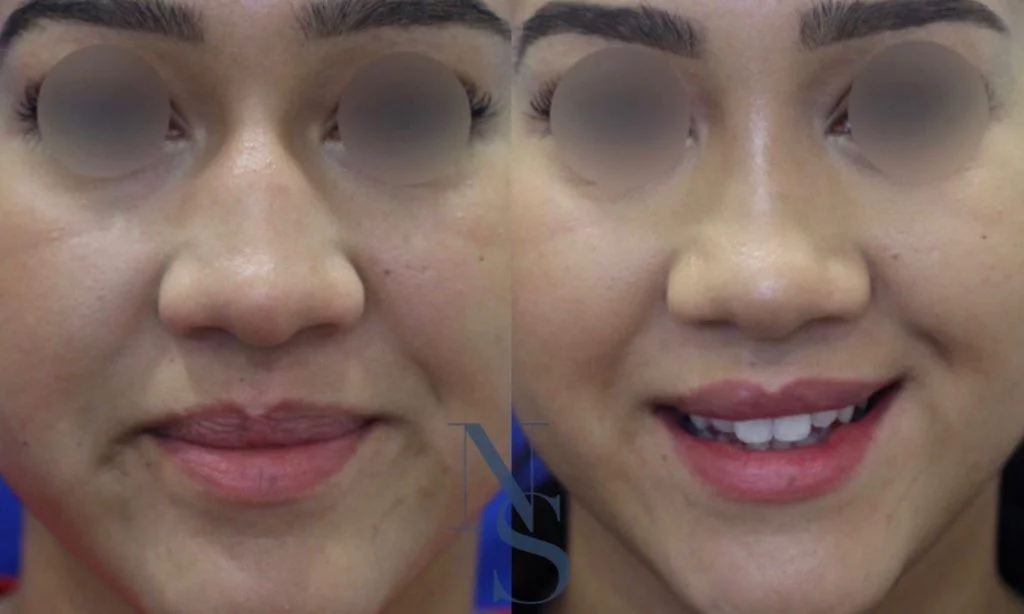
The case below illustrates the selection logic described above: a particular anatomy calls for a particular strategy, combining several complementary procedures. The intervention was performed by Dr. Nathaniel Stroumza-Escoffier. The photographs are published with the patient's written consent. The ocular region is obscured by a deliberately narrow blurred band to preserve the legibility of the suborbital region, which is part of the evaluated outcome.
Case Study Description: This case is presented as clinical documentation to illustrate the indications and limitations of the technique. It does not constitute a promise of results. Each outcome is individual and depends on anatomy, skin quality, age, weight, and other factors specific to each person. No results can be guaranteed. |
|---|
Case 1 — Woman, 55 years old, after massive weight loss
Element | Details |
|---|---|
Context | Loss of 50 kg after sleeve gastrectomy. |
Anatomical analysis | Skin laxity of the middle and lower third of the face; loss of definition of the cervicomental angle; dermatochalasis of the upper eyelids; lower eyelid bags. |
technique chosen | Cervicofacial lifting by deep plane dissection. |
Associated gestures | Upper blepharoplasty, with the scar concealed in the upper eyelid crease. Lower blepharoplasty via a transconjunctival approach, without a skin scar. Lipofilling of the under-eye area with nanofat and of the face with microfat. |
Operating time | 2 hours |
Photographic distance | 1 year, stable result. |
Front view

Right profile

Left profile

Case 1 — Deep plane facelift, woman, 55 years old. Frontal and profile views, before and after the procedure, 1-year follow-up. Dr. Nathaniel Stroumza-Escoffier, Paris. Individual result, not guaranteed.
What the images show. From the front, the jawline is redefined and the cheek tissues are repositioned; the nasolabial fold is softened without being erased, indicating repositioning rather than traction. Around the eyes, the excess skin on the upper eyelid has disappeared and the hollow under the eye is filled, the eyelid-cheek junction becoming continuous again—this is the result of the associated lipofilling, without which the tightening would have accentuated the hollowing. From the side, the definition of the cervicomental angle is restored, and the retroauricular region shows no lobe displacement or apparent scarring at this viewing distance.
This case combines the three components of facial aging described above, which explains the combination of three distinct procedures. Massive weight loss results in significant excess skin and hollowing due to the loss of fat compartments: a facelift alone would have corrected the sagging while accentuating the hollowed appearance, hence the indication for lipofilling at the same time. The choice of nanofat for the under-eye area and microfat for the face is based on the graft's fineness, which is adapted to the thickness of the recipient tissue. The transconjunctival approach for the lower eyelid avoids any skin scarring and reduces the risk of eyelid retraction.
This patient profile is increasing with the spread of bariatric surgery. It requires two things: weight stability achieved before the procedure, and a volumetric analysis as rigorous as the analysis of muscle laxity.
Short answer : In a 55-year-old patient who had lost 50 kg after sleeve gastrectomy, a two-hour deep plane facelift was performed in conjunction with upper and lower blepharoplasty and lipofilling with nanofat and microfat. The result is stable at one year. After massive weight loss, a facelift alone is insufficient: volume restoration is essential. |
|---|
See the technique and results in the video
Dr. Stroumza-Escoffier documents his practice on video. These sequences allow us to understand the actual course of the intervention, something that no text can replace.
Before/after intraoperative procedure of a deep plane cervicofacial lift —
Deep plane cervicofacial facelift surgical technique under local anesthesia —
Commentary on a publicly released result
Some results of facial surgery are the subject of lively public debate. These discussions constitute a useful educational opportunity: they allow us to demonstrate, using a case that everyone can see, the difference between a repositioning of the deep planes and a simple skin traction, and to show what an attentive observer can or cannot deduce from a photograph.
Analysis of Kris Jenner's facelift —
This video is an educational commentary on public images. It is not based on any clinical examination, contains no medical information about the individual in question, and does not constitute a diagnosis or an assessment of a colleague's work. There is no professional relationship between Dr. Stroumza-Escoffier and the individual mentioned.
Why consult Dr. Nathaniel Stroumza-Escoffier?
Dr. Nathaniel Stroumza-Escoffier is a plastic, aesthetic and reconstructive surgeon, registered with the National Council of the Order of Physicians under number RPPS 10100674943. He practices at 11 rue du Faubourg Saint-Honoré, in the 8th arrondissement of Paris.
The consultation is conducted according to a principle of transparency: explicit distinction between what falls under the lifting procedure and what falls under other treatments, presentation of the options with their respective benefits and limitations, presentation of available comparative data without favourable selection, and reframing of expectations when they exceed what is achievable.
Qualifications, expertise and teaching Qualification — Qualified plastic surgeon specializing in plastic, reconstructive, and aesthetic surgery. RPPS 10100674943. Former clinical assistant at the Hospitals of Paris (Tenon Hospital, AP-HP). Member of the SOFCEP. |
|---|
It is up to each patient to verify their surgeon's registration with the Medical Council and their qualification in plastic, reconstructive and aesthetic surgery, information which is publicly available.
Documents
List of anatomical areas concerned
- Play
- Neck
- Temples
- Face
- Lips
- Eyelids
- Menton


FAQ
At what age should one consider a facelift?
The indication for surgery is based on the degree of skin laxity, not chronological age. Some patients experience premature aging, justifying intervention as early as their late forties, while others retain toned tissue well beyond that age. A recent trend is to operate on more moderate skin laxity, based on the argument that the correction is more limited and that the tissue is of better quality at the time of the procedure.
Which facelift technique is the best?
Comparative data do not indicate a universally superior technique. A meta-analysis published in 2025 on 2,896 patients reported a satisfaction rate of 94,4% for deep plane versus 87,8% for SMAS, but a complication rate of 17,2% versus 10,3%. Each technique therefore presents its own profile of benefits and risks, which means the choice depends on individual anatomy rather than a hierarchy of principles.
What is the difference between a SMAS lift and a deep plane lift?
Both techniques act on the SMAS, but at different levels. A SMAS lift mobilizes the SMAS from a plane above it, with the skin and SMAS treated separately. A deep plane lift dissects beneath the SMAS and releases the supporting ligaments, allowing the skin and SMAS to be moved together as a single unit. The deep plane lift allows for a more extensive correction of the mid-face, at the cost of a more extensive dissection.
How long does the result of a facelift last?
A facelift doesn't stop aging; it repositions structures at a specific point in time, and then the process resumes from an improved starting point. The duration for which the results remain visibly satisfactory is measured in years and depends on the technique used, tissue quality, lifestyle, and sun protection. No single figure can be reliably given for any given patient.
Does a facelift leave visible scars?
Full-access techniques leave periauricular and retroauricular scars, positioned within the natural contours of the ear and extending into the scalp. These usually become discreet after maturation, while remaining perceptible upon close inspection. Minimal-access techniques result in shorter scars. A subdermal radiofrequency cervical approach leaves no periauricular scar, but its use is limited to moderate cervical laxity.
How long does recovery take?
Swelling and bruising reach their peak around the second or third day, then subside over two to three weeks. Most patients plan to resume social activities within two to four weeks, with significant variations depending on the extent of the procedure and individual predisposition to bruising. Numbness in the preauricular region may persist for several months.
How many days of sick leave should be expected?
The duration depends on the extent of the procedure and the nature of the professional activity. The first two weeks are dominated by swelling and bruising; a job without social exposure can be resumed sooner than one involving contact with the public. The duration is determined during a consultation, once the technique has been defined.
Is the facelift performed under general anesthesia?
A complete cervicofacial lift is usually performed under general anesthesia due to its duration and extent. Some techniques requiring limited access can be performed under local anesthesia combined with sedation. Isolated subdermal cervical radiofrequency ablation is well-suited to tumescent local anesthesia. The choice is made during an anesthesia consultation.
Can a facelift give a pulled or artificial appearance?
This appearance stems primarily from two errors: excessive traction on the skin instead of repositioning the underlying structures, and the failure to restore lost volume in a hollowed face. Modern techniques target the SMAS (superficial musculoaponeurotic system) and redrape the skin without tension, thus avoiding the first pitfall. Combining lipofilling with lipofilling when volume loss is significant prevents the second.
Should lipofilling be combined with a facelift?
Often, yes. A facelift corrects sagging tissues but does not restore volume lost through atrophy of the fat compartments. In a patient with both sagging and hollowing, a facelift alone can accentuate the hollowed appearance. The combination of treatments is decided during a consultation after analyzing the factors contributing to aging.
Can a facelift and blepharoplasty be combined in the same surgical procedure?
Yes, the combination is common and makes sense: a facelift does not address excess eyelid skin or under-eye bags, which are treated with blepharoplasty. Performing both procedures simultaneously avoids a second anesthetic and a second recovery period. The decision depends on the total operating time and the patient's overall health.
Is tobacco really an obstacle?
Yes, and this is a non-negotiable point. Active smoking reduces blood flow to the detached skin flap and significantly increases the risk of skin necrosis, a complication that can leave a poor-quality scar requiring revision. Smoking cessation for several weeks before and after the procedure is mandatory, and a patient who refuses is generally rejected.
What is the risk to the facial nerves?
Facial nerve injury is a rare but serious complication. It can be transient, due to stretching, or, more rarely, permanent. The most frequently affected branches are the marginal mandibular branch and the frontal branch. Recent aggregate data report injuries that are most often transient and resolve on their own. Prevention relies on anatomical knowledge and adaptation of the dissection plane. Sensory disturbances, distinct from motor impairment, are frequent and usually transient.
Is a hematoma common after a facelift?
This is the most frequent complication, with a published incidence of 2 to 3%, generally occurring within hours of the procedure. A compressive hematoma requires surgical evacuation. Therefore, intense or asymmetrical pain in the first few hours should prompt immediate medical attention. Prevention relies on intraoperative hemostasis, blood pressure control, and prior discontinuation of medications that promote bleeding.
What is tranexamic acid and is it used?
This is an antifibrinolytic drug used by some teams in the perioperative period to limit bleeding. A meta-analysis published in 2024 reported a significant reduction in the risk of minor hematoma and postoperative drainage volume, without an increase in complications. The sample size analyzed remains small, and the benefit has not been demonstrated for major hematomas.
Can a facelift be avoided with non-surgical techniques?
Non-surgical techniques—focused ultrasound, external radiofrequency, and thread lifts—primarily act on the superficial dermis and collagen stimulation. They can provide modest improvement in early-stage sagging. They do not reposition the deeper layers and do not produce the results of a facelift in advanced cases. Accumulating these treatments to avoid a necessary surgical procedure leads to significant cumulative expense for an inferior result.
Is there a solution for neck scarring?
Yes, in cases of mild to moderate cervical laxity, without significant excess skin. Subdermal radiofrequency, combined if necessary with cervical liposuction, allows for tightening without a periauricular scar. Dr. Stroumza-Escoffier has developed a dedicated protocol, the SNEC Lift (Scarless Non-Excisional Cervical Lift), presented on a separate page. This approach does not replace a cervicofacial lift when excess skin or platysmal bands are significant.
Can you have a facelift done again later?
Yes, a revision is possible after several years, as the aging process resumes after the initial procedure. A revision is performed under different conditions due to the scar tissue remodeling from the first procedure, which alters the technique and sometimes the achievable result. The indication and timing are assessed during a consultation.
What happens if I am not satisfied with the result?
Regular postoperative follow-up is provided. Any dissatisfaction is examined, distinguishing between what is due to ongoing healing, as edema can persist for several months, and what constitutes an objectively improvable result. If necessary, a touch-up procedure is discussed after complete tissue stabilization, which is at least twelve months after the initial surgery.
How many facelifts does Dr. Stroumza-Escoffier perform?
Approximately 100 cervicofacial lifts per year, with 10 years of experience. The average operating time is two hours. A facelift is a procedure with a long learning curve: the regularity of the procedure is a criterion that patients rightly consider.
Is it possible to have a facelift under local anesthesia?
Yes, in selected patients. Dr. Stroumza-Escoffier performs deep plane facelifts under local anesthesia in 10 to 15% of cases, when the indication and the patient's profile are suitable. This approach avoids prolonged fasting, the recovery period, and the risks associated with general anesthesia. It requires controlled anxiety and good tolerance of procedures performed while awake. Published studies report a safety profile comparable to that of general anesthesia, with most hematomas being minor.
Is it possible to have a facelift after bariatric surgery or significant weight loss?
Yes, and it's a common indication. Massive weight loss results in significant excess skin combined with a hollowing effect due to the loss of fat compartments: a facelift alone would correct the sagging while accentuating the hollowed appearance, thus justifying the simultaneous use of lipofilling. Two conditions are essential: a stable weight for several months and a satisfactory nutritional profile, as bariatric surgery can lead to deficiencies that affect healing.
Why are certain facelifts not offered at the clinic?
Dr. Stroumza-Escoffier does not recommend isolated temporal facelifts, whose benefit on the middle third of the face is limited and short-lived, nor concentric malar facelifts, due to the risk of ectropion and paresis, nor facelifts that do not address the SMAS (superficial musculoskeletal system), whose durability is insufficient. These choices reflect a personal trade-off between expected benefit and accepted risk; other teams make different trade-offs.
How do I know which technique is suitable for my face?
Only a clinical examination can distinguish the extent of tissue descent, volume loss, and skin alteration. This analysis determines the most appropriate strategy and may conclude that a facelift is not the right solution or that it should be combined with other procedures.
Disclaimer: This article is for informational and educational purposes only. It is not a substitute for individual medical advice. No results can be guaranteed: they depend on anatomy, skin quality, and individual factors. The information above is general in nature.
Scientific references
References from peer-reviewed journals, indexed in PubMed/MEDLINE. Each reference is provided with its PMID and, where available, its DOI, which can be directly verified.
- Khoury S, Almubarak Z, Khan H, Boldt G, Villemure-Poliquin N, Nichols AC. The Deep Plane versus SMAS Facelift: A Systematic Review and Meta-Analysis. Aesthetic Plastic Surgery. 2025;49(21):5895-5903. PMID: 40801931. DOI: 10.1007/s00266-025-05118-x
- Vayalapra S, Guerero DN, Sandhu V, Happy AA, Imantalab D, Kissoonsingh P, Khajuria A. Comparing the Safety and Efficacy of Superficial Musculoaponeurotic System and Deep Plane Facelift Techniques: A Systematic Review and Meta-analysis. Annals of Plastic Surgery. 2025;95(5):582-589. PMID: 40600822. DOI: 10.1097/SAP.0000000000004454
- Alenazi AS, Obeid AA, Alderaywsh A, Alrabiah A, Alkaoud O, Ashoor M, Aldosari B, Alarfaj AM. Impact of Tranexamic Acid on Bleeding Outcomes and Complication Rates in Facelift: A Systematic Review and Meta-analysis. Aesthetic Surgery Journal. 2024;44(11):NP749-NP761. PMID: 39141514. DOI: 10.1093/asj/sjae156
- Tarallo M, Cilluffo M, Papa F, Fanelli B. Retaining Ligaments of the Face: Still Important in Modern Approach in Mid-Face and Neck Lift? Journal of Personalized Medicine. 2025;15(12):582. PMID: 41440945. DOI: 10.3390/jpm15120582
- Hamra ST. The deep-plane rhytidectomy. Plastic and Reconstructive Surgery. 1990;86(1):53-61, discussion 62-63. PMID: 2359803
- Frojo G, Dotson A, Christopher K, Kaswan S, Lund H. Facelift Performed Safely With Local Anesthesia and Oral Sedation: Analysis of 174 Patients. Aesthetic Surgery Journal. 2019;39(5):463-469. PMID: 30107493. DOI: 10.1093/asj/sjy202
- Ors S. High Superficial Musculoaponeurotic System Lamellar Facelift Under Local Anesthesia. The Journal of Craniofacial Surgery. 2021;32(5):1788-1793. PMID: 33496520. DOI: 10.1097/SCS.0000000000007466
- DeJoseph LM, Pou JD. Local Anesthetic Facelift. Facial Plastic Surgery Clinics of North America. 2020;28(3):409-418. PMID: 32503722. DOI: 10.1016/j.fsc.2020.03.012
- Locketz GD, Bloom JD. Percutaneous Radiofrequency Technologies for the Lower Face and Neck. Facial Plastic Surgery Clinics of North America. 2019;27(3):305-320. PMID: 31280845. DOI: 10.1016/j.fsc.2019.03.003
This article is for informational purposes only and does not replace a medical consultation.