Facial cosmetic surgery in Paris: which procedure to choose?
Parent page — Facial and neck cosmetic surgery and medicine. Medically reviewed by Dr. Nathaniel Stroumza-Escoffier, plastic surgeon in Paris 8 — RPPS 10100674943. Last updated: September 2026.
Medically reviewed by Dr. Nathaniel Stroumza-Escoffier , plastic surgeon in Paris 8.
RPPS 10100674943 — Last updated: September 2026.
In a nutshell
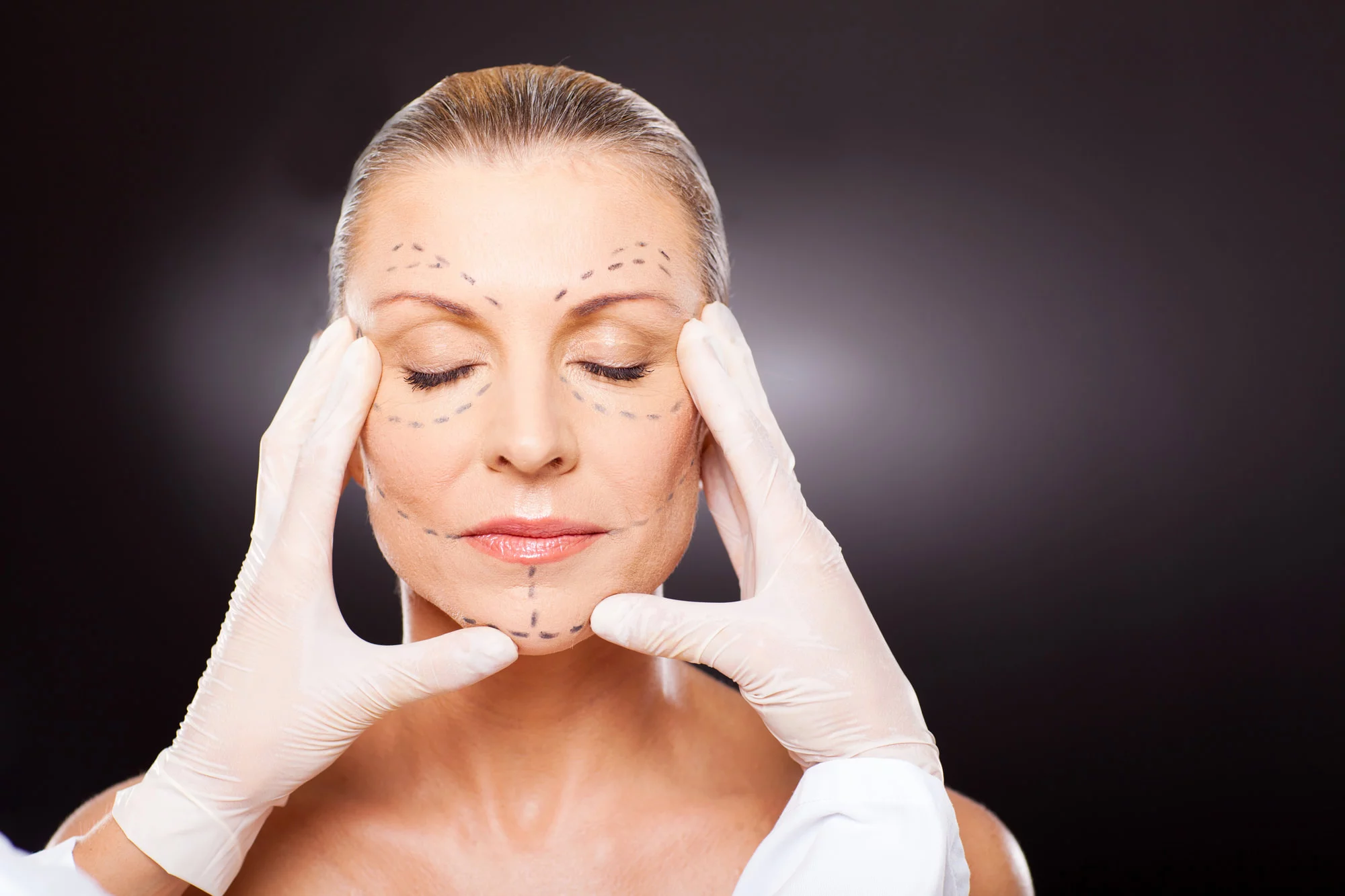
Facial aging is not just about the skin. It involves, to varying degrees, changes in skin quality, volume, sagging of deeper tissues, and changes in the bone structure. The right treatment depends on the predominant anatomical level : an injection is not a substitute for a facelift, and a facelift alone cannot restore lost volume.
Short answer: how to choose a facial procedure
The choice of treatment depends first and foremost on the anatomical issues involved. Heavy eyelids often warrant blepharoplasty; jowls and a sagging jawline require a facelift; a double chin may be addressed with liposuction, subdermal radiofrequency, a SNEC lift, or a neck lift, depending on the fat, skin, and platysma muscle. A hollow face is more suited to volume restoration. Several levels of intervention may coexist and require a combined strategy.
The four levels of facial aging
| Level | What is evolving | Possible treatments |
|---|---|---|
| 1. Skin quality | Collagen, fine lines, texture, dyschromia | Skin treatments, peels, certain radio frequenciesinjections as indicated |
| 2. Volumes | Fat deposits are melted or redistributed: temples, tear troughs, cheeks. | Hyaluronic acidlipofilling, volumetric strategy |
| 3. Tissue relaxation | SMAS descent and ligament laxity: jowls, oval of the jaw, neck | Facelift/of, SNEC Lift In certain indications, subdermal radiofrequency |
| 4. Skeletal framework | Progressive remodeling of the orbit, maxilla, and mandible | Volumetric compensation or selected structural procedures; this is not the usual target of standard rejuvenation. |
These four levels often coexist. Clinical examination determines which one predominates and in what order the procedures should be performed.
Useful definitions
SMAS : superficial musculoaponeurotic system, essential fibromuscular plane in many lifting techniques.
Dermatochalasis : excess eyelid skin.
Ptosis : the descent of a tissue.
Neocollagenesis : production of new collagen stimulated by certain biological or energetic processes.
Facial surgery: which procedure for which need?
| What bothers you | Common cause | Where to look |
|---|---|---|
| Heavy eyelids, tired eyes | Excess skin on the upper body, under-eye bags, sometimes true ptosis | Blepharoplasty / eyelid assessment |
| Relaxed oval face, jowls | Descent of deep tissues and the SMAS | Facelift |
| Double chin, puffy neck | Fat, skin, platysma, chin projection | Double chin / SNEC Lift / neck lift |
| Disproportionately large nose or breathing difficulties | Nasal framework, septum, nasal valve | Rhinoplasty / rhinoseptoplasty |
| Skin less firm | Skin alteration without major ptosis | Radio frequency / skin treatments |
| Expression lines | Repeated muscle contraction | Botulinum toxin |
| Hollow face | Loss of fat volume or weight loss | Hyaluronic acid / lipofilling |

Must we choose between injections and surgery?
No. They don't act on the same level. Injections can restore volume, modulate muscle contraction, or improve certain skin parameters; surgery repositions sagging tissue or removes excess skin. Adding volume to compensate for ptosis can make the face appear heavier. Conversely, lifting a face that is essentially hollow can accentuate the volume loss. Therefore, the approaches are often complementary rather than competing.
What does the minimally invasive approach offer for the face and neck?
In selected cases, it allows for a reduction in surgical approaches and sometimes even the use of local anesthesia. It can be combined with cervical liposuction, subdermal radiofrequency, or combined protocols such as the SNEC Lift . It does not replace full surgery when there is significant excess skin, pronounced platysmal bands, or advanced skin laxity.
Transparency
Dr. Stroumza-Escoffier works as a consultant and trainer for InMode, a manufacturer of radiofrequency devices. The indications for treatment are determined based on the patient's anatomy and objectives.
Data from Dr. Stroumza-Escoffier's practice
| Intervention | Practice data reported |
|---|---|
| Cervico-facial lift | Approximately 100 facelifts/year; 10-year follow-up; average reported operating time of approximately 2 hours; local anesthesia for some selected patients. |
| SNEC Lift | More than 250 protocols; maximum announced follow-up of 5 years; local anesthesia in 95% of cases; average duration announced 28 min; average social recovery announced around 7 days. |
| Blepharoplasty | Local anesthesia advertised in 100% of upper eyelids, 90% of lower eyelids and 80% of all four eyelids; indicative durations 30 min, 45 min and 1 h 30. |
| Botulinum toxin | 15 years of practice; 300 to 400 sessions/year according to the practice's data. |
| Hyaluronic acid | 15 years of practice; 200 to 300 injections/year according to practice data. |
These figures are self-reported data from the practice: they describe the activity and the conditions under which it was carried out, not an expected result for a given patient.
Two documented clinical cases
Case 1 — Double chin treated with SNEC Lift. Patient treated with SNEC Lift combining targeted cervical liposuction and subdermal radiofrequency. Profile view before the procedure and postoperative result.
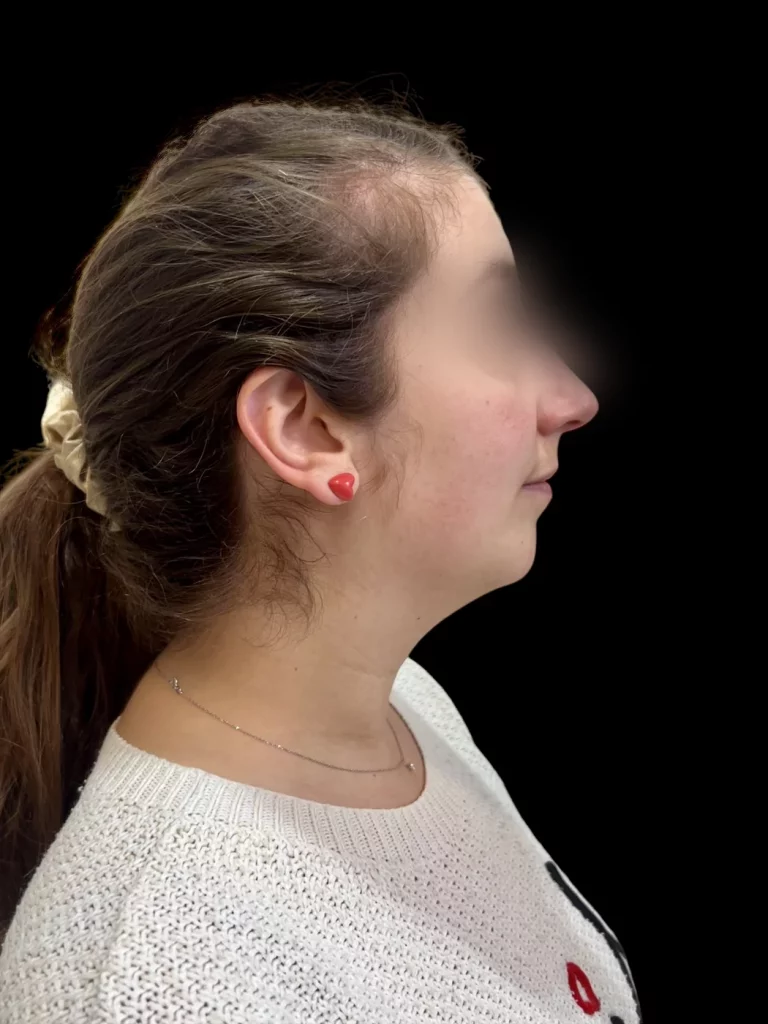
Before intervention
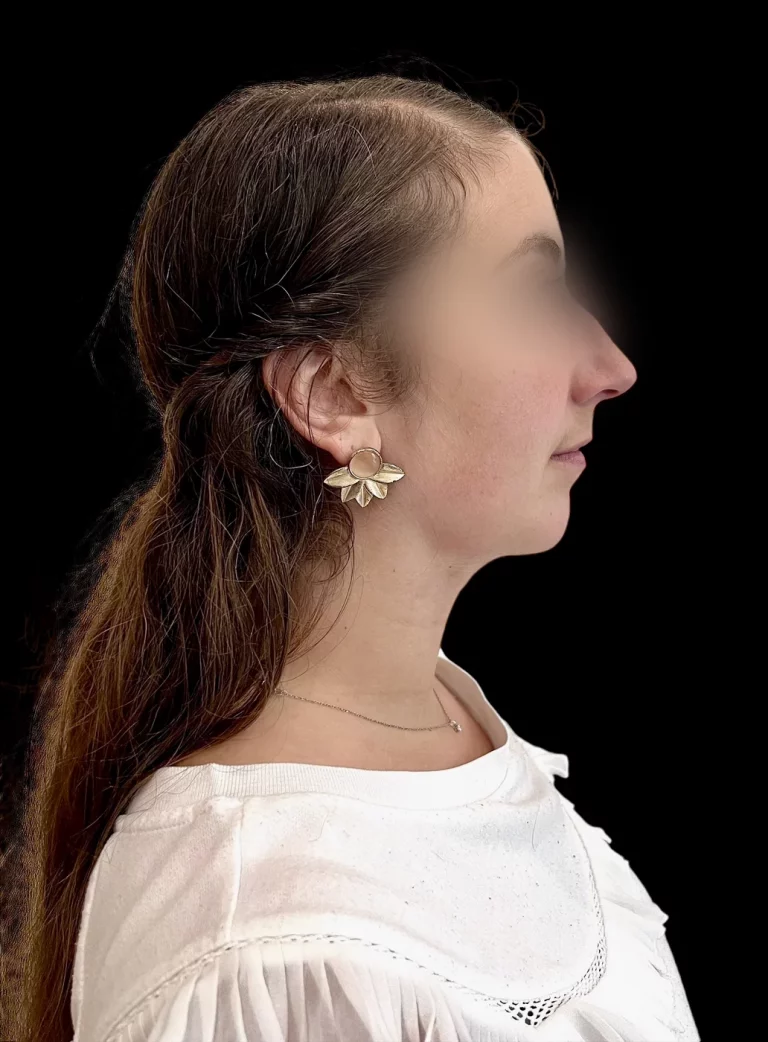
Result
Case 2 — upper blepharoplasty. Before/after — dermatochalasis of the upper eyelid. Photographs from the practice of Dr. Stroumza-Escoffier.
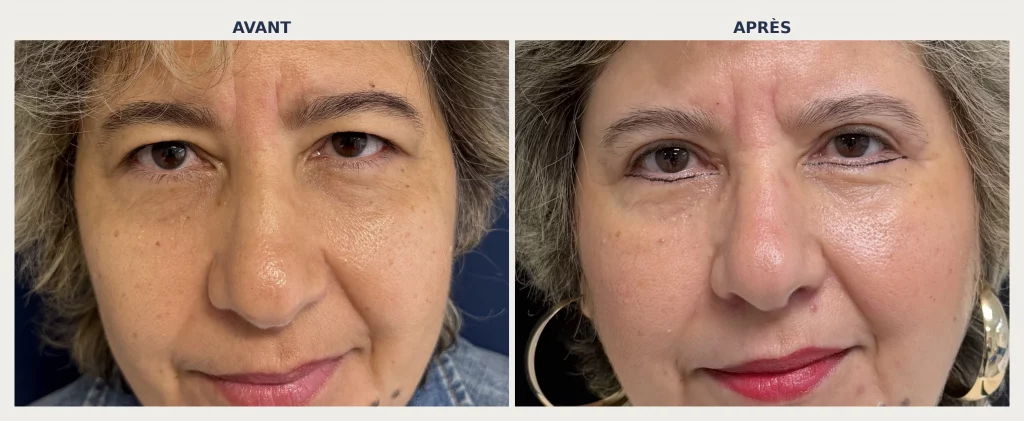
Clinical photographs are published with consent and presented with anonymization appropriate to the type of view. Each result is individual; no result can be guaranteed.
Is facial cosmetic surgery covered by Health Insurance?
Facial surgery performed for purely cosmetic purposes is not covered by French National Health Insurance. However, certain procedures may be considered functional or reconstructive when they meet the criteria of the French Classification of Medical Procedures (CCAM). The code depends on the specific procedure performed and never, on its own, guarantees reimbursement.
| Intervention | Examples of CCAM codes | Possible coverage |
|---|---|---|
| Face/Neck Lifting | QAMA001, QAMA006, QAMA009, QAMA010, QAMA011; QAMA007 for bilateral temporal | In certain functional or restorative indications; not for a purely aesthetic facelift. |
| Blepharoplasty | BAFA008 (upper bilateral), BAFA009, BAFA011 (lower via cutaneous route), BAFA017 (bilateral fat via conjunctival route) | Possible if the medical indication meets the CCAM criteria; not for a purely aesthetic request. |
| Facial lipofilling | QZEA045: Subcutaneous autograft of adipose tissue for filling a skin depression | Possible in certain reconstructive indications; not for purely aesthetic volumizing. |
| Chin/neck liposuction | QAJB001 | Reimbursable only in the indications provided for by the nomenclature; cosmetic liposuction of the double chin is not covered. |
Important note: the existence of a CCAM code does not automatically mean that the procedure is covered. Coverage depends on the medical indication, the procedure actually performed, and the conditions attached to the code. Some procedures may require prior authorization. The surgeon determines the appropriate coding after a clinical examination.
Reference: Common Classification of Medical Procedures (CCAM), Health Insurance — verification September 2026.

Facial and neck procedures in detail
Facelift
Repositioning descended tissues involves working on deep planes, particularly the SMAS. Both SMAS and deep plane techniques have published data; recent meta-analyses do not allow for a definitive conclusion that one technique is universally superior. The choice depends on the anatomy, the area to be corrected, and the surgeon's experience.
Double chin treatment
Identify the cause: submental fat, skin laxity, platysma, chin anatomy, or a combination of these factors. The solution may range from liposuction to a neck lift, with minimally invasive options available for certain patients.
SNEC Lift
A minimally invasive protocol developed by Dr. Stroumza-Escoffier for certain mild to moderate cervical laxities, combining targeted liposuction and subdermal radiofrequency without skin excision. It does not replace a facelift when there is significant excess skin or muscle. Indicative price: from €5,000.
Neck lift
Treating advanced cervical laxity: excess skin, platysma bands, and loss of definition of the cervicomental angle. It can be performed alone or in conjunction with a facelift.
Blepharoplasty
Treat excess skin on the upper eyelid and/or under-eye bags. In the lower eyelid, a transconjunctival approach can avoid skin scarring when indicated.
Rhinoplasty
Modifying the shape of the nose; when a functional disorder exists, the analysis must include the septum and nasal valves. Functional rhinoseptoplasty and purely cosmetic rhinoplasty do not have the same treatment guidelines.
Facial radiofrequency
External and subdermal devices should not be confused. The former primarily aim to improve skin quality and firmness; the latter are more invasive and can be integrated into a selected skin tightening strategy.
Botulinum toxin
Temporarily reducing the activity of certain muscles responsible for expression lines. The result develops gradually; the final evaluation is typically carried out after about two weeks.
Hyaluronic acid and lipofilling
Restoring volume or correcting certain transitions. Hyaluronic acid is absorbable and, for HA-based products, can be broken down by hyaluronidase when indicated. Lipofilling uses autologous fat.
Face after significant weight loss or GLP-1 treatment
Significant weight loss, whether achieved through lifestyle changes, bariatric surgery, or treatment with GLP-1 receptor agonists, can reveal or accentuate facial volume loss, hollowing of the temples or under the cheekbones, dark circles under the eyes, wrinkles, and laxity of the face and neck. The media term "Ozempic face" primarily describes the aesthetic consequences of sometimes rapid weight loss; it does not refer to a specific facial condition.
The strategy must be sequenced: first, assess weight stability and the dynamics of weight loss, then differentiate between volume loss, skin alterations, and true ptosis. Depending on the individual profile, treatment may combine volume restoration, skin quality improvement, radiofrequency, or surgical tightening. Adding too much volume to mask sagging remains a potential mistake.
Why this chapter is important
Publications from 2025-2026 increasingly describe facial changes observed after weight loss while taking GLP-1, but specific data remain limited and some recommendations are based on clinical experience. This section should be updated regularly.
Other facial procedures performed in the office
Lips: augmentation or reduction depending on anatomy, by surgery, hyaluronic acid or lipofilling as indicated.
Cheeks: the strategy depends on volume, ptosis, and morphology. Bichectomy should be indicated with caution because irreversible reduction of deep fat can accentuate hollowing over time in some patients.
Ears: Otoplasty corrects, among other things, protruding ears. The technique is chosen according to the cartilaginous deformity; coverage may be possible when the deformity causes significant social discomfort, according to applicable criteria.
Chin: Genioplasty or an implant can modify chin projection. The choice depends on skeletal and occlusal analysis; functional/reconstructive indications must be distinguished from aesthetic ones.
Medical rhinoplasty: injections can correct certain contour imperfections without reducing the actual size of the nose. The nasal region is a vascular area at risk; the indication and anatomical expertise are essential. Learn more about medical rhinoplasty.
Facial surgery prices in Paris
Prices vary depending on the indication, duration, anesthesia, surgical location, and any associated procedures. A personalized quote is provided after a clinical examination.
| Intervention | Price from |
|---|---|
| SNEC Lift (minimally invasive neck and jawline lift) | € 5 |
| Upper blepharoplasty | € 2 |
| Lower blepharoplasty | € 3 |
| Four eyelids | € 4 |
| Cervico-facial lift | € 4 |
| Mid-face lift | € 5 |
| Temporal lift | € 3 |
| Mini-facelift | € 4 |
| Facial lipofilling | € 2 |
| Lipo-lifting | € 5 |
| Primary rhinoplasty | € 4 |
| secondary rhinoplasty | € 5 |
| Tip rhinoplasty | € 4 |
| Otoplasty | € 3 |
| Upper lip lift | € 2 |
| Lip reduction | € 2 |
| Genioplasty / chin surgery | € 3 |
Indicative prices from September 2026, subject to change. Any anesthesia fees and facility costs depend on the surgical context and must be specified in the quote.
FAQ — Facial cosmetic surgery
At what age should facial surgery be considered?
The indication depends more on anatomy than on age. Skin quality, ptosis, volume, and expectations are determining factors.
Does a facelift give a frozen face?
The goal of a modern facelift is to reposition tissues without placing excessive tension on the skin. The result depends on the indication, the technique, and the execution.
How long does the result of a facelift last?
A facelift corrects a condition at a given moment; aging continues. Durability varies with tissue quality, weight, smoking, sun exposure, and the technique used.
Can several interventions be combined?
Yes, for example, facelift and blepharoplasty or surgery and volume restoration. Safety depends on the cumulative duration, the anesthesia, and the patient's medical history.
Can injections replace a facelift?
No, not when there is a true descent of the deep tissues. They can complement a facelift or treat an isolated loss of volume.
What scars are there after a facelift?
They are generally placed in the periauricular areas and on the scalp, depending on the technique. Their evolution depends in particular on tension, the individual's constitution, and sun protection.
Should we quit smoking?
Smoking increases the risk of wound healing complications and skin damage. Perioperative smoking cessation is usually recommended according to the surgeon's protocol.
Is it possible to have a facelift under local anesthesia?
Certain procedures and certain patients are suitable for this approach. The choice depends on the extent of the procedure, its duration, the patient's profile, and the surgical organization.
Is there a solution for the neck without a periauricular scar?
Yes, in some patients with mild to moderate skin laxity without significant excess skin: liposuction, subdermal radiofrequency, or SNEC Lift can be considered. Advanced skin laxity is more appropriate for a facelift.
How long before an event should an injection be given?
Redness, swelling, or bruising are possible. For botulinum toxin, it is advisable to wait approximately two weeks before an important event to assess the final result.
What to do about a hollowed face after GLP-1?
It is important to distinguish between volume loss, laxity, and skin alterations. Treatment may address volume, skin quality, and sometimes tightening, ideally once weight gain has stabilized.
About the Author
Dr. Nathaniel Stroumza-Escoffier — Plastic surgeon in Paris 8, board-certified in plastic, reconstructive, and aesthetic surgery. RPPS 10100674943. Former Clinical Assistant at the Hospitals of Paris (Tenon Hospital, AP-HP). Member of the scientific committee of the SOFCEP (French Society of Plastic, Reconstructive and Aesthetic Surgery). His practice focuses on minimally invasive surgery of the face, neck, body, and breast, and he also teaches and provides training.
Office: 11 rue du Faubourg Saint-Honoré, 75008 Paris.
Main scientific references
- Shaw RB Jr, Kahn DM. Aging of the midface bony elements: a three-dimensional computed tomographic study. Plast Reconstruction Surg. 2007;119(2):675-681.
- Mendelson BC, Hartley W, Scott M, McNab A, Granzow JW. Age-related changes of the orbit and midcheek and the implications for facial rejuvenation. Aesthetic Plast Surg. 2007;31(5):419-423.
- Khoury S et al. The Deep Plane versus SMAS Facelift: A Systematic Review and Meta-Analysis. Aesthetic Plast Surg. 2025;49(21):5895-5903. PMID 40801931.
- Vayalapra S et al. Comparing the Safety and Efficacy of SMAS and Deep Plane Facelift Techniques: A Systematic Review and Meta-analysis. Ann Plast Surg. 2025. PMID 40600822.
- Koroma P et al. Deep Plane Facelifts: A Systematic Review and Meta-Analysis of Outcomes. Aesthetic Plast Surg. 2026. PMID 42576065.
- Dayan E et al. Multimodal Radiofrequency Application for Lower Face and Neck Laxity. Plast Reconstruction Surg Glob Open. 2020;8(8):e2862. PMID 32983756.
- Wang F et al. In vivo stimulation of de novo collagen production caused by cross-linked hyaluronic acid dermal filler injections in photodamaged human skin. Arch Dermatol. 2007. PMID 17309996.
- Naumann M, Jankovic J. Safety of botulinum toxin type A: a systematic review and meta-analysis. Curr Med Res Opin. 2004;20(7):981-990. PMID 15265242.
- Kılıç S. Facial aging after GLP-1 receptor agonist-induced weight loss: the emerging Ozempic face phenomenon. J Diabetes Metab Disord. 2025. PMID 41210112.
- Nonsurgical Aesthetic Treatment of the Face and Neck in GLP-1 Receptor Agonist Weight Loss Patients: Experience-Based Considerations. 2026. PMID 41768029.
Read also
- Facelift — SMAS, deep plane, suites and sustainability.
- Double chin treatment — what solution depending on the cause.
- SNEC Lift — a scarless neck lift.
- Blepharoplasty — upper and lower eyelids.
- Rhinoplasty — shape of the nose and respiratory function.
- Facial radiofrequency — skin quality and firmness.
- Botulinum toxin — expression lines.
- Hyaluronic acid — skin volume and quality.
Page written under the responsibility and validated by Dr. Nathaniel Stroumza-Escoffier . Last updated: September 2026.